



Social Media Marketing
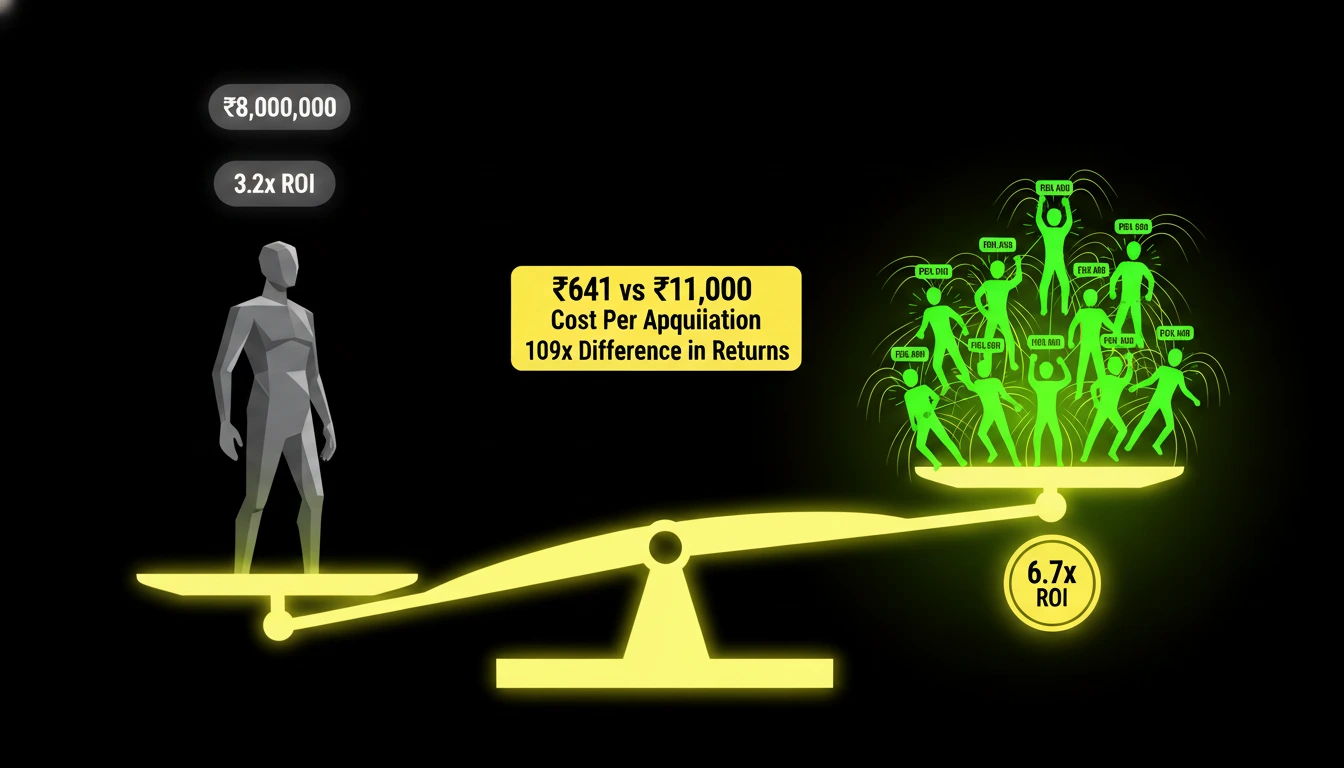
The debate between micro-creators and macro-influencers has been settled by data: 10 micro-influencers delivering 6.7x average ROI consistently outperform single macro-influencers at 3.2x ROI for Indian brands in 2026. A recent case study showed ₹2 lakh invested across 20 micro-creators generated ₹23.58 lakh in revenue, while the same budget on one macro celebrity resulted in just ₹21,600—a staggering 109x difference in returns.
The ROI reality: micro vs macro influencers
Cost per acquisition and engagement rates tell the complete story of why micro-creators deliver superior returns for most Indian brands.
Micro-influencers (10K-100K followers) command ₹8,000-₹80,000 per post and deliver 3-5x ROI with engagement rates between 3-10%, while macro-influencers (500K-1M followers) charge ₹800,000-₹8,000,000+ per post with lower 2-3x ROI and engagement rates around 1-3%. The cost per acquisition drops dramatically from nearly ₹11,000 with celebrities to just ₹641 with micro-influencers, making them 17x more efficient at converting audiences into customers.
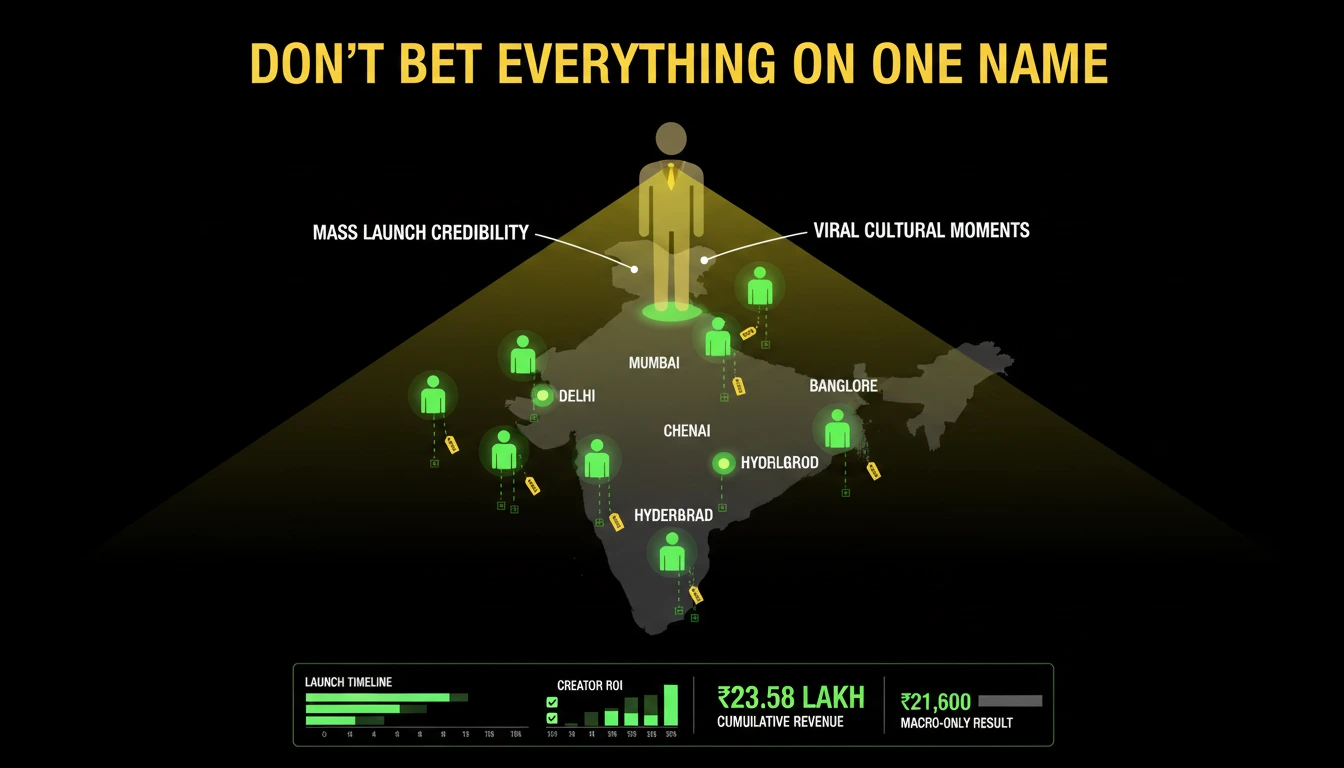
For brands working with influencer marketing agencies, this data reshapes strategy—diversifying budgets across 10-30 micro-creators instead of betting everything on one macro name delivers both reach and conversion efficiency.
Why micro-creators outperform macro-influencers
The superior performance of micro-creators stems from trust, niche authority, and authentic relationships with highly engaged communities.
Micro-influencers maintain 60-70% viewer retention compared to 40-50% for mega creators and 30-40% for celebrity-led content, indicating audiences genuinely care about their recommendations rather than passively scrolling past sponsored posts. Their followers are 22% more likely to make purchases based on recommendations because micro-creators feel like trusted friends rather than distant celebrities pushing products.
Niche targeting allows micro-creators to reach specific demographics—vegan food enthusiasts in Bangalore, sustainable fashion buyers in Mumbai, or fitness-focused millennials in Delhi—with precision impossible for broad-reach macro-influencers. This alignment between creator audience and brand target market eliminates wasted impressions and drives qualified traffic that converts.
The rise of influencer marketing in India has been fueled by this shift toward authenticity, with brands recognizing that genuine recommendations from trusted voices matter more than celebrity endorsements.
Strategic approach: deploying 10 micro-creators effectively
Running campaigns across multiple micro-creators requires systematic planning, clear briefs, and centralized performance tracking to maximize ROI.
Start by identifying 10-30 micro-creators whose audiences align with your target demographic, engagement rates exceed 4%, and content style matches your brand voice. Provide flexible creative guidelines that allow creators to adapt messaging to their unique voice while maintaining brand consistency—overly scripted content kills the authenticity that makes micro-creators effective.
Stagger campaign launches across creators to maintain sustained visibility rather than one-day spikes, and use unique promo codes or tracking links per creator to measure individual ROI and identify top performers for future partnerships. Leading brands like Myntra have achieved 3x higher engagement and 30% growth in conversion rates by leveraging nano and micro-influencers with personalized discount codes.
For brands exploring digital media trends, micro-communities built around niche creators represent the future of influencer marketing, offering higher trust and conversion rates than mass-reach strategies.
When macro-influencers still make sense
While micro-creators win on ROI, macro-influencers serve specific strategic objectives that justify their premium costs in certain scenarios.
Use macro-influencers for mass-market product launches, national brand awareness campaigns, or when you need instant credibility in a new category where your brand lacks recognition. A beauty brand entering India might partner with one established beauty macro-influencer for launch credibility, then deploy 20 micro-creators for sustained conversion-focused campaigns.
Macro-influencers also excel at creating viral moments and cultural conversations that micro-creators cannot achieve individually—like the campaigns featured in Garage Collective’s analysis of viral digital marketing where celebrity partnerships drove nationwide buzz.
The winning strategy combines both: leverage macro-influencers for broad awareness and brand equity, then activate micro-creators for targeted conversion and community building, creating a full-funnel influencer ecosystem.
FAQ’S
1. What ROI can brands expect from micro-influencers in India?
Micro-influencers deliver 3-5x ROI on average, with some campaigns achieving 6.7x returns compared to 2-3x for macro-influencers.
2. How many micro-influencers should replace one macro-influencer?
Budget for 10-30 micro-creators at the same cost as one macro-influencer to maximize reach, engagement, and conversion efficiency.
3. Why do micro-influencers have higher engagement rates?
Their smaller, niche audiences trust them as authentic voices rather than celebrity endorsers, resulting in 3-10% engagement vs 1-3% for macro-influencers.
4. What’s the cost difference between micro and macro-influencers?
Micro-influencers charge ₹8,000-₹80,000 per post while macro-influencers cost ₹800,000-₹8,000,000+, making micros 10-100x more cost-effective.
5. Which Indian brands successfully use micro-influencer strategies?
Nykaa, Myntra, Mamaearth, and boat leverage micro-influencers for authentic product reviews, tutorials, and niche community engagement.
