



Branding
The “post daily or die” mentality has bankrupted countless Indian brands in 2026, wasting resources on filler content that algorithms actively suppress while competitors win with just 3-4 strategic posts monthly. Data from nearly 3 billion social posts reveals that posting frequency has declined since 2022 as platforms reward meaningful engagement over sheer volume—yet most brands still chase outdated consistency metrics.
Why the daily posting myth persists in India
Indian brands cling to the consistency myth because early social media playbooks preached “post 3x daily” when algorithms were simpler and content scarcity existed. In 2026, users spend just 9 seconds evaluating each post while consuming 2 hours 27 minutes of social media daily—meaning your content competes with hundreds of pieces for attention, and frequency alone guarantees nothing.
The pressure intensifies through vanity metrics obsession and competitor comparison: “If they’re posting daily, shouldn’t we?” This flawed logic ignores that their engagement likely plummeted too, creating a race-to-the-bottom where everyone loses except AI-generated spam that floods feeds. As Garage Collective notes in their guide on social media marketing, quality over quantity isn’t just advice—it’s algorithmic survival.
Modern platforms like Instagram, LinkedIn, and YouTube now penalize low-effort content by limiting distribution, making filler posts actively harmful to your account health and reach potential.
How algorithms prioritize quality over quantity
Social platforms in 2026 use sophisticated engagement signals—dwell time, saves, shares, meaningful comments—to determine content value, not how often you post. Instagram’s algorithm gives carousels “second chances” and extended impressions when content earns genuine engagement, while low-performing frequent posts get suppressed faster.
Three well-researched posts generating 200+ comments, 50+ saves, and 10+ shares each will deliver 5-10x the reach of 30 generic quotes or stock photos receiving 15 likes and zero comments. Algorithms interpret high-retention content—posts where users stop scrolling, read fully, and interact meaningfully—as signals of quality worth distributing widely.
The shift mirrors SEO trends 2026 where Google penalizes “made-for-algorithms” content that prioritizes ranking over user value, rewarding instead comprehensive, expert-driven resources regardless of publishing frequency. Both search and social now demand substance over volume.
The real cost of filler content for Indian brands
Posting 30 mediocre updates monthly costs dramatically more than 3 exceptional pieces—not just in production but in opportunity cost and brand damage.
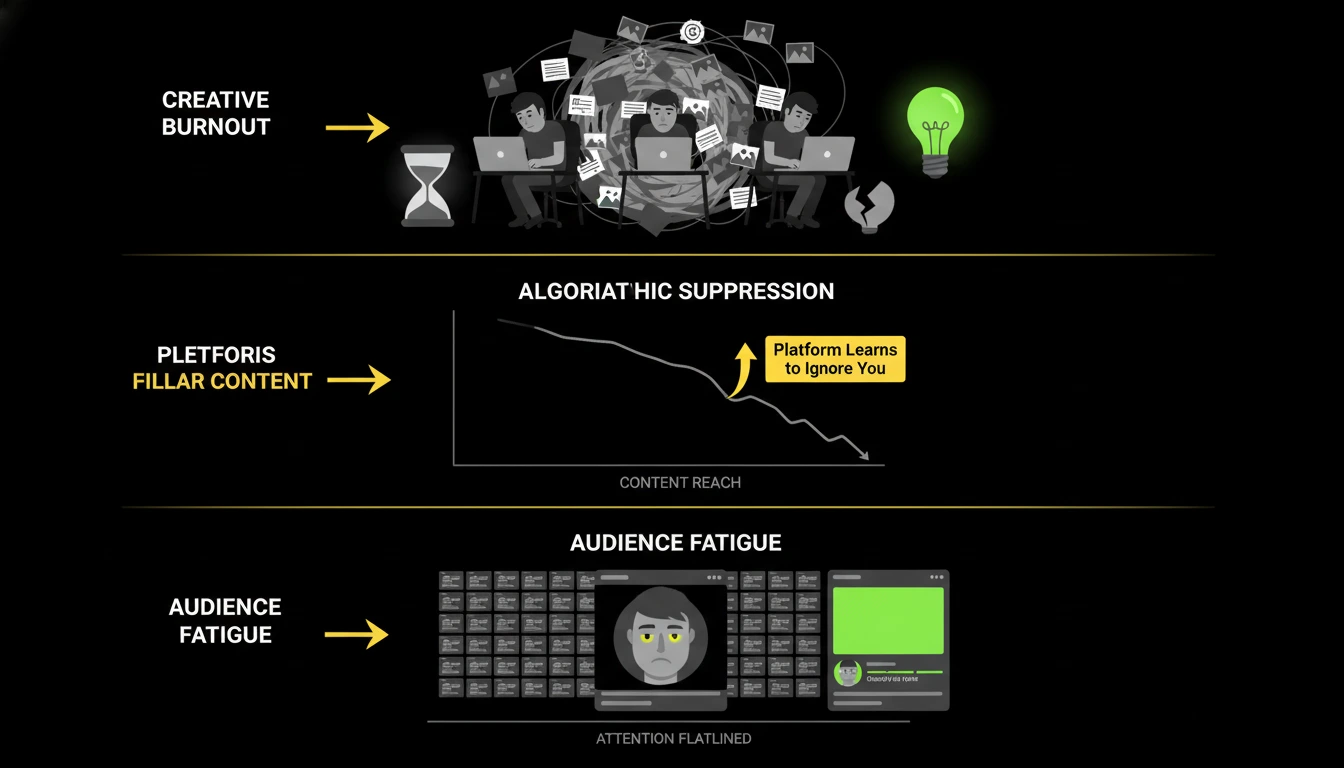
Creative burnout and resource drain—Teams scrambling to hit arbitrary posting quotas sacrifice research, strategy, and quality for speed, producing forgettable content that fails to move business metrics. A single deep-dive case study, comprehensive guide, or thought leadership piece delivers compounding value for months while daily “Monday motivation” quotes generate zero lasting impact.
Algorithmic suppression—When your content consistently underperforms, platforms learn your posts aren’t worth distributing, creating downward spirals where even your quality content gets buried. Brands posting 5x weekly with 1-2% engagement rates would see better results posting once weekly with 8-10% engagement because strong performance trains algorithms to trust your content.
Brand dilution and audience fatigue—Constant low-value posting conditions your audience to ignore you, reducing the impact when you finally have something important to say. As seen in viral campaigns across India, brands break through noise with bold, memorable moments—not incremental noise addition.
Building a quality-first content strategy
Transitioning from quantity to quality requires redefining success metrics and restructuring content workflows around value creation.
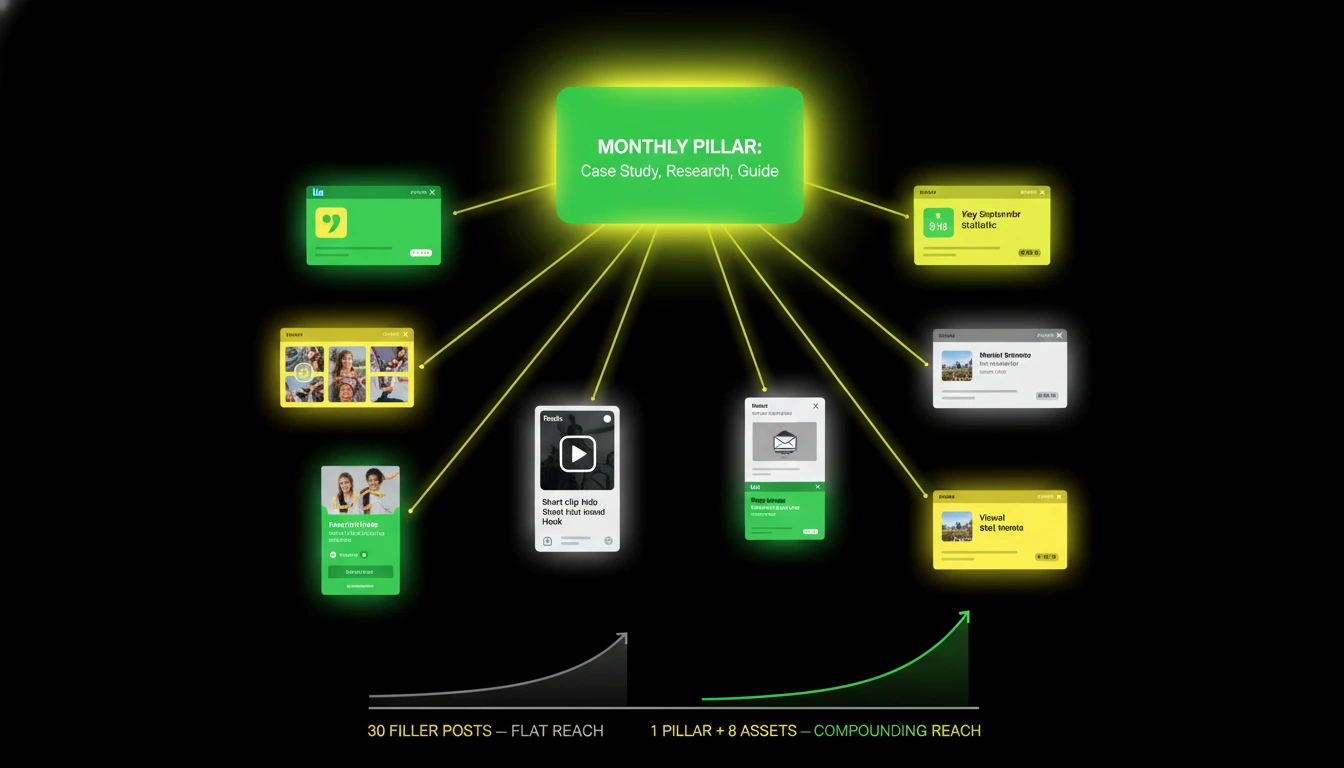
Focus on pillar content monthly—Produce 3-4 comprehensive resources each month: in-depth guides, original research, case studies, or expert interviews that establish thought leadership and deserve promotion across channels. Each piece should answer significant audience questions thoroughly rather than scratching surface-level topics hastily.
Maximize distribution of fewer assets—Instead of creating 30 unique posts, transform one pillar piece into 8-10 micro-content assets: key insights for LinkedIn, behind-the-scenes for Stories, carousel breakdowns for Instagram, short clips for Reels. This approach maintains a consistent presence while concentrating resources on quality production.
Measure engagement depth over frequency—Track saves, shares, comment quality, and time spent per post rather than publishing volume or vanity reach metrics. If your 3 monthly posts each generate 500+ meaningful interactions versus 30 posts averaging 20 likes, you’re winning algorithmically and commercially.
Brands exploring digital media trends recognize that short-form video, micro-influencer partnerships, and community-driven content all prioritize authentic value over manufactured consistency.
FAQ’S
1. How many times should brands post per week in 2026?
Focus on 1-3 high-quality posts weekly rather than daily filler; engagement depth matters more than posting frequency for algorithmic distribution.
2. Will posting less frequently hurt my social media growth?
No—data shows brands posting less but with higher quality see better engagement rates and reach as algorithms reward valuable content over volume.
3. How long should I spend creating each social media post?
Quality posts require 2-4 hours for research, creation, and optimization versus 10-15 minutes for filler content; invest time where it compounds.
4. Can I maintain consistency without daily posting?
Yes—consistency means reliably delivering value (weekly comprehensive posts) not mindless frequency (daily low-effort updates).
5. How do I convince leadership that less posting is better?
Show engagement rate comparisons: 3 posts with 8% engagement beat 30 posts with 1.5% engagement in total reach, conversions, and brand impact.