



Branding
The AI revolution isn’t one-size-fits-all. In 2026, businesses across different industries will adopt fundamentally different AI visibility strategies. A SaaS company’s path to dominance through AI-first search differs radically from an ecommerce brand’s approach—and both are miles apart from local businesses optimizing for voice and AI referral traffic.
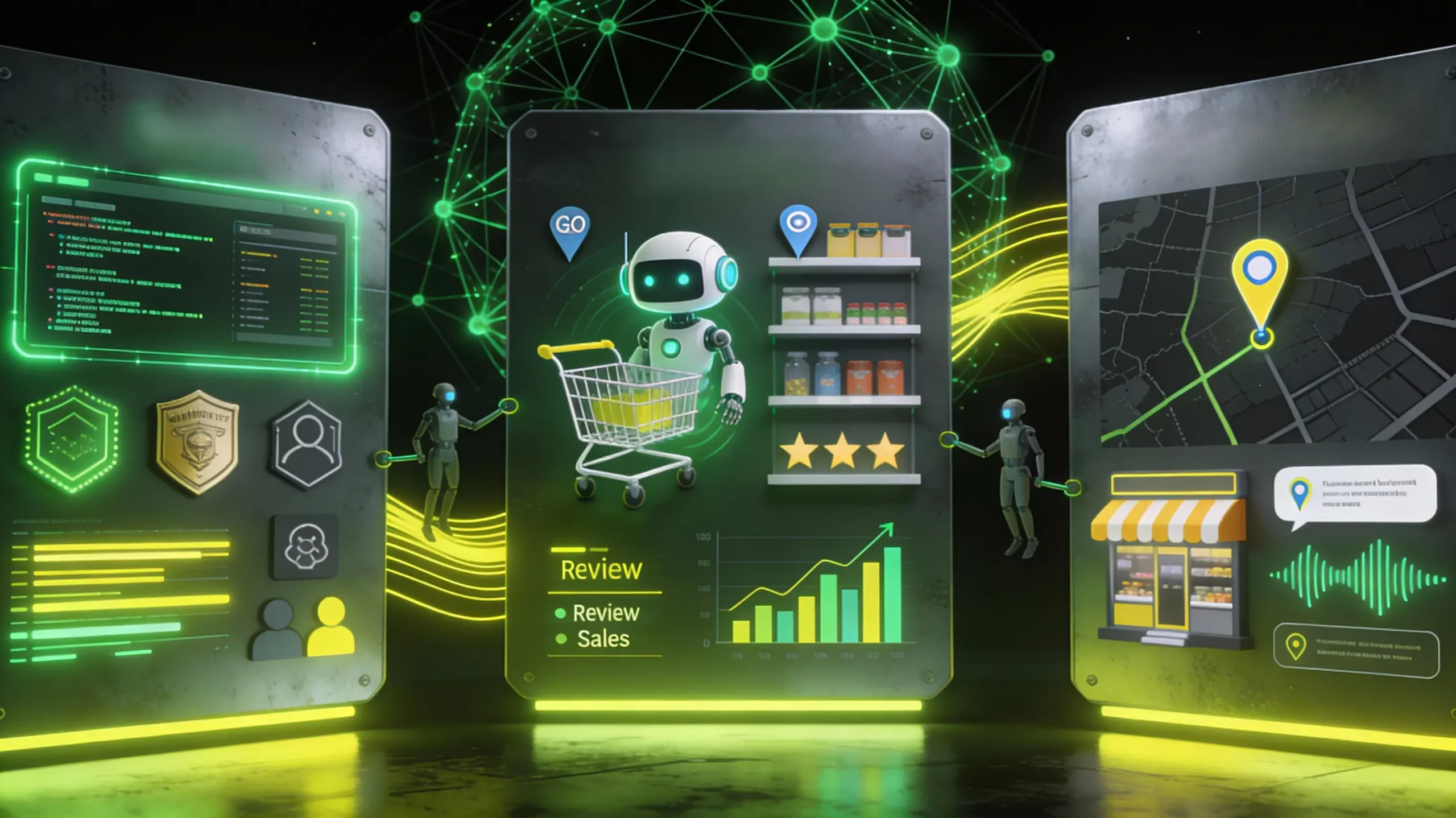
This guide breaks down industry-specific AI playbooks so you can implement the right strategy for your business in 2026. Whether you’re exploring the evolution of digital marketing for ecommerce or scaling through AI-powered channels, this playbook covers all angles.
Understanding AI Visibility Across Industries
AI visibility isn’t just about appearing in search results anymore. In 2026, it’s about being recommended by AI agents, chatbots, and recommendation engines. Your presence in answer engine optimization (AEO) platforms like ChatGPT, Perplexity, and Claude determines whether customers find you—or your competitor.
The shift from traditional search engine optimization to GEO (Google’s Generative Engine Optimization) means each industry must adapt. Understanding how search engine optimization works today is critical to competing in this new landscape where AI agents mediate discovery.
The SaaS AI Playbook for 2026
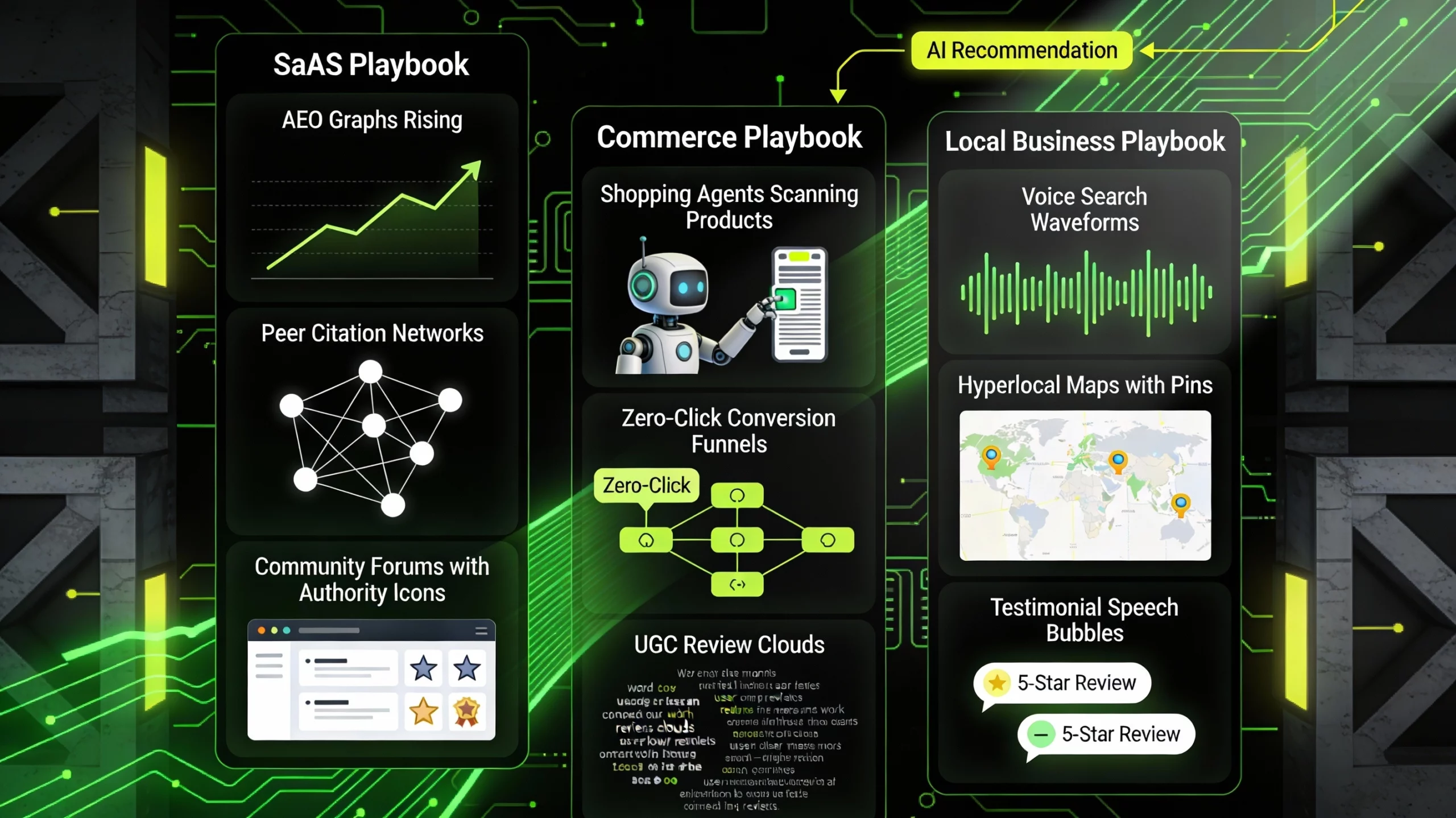
SaaS companies thrive on thought leadership and authority. In 2026, your AI visibility depends on three critical pillars:
1. Answer Engine Optimization (AEO) Dominance
SaaS buyers search for solutions using natural language queries. “How do I automate my sales pipeline?” triggers AI-powered responses. Your content must rank in answer engine optimization platforms by establishing expertise and authority on specific use cases.
The foundation for this success is building authority through thought leadership.
Create detailed solution guides, answer buyer questions directly, and position your team as industry experts. This is how AI systems learn to trust and recommend your content.
2. Building Authority Through Peer Citations
SaaS benefits from peer-reviewed content. AI-first search platforms prioritize sources cited across industry publications. Partner with analysts, contribute to industry reports, and get featured in authority-building platforms. When you’re cited by credible sources, AI systems recognize you as a trustworthy expert.
3. Community-Driven Content Strategy
Implement a comprehensive lead generation ecosystem strategy by building communities around your product. Host webinars, create case studies, and foster thought leadership that AI systems recognize as authoritative. This is where content, community, and conversion intersect for SaaS growth.
The Ecommerce AI Playbook for 2026
Ecommerce faces a different challenge: AI shopping agents are reshaping discovery. Brands must optimize for machine-readable product data and AI referral traffic. Your product feeds, descriptions, and reviews must be perfect because AI agents interpret them directly.
1. Optimize for Shopping Agents
AI agents now handle 40%+ of commerce discovery. Use structured data, rich descriptions, and customer testimonials that AI understands. Your product listings must speak the language of algorithms—clear, descriptive, and trustworthy.
2. Master Zero-Click and Direct Conversions
With zero-click search optimization, fewer users click through to your site. Instead, AI provides answers directly. Your ecommerce strategy must capture conversions within AI platforms themselves through shopping integrations and direct commerce features.
3. Leverage User-Generated Content for AI Trust
User reviews, ratings, and testimonials are gold for AI systems evaluating trustworthiness. Invest in review generation and EEAT (Experience, Expertise, Authority, Trust) signals within your product ecosystem. Fresh, authentic customer feedback signals quality to AI systems.
The Local Business AI Playbook for 2026
Local businesses benefit most from AI visibility through voice search and location-based AI agents. The challenge here is standing out in hyper-local searches where competition is fierce.
1. Dominate Voice and Location-Based Search
GEO optimization for local businesses means appearing in local AI searches: “Find a plumber near me.” Optimize your Google Business Profile, local keywords, and location-specific content understanding the role of branding in local business helps you differentiate in a crowded local market.
2. Build Hyperlocal Authority
Create content that positions you as the local expert. Participate in community initiatives, local partnerships, and leverage your lead generation ecosystem locally through grassroots engagement. Build relationships that establish authority signals AI systems recognize.
3. Encourage Customer Testimonials and Social Proof
Local AI searches prioritize recent testimonials and community trust signals. Actively gather reviews and create a feedback loop that establishes local authority and trust. For local businesses, reputation is everything—and AI systems are learning to measure it.
Unifying Principles Across All Industries
Regardless of your industry, three principles drive AI visibility in 2026:
- First: Optimize for AEO and GEO, not just traditional SEO
- Second: Build EEAT signals across all platforms
- Third: Create AI-first search content that answers questions directly, without requiring click-throughs
FAQs
Q1: What’s the difference between SEO and GEO?
SEO targets traditional search rankings; GEO targets AI-generated responses and answer engine results.
Q2: How do I track AI visibility?
Monitor mentions in ChatGPT, Perplexity, Claude; track AI referral traffic through UTM parameters; and measure citations in AI platforms.
Q3: Is my industry better suited for AEO or GEO?
SaaS excels with AEO (authority-driven). Ecommerce thrives with GEO (product-driven). Local business wins through localized AI-first search.
Q4: How long does it take to see AI visibility results?
4-6 months for AEO platforms to index and recommend your content; 6-12 months for sustained AI visibility growth.
Q5: Can I use the same content for SEO, AEO, and GEO?
Partially. Optimize the foundation for AEO and GEO first, then repurpose for traditional SEO through multiple channels.
