



Why Google Isn’t Enough Anymore
In 2025, search is everywhere. Users ask ChatGPT for advice, pull up Perplexity for instant research, and scroll LinkedIn, Reddit, or TikTok for answers. Google remains important—but it’s no longer the single gateway to online discovery.
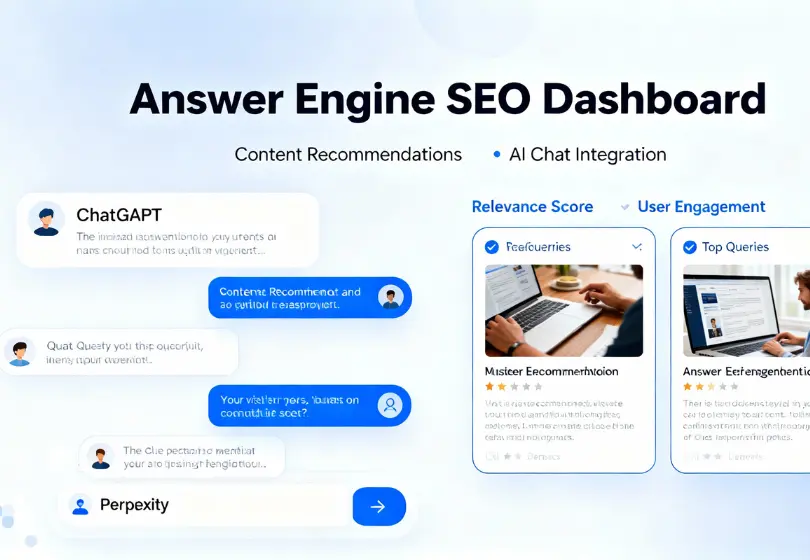
AI-powered answer engines have ushered in a new era of search. Instead of users wading through links, they simply ask, and the AI delivers a synthesized answer—often citing its sources. For brands and agencies, this means classic SEO tactics aren’t enough. Now, getting cited and noticed by these answer engines is the new battleground known as Answer Engine Optimization (AEO).

What Sets Answer Engines Apart
Unlike traditional search engines (Google, Bing), answer engines like ChatGPT, Perplexity, and Claude work differently:
- Traditional search: You see a ranked list of web links. You pick what to open.
- Answer engines: You ask a question, the AI returns a direct answer, often with cited sources, and most users never click a link.
Your objective shifts from simply ranking high, to being the trusted source an answer engine cites in its response.
Key Answer Engine Platforms
- ChatGPT / SearchGPT: Web-enabled ChatGPT references Bing’s top results, heavily weighing domain authority. About 87% of citations match Bing’s first 20 results.
- Perplexity AI: AI-native, it values freshness, real-time data, and thoroughness. 39% of businesses are already optimizing for Perplexity.
- Claude & others: More AI models (Anthropic, Cohere, Mistral) are rolling out search capabilities. Expect even broader content scanning soon.
Bottom line: Being noticed by these engines now is a critical channel for thought leadership and client acquisition.
How to Get Your Content Cited by Answer Engines
Recent studies of millions of AI citations reveal what matters most:
- Domain authority wins: High-trust sites get cited more, even over well-written new pages.
- Organic traffic helps (at scale): Once a site hits strong organic traffic, citation numbers climb.
- Homepage power: Engines prefer brands whose main site is strong, not just single pages.
- Traditional SEO assists: Top Google/Bing positions remain strong predictors of AI citations.
- Freshness is rewarded: Updated, recent content (especially for Perplexity) surfaces faster.
- Natural structure beats keyword-stuffing: Clarity, broad topic URLs, and plain-English titles perform better.
Actionable Steps for AEO Success
1. Build a Trusted, Authoritative Domain
- Secure quality backlinks from relevant, reputable sites.
- Publish consistently on focused topics to demonstrate expertise.
- Maintain editorial standards, accuracy, and transparency.
2. Produce Citation-Worthy Content
- Lead with clear answers—summarize in the first paragraph.
- Use FAQs, lists, headings, tables—easy for AIs to extract and cite.
- Feature original research, data, and expert insights.
- Regularly update posts with new stats and use cases.
3. Optimize for Each Platform
- For ChatGPT: Focus on Bing/Google authority and clear HTML.
- For Perplexity: Update content often, dive deep on topics, cover multiple perspectives.
- Use hub pages and pillar content that answer full context—not just surface-level details.
4. Establish EEAT Signals
- Add author bios with real credentials.
- Use consistent tone and high-quality visuals.
- Show transparency—link sources, include data, cite reputable third parties.
5. Distribute on Influential Channels
- Share on Reddit, LinkedIn, X, and industry communities (AI scrapes and learns from these).
- Get coverage in newsletters, roundups, and podcasts—AIs scan prominent content.
- Build your email audience for instant traction.
Why Early AEO Moves Matter Most
Most brands are still focusing on standard SEO. Those who start AEO now can:
- Secure keywords like “answer engine optimization” and “Perplexity SEO.”
- Become a go-to citation for questions about ChatGPT/Perplexity rankings.
- Attract modern, technically-savvy clients seeking results beyond Google.
The New Reality: Multi-Channel Search
Consumers are already searching on Google, ChatGPT, Perplexity, Reddit, and TikTok. AEO is not replacing SEO—it’s the next layer to drive visibility in these new, user-first search environments.
Agencies and brands who master AEO get cited, trusted, and seen—across all the channels that matter. Those who ignore it risk becoming invisible in the places where the most curious and valuable users are searching.
