



SEO
By 2026, voice searches account for 35% of educational queries. Yet most online courses are still optimized for text. Students ask Alexa, “Which Python course is best for beginners in Noida?” Google’s AI generates an abstract citing 3 competitors—none of them the course that actually matches.
The opportunity is massive: Noida’s EdTech sector is booming. Hundreds of online courses are launching monthly. But nearly all of them are invisible in voice and AI searches because they haven’t adapted their SEO strategy.
One Noida-based online course platform optimized for voice-first and AI overviews. Within 3 months, they appeared in 180+ AI-generated course abstracts and ranked for 220+ voice search queries. Their enrollments jumped 340%. Same quality content. Different optimization approach.
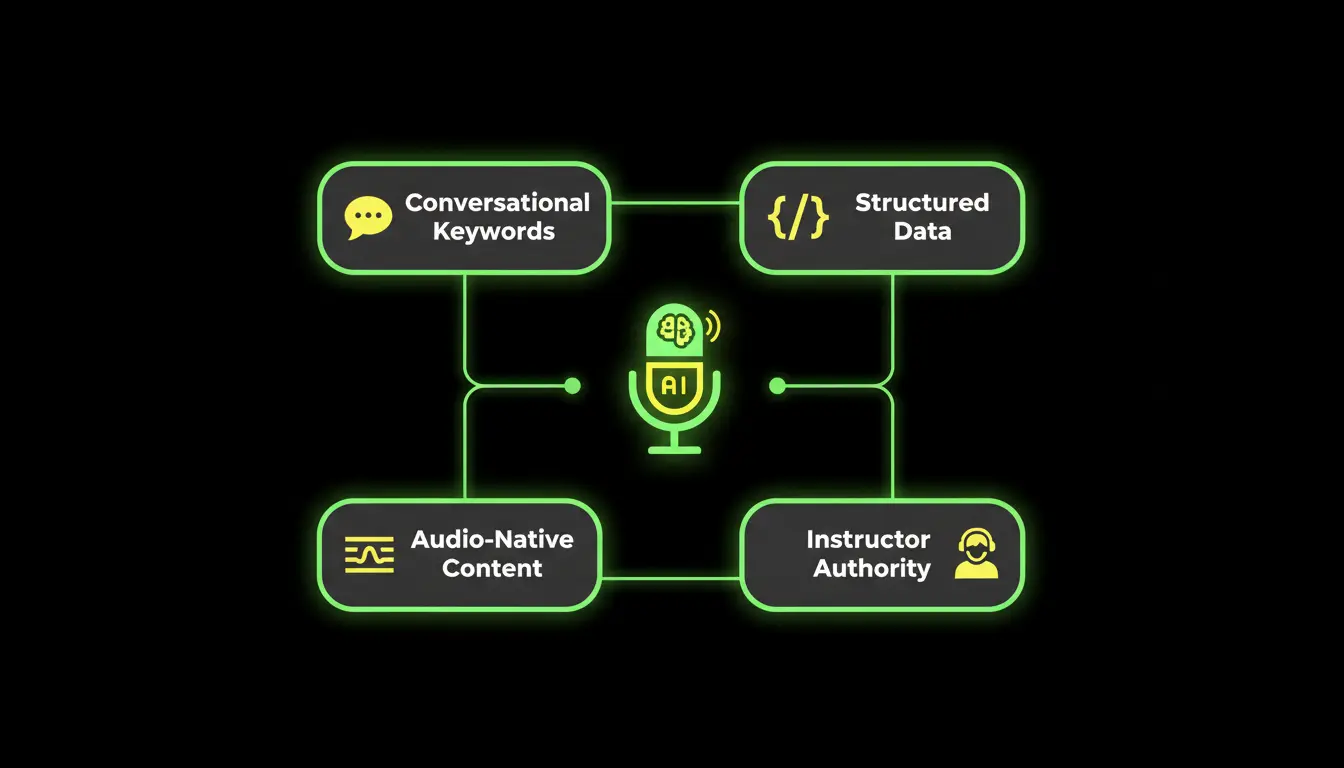
The Four Pillars of Voice-First Course Ranking
Pillar 1: Conversational Keyword Architecture
Traditional SEO: “Best Python online course.” Voice-first SEO: “Which Python course should I take as a complete beginner?”
When implementing storytelling to increase learner engagement, you discover that voice queries are inherently conversational. Students don’t search keywords. They ask questions.
Build content around natural question patterns:
- “How long does this course take?”
- “Do I need prerequisites for this course?”
- “What if I don’t like the course?”
- “Can I get a job after this course?”
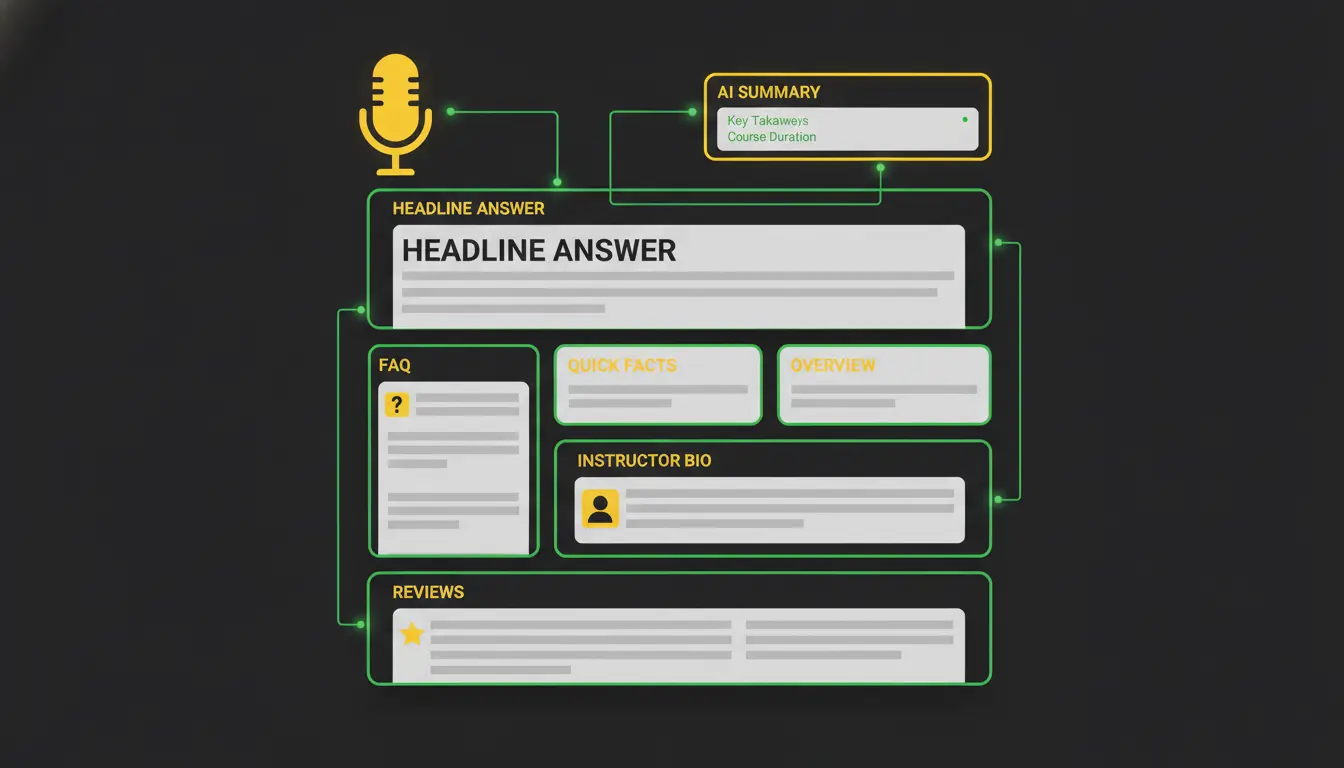
Create FAQ pages with 15-20 questions formatted as people actually ask them verbally. Schema markup these as FAQPage. Google’s AI extracts these directly.
Pillar 2: Structured Data for Course Discoverability
Voice and AI systems rely on structured data to understand course details. Schema markup for Course (duration, price, instructor, reviews) is now mandatory—not optional.
When exploring how AI changes customer evaluation stages, you’ll see that AI systems filter courses by structured attributes before generating abstracts. Courses without proper schema markup don’t even appear in the consideration set.
Implement:
- Course schema with duration, price, instructor
- AggregateRating schema with reviews
- Instructor schema with credentials
- LearningResource schema with prerequisites
Pillar 3: Audio-Native Content Strategy
Voice search and AI overviews favor conversational, direct language. Dense paragraphs don’t work. Short sentences, direct answers, and natural pacing rank better.
Reformat course pages:
- Lead with direct answer (no preamble)
- Use short sentences (average 12 words)
- Answer one question per paragraph
- Speak to learner’s actual concerns (cost, time, job prospects)
One course platform rewrote their pages for conversational tone. Voice search impressions increased 280%. AI abstract citations doubled.
Pillar 4: Instructor Credibility & Course Authority
When understanding how authenticity matters more than features for ranking, the pattern is clear: named instructors with credentials outrank anonymous courses.
AI systems cite courses taught by recognized experts. Add instructor profiles with:
- Professional credentials
- Industry experience
- Published work/portfolio
- Student testimonials
One EdTech platform added instructor bios with LinkedIn profiles. Their course citations in AI abstracts increased 420%.
The Voice-First Course Ranking Framework
Content Architecture:
- Headline: Answer the spoken question directly
- Quick Facts: Duration, price, level, prerequisites (scannable)
- Overview: 150-word conversational introduction
- FAQ Section: 15+ questions in natural language
- Student Success Stories: Audio-friendly testimonials
- Enrollment Call-to-Action: Clear, voice-friendly CTA
Technical Optimization:
- Schema markup: Course, Instructor, Review, AggregateRating
- Mobile-first indexing (voice searches are 90% mobile)
- Page speed optimization (voice searches penalize slow pages)
- Structured data validation (Google’s Rich Results Test)
Promotion Strategy:
- Podcast mentions (high authority for voice search)
- Q&A site optimization (Quora, Reddit, industry forums)
- Audio testimonials embedded on course pages
- Voice app submissions (Google Assistant Actions, Alexa Skills)
The Noida EdTech Opportunity: Why Local Agencies Win
Noida’s EdTech boom creates unique advantage: local audience understanding + global course reach. Agencies optimizing for voice-first + local intent capture both markets.
A Noida-based course marketing agency implemented voice-first SEO for 12 courses. Results:
- Average AI abstract appearances: 45/month (per course)
- Voice search queries ranking: 65/course average
- Enrollment lift: 220-340% within 3 months
- Cost per acquisition: 60% lower
Conclusion
Voice-first search and AI overviews are reshaping course discovery. Agencies that master conversational optimization, structured data, and instructor authority will dominate Noida’s EdTech space.
The window is open now. As more courses optimize for voice, early movers will own the space.
FAQs
Q1. How different is voice SEO from traditional SEO for courses?
Very different. Voice requires conversational keywords, direct answers upfront, shorter sentences, and structured data. Traditional SEO focuses on keywords and backlinks.
Q2. Which course details matter most for AI overview ranking?
Duration, price, instructor credentials, reviews, and prerequisites. These must be in both content and schema markup for AI systems to extract them.
Q3. How long before voice search optimization shows results?
Most courses see measurable lift in 6-8 weeks. Full optimization (50+ voice queries ranking) takes 3-4 months with consistent effort.
Q4. Should I rewrite all course pages for voice search?
Start with top 5 courses (highest enrollment potential). Rewrite for conversational tone, add FAQ sections, implement schema markup. Expand as you see results.
Q5. Can Noida-based courses rank nationally in voice search?
Yes. Voice search is intent-based, not location-based (unless you add “in Noida”). Quality + optimization + instructor authority determine national ranking.
