



Lowering cost per acquisition (CPA) while improving ROI is the ultimate goal for every business running digital ad campaigns in 2026. By implementing targeted optimization strategies across your campaigns, landing pages, and conversion funnels, you can significantly reduce acquisition costs and maximize profitability.
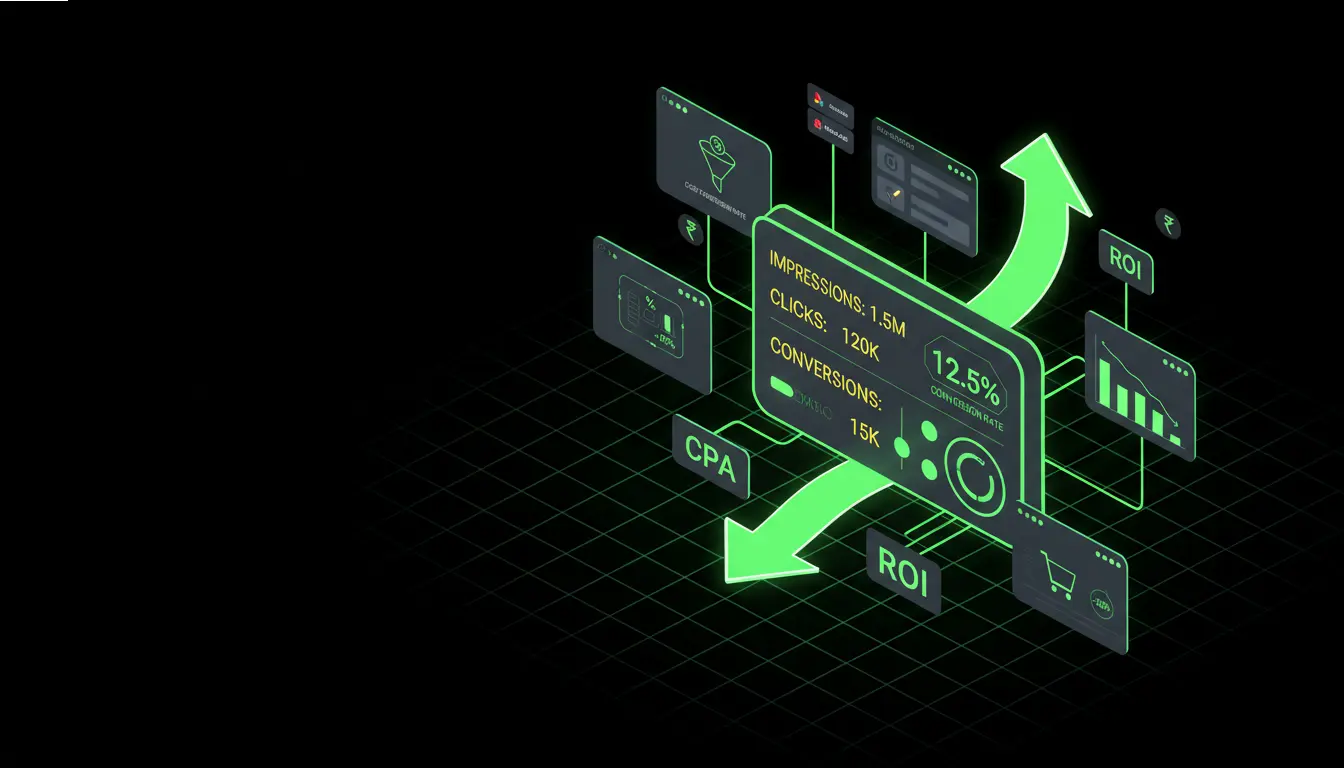
Optimize your targeting and audience segmentation
Precise audience targeting ensures your ad spend reaches high-intent prospects who are most likely to convert, reducing wasted impressions and clicks.
Focus on high-performing audience segments by analyzing your campaign data to identify demographics, locations, and interests that deliver the lowest CPA and highest conversion rates. For Indian businesses, this might mean targeting young professionals in metro cities like Noida, Delhi, or Bangalore who show higher engagement with digital marketing campaigns.
Use negative keywords strategically to prevent your ads from showing for irrelevant searches, and prioritize transactional keywords like “buy,” “discount,” or “booking” that indicate purchase intent. This approach ensures every rupee spent targets users ready to take action, directly lowering your acquisition costs.
Improve landing page experience and conversion rates
Your landing page is where conversions happen—optimizing it can dramatically reduce CPA without increasing ad spend.
Run continuous A/B tests on headlines, call-to-action buttons, form fields, images, and page layouts to identify what drives the highest conversion rates for your Indian audience. Even small improvements—like reducing form fields from 8 to 3, or adding social proof testimonials—can boost conversions by 20-40%.
Ensure your lead generation ecosystem includes high-quality landing pages that match ad messaging, load in under 3 seconds, and are fully mobile-optimized since over 70% of Indian users browse on smartphones. Include clear value propositions, trust signals, and localized content that resonates with your target market.
Leverage smart bidding and budget allocation
AI-powered bidding strategies and strategic budget shifts can optimize spend toward your best-performing campaigns.
Use Google’s Smart Bidding or Meta’s automated bid strategies to adjust bids in real-time based on conversion likelihood, ensuring you pay the optimal amount for each click. These tools use machine learning to identify patterns that manual bidding might miss, often reducing CPA by 15-30%.
Allocate more budget to campaigns, ad groups, and keywords delivering strong ROAS (return on ad spend) or low CPA, while reducing or pausing underperforming segments. For Google Ads management, this means continuous monitoring and swift adjustments to capture maximum value from every campaign.
Enhance remarketing and retargeting strategies
Retargeting allows you to re-engage visitors who didn’t convert on their first visit, typically at a fraction of the cost of new customer acquisition.
Create segmented retargeting audiences based on behavior—cart abandoners, product viewers, and past purchasers each require different messaging and offers. Use dynamic product ads on Meta and Google Display to show personalized content based on what users previously viewed.
Retargeting campaigns typically deliver 2-3x higher conversion rates at 50% lower CPA compared to cold prospecting, making them essential for performance marketing agencies focused on maximizing client ROI. Combine email retargeting with ad retargeting for a multi-touch approach that keeps your brand top-of-mind.

Track, measure, and optimize continuously
Comprehensive tracking and regular optimization based on performance data are essential for sustained CPA reduction and ROI improvement.
Set up proper conversion tracking using Google Analytics 4, Meta Pixel, and CRM integrations to accurately measure which campaigns, ads, and keywords drive actual sales or qualified leads. Without accurate tracking, you’re optimizing blind and potentially wasting budget on channels that don’t convert.
Review campaign performance weekly, testing new ad variations, adjusting bids on high-performers, and eliminating keywords or placements that consistently deliver high CPA with low conversion quality. This continuous optimization cycle ensures your campaigns stay efficient as market conditions and audience behavior evolve.
FAQ’S
What is a good CPA for digital marketing campaigns in India?
A good CPA varies by industry, but aim for a ratio where customer lifetime value is at least 3x your acquisition cost.
How quickly can I reduce my CPA?
With proper optimization, you can see 15-30% CPA reduction within 30-60 days through landing page improvements, better targeting, and smart bidding.
Which performs better: Google Ads or Meta Ads for lower CPA?
Google Ads typically delivers better results for high-intent searches, while Meta Ads excels at awareness and retargeting; use both strategically.
Should I focus on CPA or ROAS?
Both matter—CPA measures efficiency, while ROAS measures profitability; optimize for the metric that aligns with your business goals.
How does conversion rate optimization affect CPA?
Improving conversion rate directly lowers CPA without increasing ad spend; a 2x conversion improvement cuts CPA in half.
