



Carousel posts have emerged as Instagram’s most powerful organic reach driver in 2026, delivering 10% average engagement rates compared to 7% for single images and 6% for Reels—yet most brands still underutilize them. With Instagram’s algorithm now favoring carousels through unique “second chance” distribution and extended impression opportunities, understanding carousel SEO has become essential for brands seeking sustainable organic growth.
Why carousel posts dominate Instagram’s algorithm
Instagram’s AI-powered ranking system prioritizes content that keeps users engaged longer, and carousel posts naturally excel at this metric by encouraging multiple swipes and extended viewing time. When users scroll past a carousel without engaging, Instagram automatically reshows the post later with slide two displayed first—effectively giving your content double exposure opportunities without additional posts.
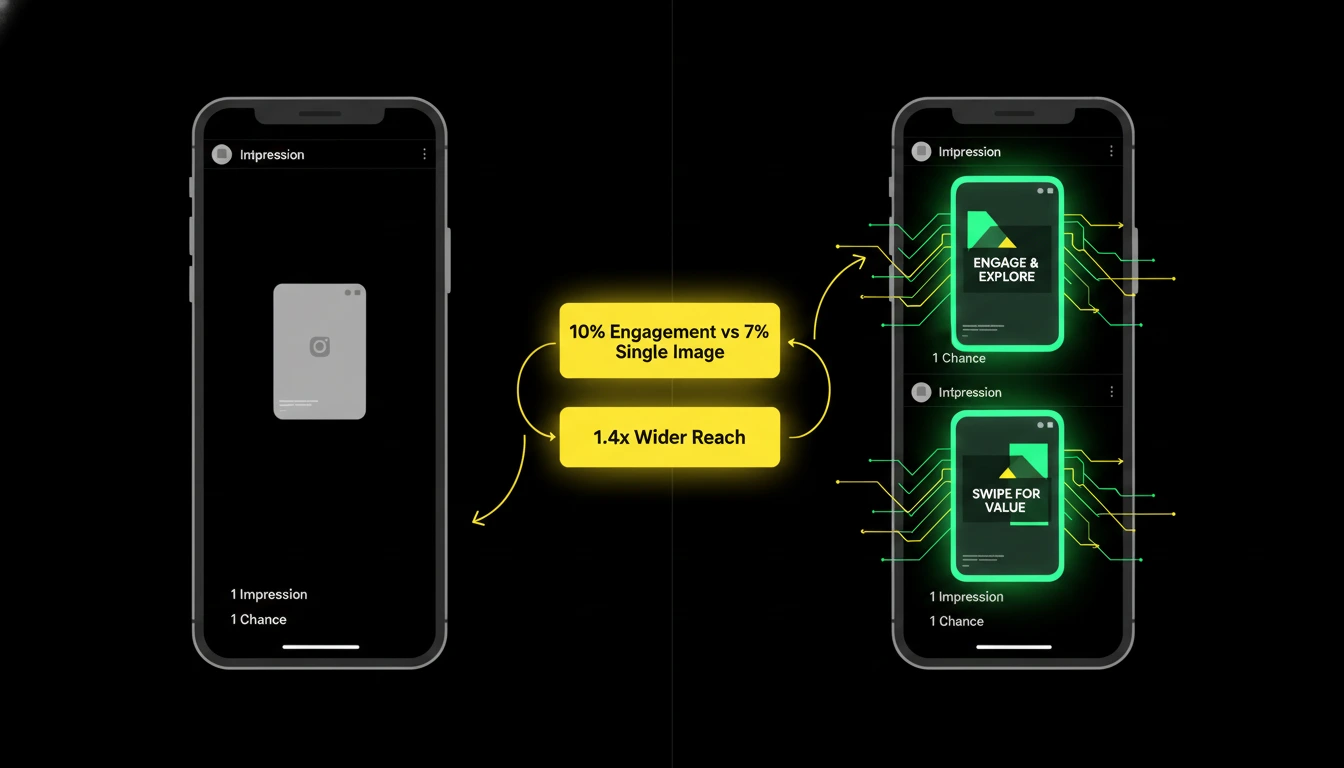
This “second chance algorithm” mechanism, confirmed by Instagram, explains why carousels generate 2x more saves than single posts and achieve 1.4x wider reach with 3.1x higher engagement rates compared to static images. The ranking advantage is measurable: carousel exit rates stabilize around 15% by slide four, while optimal sequences of 6-10 slides maintain viewer attention and signal high-quality content to Instagram’s AI.
For brands working with social media agencies in Delhi NCR, carousel optimization has become a core strategy for maximizing organic reach without paid promotion.
Core carousel SEO optimization strategies
Effective carousel SEO combines visual storytelling, keyword optimization, and algorithmic understanding to maximize discoverability and engagement.
Hook viewers in the first three slides—Your opening slide must promise value that requires swiping to receive, using compelling headlines, bold visuals, or curiosity gaps that incentivize continued engagement. Think “10 Marketing Mistakes Costing You Clients” or “The Real Reason Your Ads Don’t Convert” with subsequent slides delivering on that promise through actionable insights.
Optimize captions like mini blogs—Place primary keywords in the first sentence of your caption, write detailed descriptions that provide context, and include natural keyword variations that help Instagram’s AI understand your content topic and target audience. For example, a digital marketing agency showcasing campaign results might use captions starting with “Performance marketing strategies that generated 5x ROI for Delhi NCR brands.”
Add searchable on-slide text—Include clear, readable phrases people actually search for directly on your carousel slides: “Instagram growth checklist,” “ROI tracking template,” or “Content calendar framework.” This text helps both users and Instagram’s visual recognition systems understand your content, improving discoverability in search and Explore feeds.
Manually write alt text—While often overlooked, alt text provides accessibility and clarity for Instagram’s AI to comprehend image content, improving recommendation accuracy and search visibility.
Carousel content formats that drive saves and shares
The most successful carousels in 2026 deliver genuine value that users want to reference repeatedly, triggering Instagram’s highest-value engagement signals: saves and shares.
Educational guides and step-by-step tutorials perform exceptionally well—”7 Steps to Launch Your First Ad Campaign,” “Complete Guide to Instagram Analytics,” or “How to Write Converting Sales Pages.” These formats position your brand as an authority while providing bookmark-worthy content users return to when implementing strategies.
Data visualizations, stat compilations, and research findings also drive saves because they present complex information in digestible visual formats that serve as reference materials. Before-and-after transformations, case study breakdowns, and results-focused carousels build credibility while showcasing tangible outcomes.
Brands exploring SEO trends 2026 should recognize that carousel SEO shares fundamental principles with broader search optimization: value-first content, clear topic authority, and user-centric design that prioritizes audience needs over algorithmic manipulation.
Building carousel strategy for maximum ROI
Strategic carousel implementation requires consistent publishing, performance tracking, and format diversification that balances discovery with engagement.
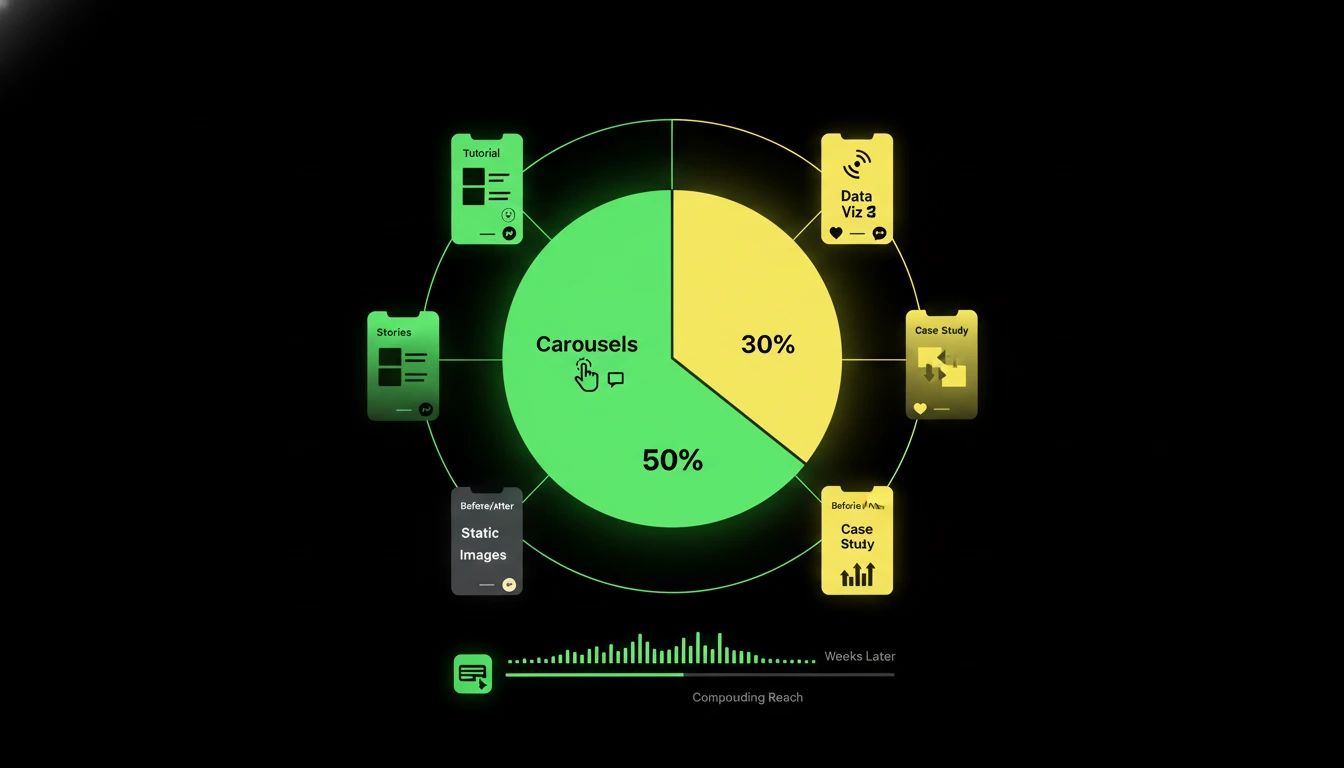
Allocate 40-60% of your content strategy to carousels given their superior engagement metrics, while using Reels for discovery and reaching new audiences, Stories for relationship building with existing followers, and static images sparingly to pace your feed. Repurpose high-performing Reels into step-by-step carousel guides to extend content lifespan and maximize value from successful creative concepts.
Track engagement rate, save rate, and reach per carousel to identify which topics, formats, and slide counts perform best for your audience. Test different carousel lengths—while 6-10 slides work for most content, comprehensive guides extending to 13+ slides can achieve peak reach when value justifies length.
For businesses investing in social media marketing, carousel mastery offers cost-effective organic reach that compounds over time as saved posts continue generating impressions long after publication.
FAQ’S
1. Why do carousel posts outperform Reels for engagement in 2026?
Carousels average 10% engagement versus 6% for Reels because they encourage multiple interactions per post and benefit from Instagram’s “second chance” redistribution algorithm.
2. What’s the optimal carousel length for maximum reach?
6-10 slides perform best for most content, with peak reach observed around slide 13 for comprehensive guides that maintain value throughout.
3. How does carousel SEO differ from traditional Instagram optimization?
Carousel SEO emphasizes swipe-through rates, time spent per post, saves, and multi-slide storytelling versus single-image focus on immediate visual impact.
4. Should brands prioritize carousels over Reels?
Use both strategically—Reels for new audience discovery and carousels for deeper engagement with existing followers, with carousels comprising 40-60% of content.
5. How do I track carousel performance effectively?
Monitor engagement rate, save rate, reach, and swipe-through percentages using Instagram Insights, comparing performance across different topics and formats.