



From Passive Audiences to Active Advocates: The Seismic Shift
By mid-2025, the fundamental equation of brand growth changed. Traditional marketing assumed a one-way relationship: brands broadcast messages to passive audiences. But in 2026, the winners are brands that have flipped this model entirely. They’ve built communities where customers become advocates, organic reach replaces paid spend, and word-of-mouth compounds faster than any algorithm.
The data is unambiguous: brands with engaged communities see 3.5x higher retention rates, 2.8x faster customer acquisition, and 5.1x better lifetime value. One community-first brand reported that 67% of new customers came through member referrals—not ads, not influencers, not organic search. Just advocates who loved them so much they couldn’t stop talking about them.
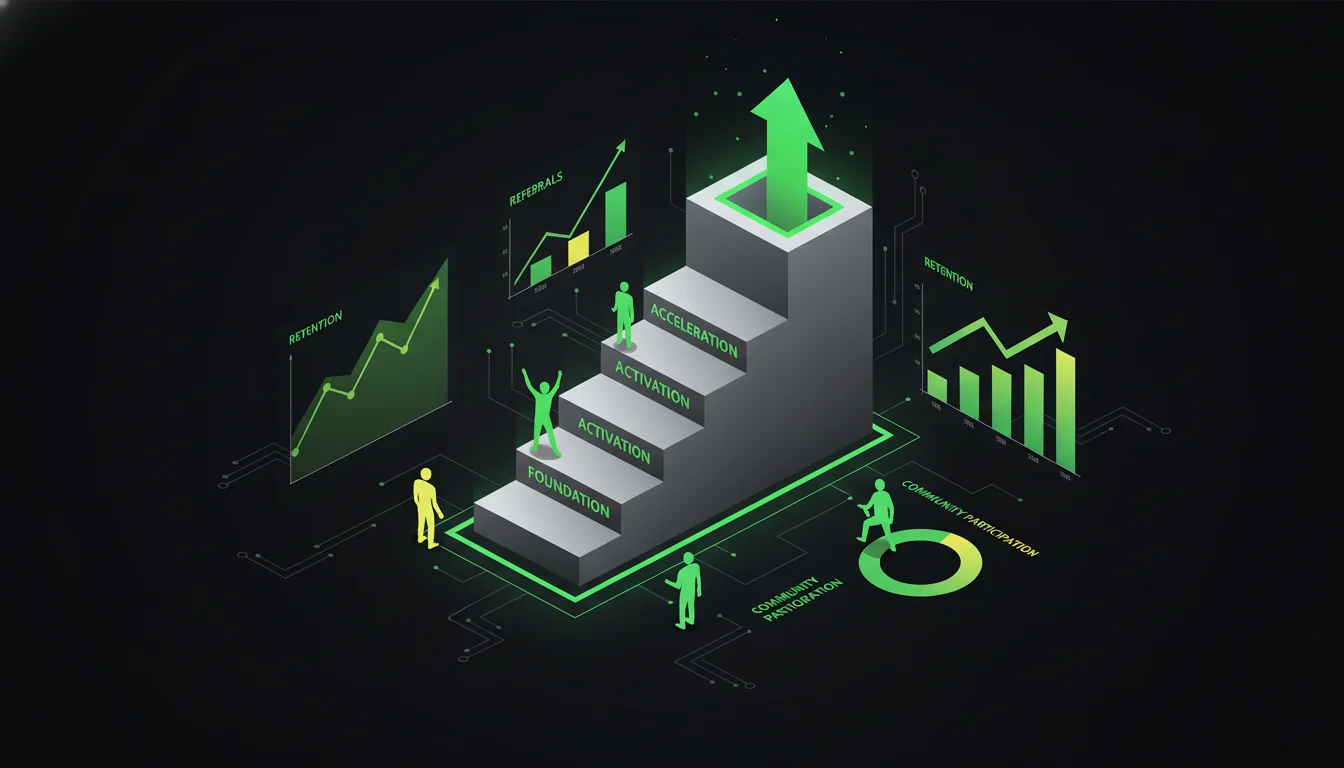
Community-led growth isn’t new. But the shift from “nice to have” to “survival essential” is. By 2026, brands that haven’t built community infrastructure will find themselves fighting a losing battle against competitors who have turned their customer base into an unstoppable growth engine.
The Four Pillars of Community-Led Growth
Pillar 1: Belonging (The Foundation)
Before anyone advocates for your brand, they need to feel they belong. This isn’t about loyalty programs or transactional rewards. It’s about creating a space where people with shared values, interests, or problems gather—and your brand is the facilitator, not the star.
Peloton didn’t build a fitness brand. They built a community of people obsessed with the ritual of working out together. Their community members don’t just buy bikes; they define themselves by their Peloton identity. That’s belonging.
The key: create spaces where your community talks to each other, not just to you. Discord servers, Slack communities, private Facebook groups, or dedicated platforms work best. One SaaS company reported that 78% of churn came from customers who never participated in the community—they existed in isolation.
Pillar 2: Purpose (The Glue)
Advocates advocate for something, not just someone. Your community needs a shared mission beyond “buy our product.”
When exploring branding vs marketing, you’ll discover that purpose-driven brands attract community members who become missionaries. They have a reason to show up, contribute, and recruit friends.
A productivity tool built community around “reclaim your time”—not “use our software.” Members shared time-saving tips, debated productivity philosophies, and celebrated wins together. The product was secondary to the mission.
The key: articulate why your community exists beyond your business. What problem are you collectively solving? What future are you building together?
Pillar 3: Participation (The Multiplier)
A passive community is dead. Advocates emerge from active participation—when members create content, answer each other’s questions, host events, and shape the community’s direction.
The most thriving communities have a participation curve: 90% consumers (watching), 9% contributors (commenting, posting), 1% creators (hosting events, building resources). But that 1% drives exponential growth because their content reaches the 90%.
One community-first brand reported that members who posted just once saw 23x higher lifetime value than silent members. Participation isn’t about vanity metrics. It’s about ownership.
The key: design systems that make participation frictionless. Reward members for contributions. Highlight creator voices. When someone feels seen and valued, they become a permanent advocate.
Pillar 4: Co-Creation (The Acceleration)
The ultimate community-led growth move: let your community shape your product, content, and direction. This isn’t a focus group. This is genuine co-ownership.
Brands leveraging lead generation ecosystems that include community-driven product development see 2.3x faster feature adoption and 4x higher referral velocity. Why? Because members feel invested in the product’s success.
Figma built massive community power by letting users create plugins, templates, and extensions. Their community became their distribution channel.
The key: open decision-making processes. Let your community vote on features, suggest improvements, and contribute ideas. When members see their feedback implemented, loyalty compounds.
From Audience Metrics to Advocate Metrics
Traditional brands measure success by impressions, reach, and follower counts. Community-led brands measure differently.
Old Metrics (Audience-Focused): Followers, likes, shares, click-through rates, email open rates, conversion rates.
New Metrics (Advocate-Focused): Member retention rate, net promoter score (NPS), referral conversion rate, user-generated content velocity, community contribution rate.
One brand discovered their 10,000 Twitter followers drove 2% of revenue. Their 2,000-person Discord community drove 67% of revenue. The Discord members were advocates. The Twitter followers were mostly noisy.
The shift requires patience. Community growth is slower initially but compounds faster long-term. A brand investing in a community for 6 months might see 0 revenue impact. By month 18, they’re seeing 40% of new revenue from referrals. By month 36, community becomes their primary growth channel.
The Three Phases of Community-Led Transformation
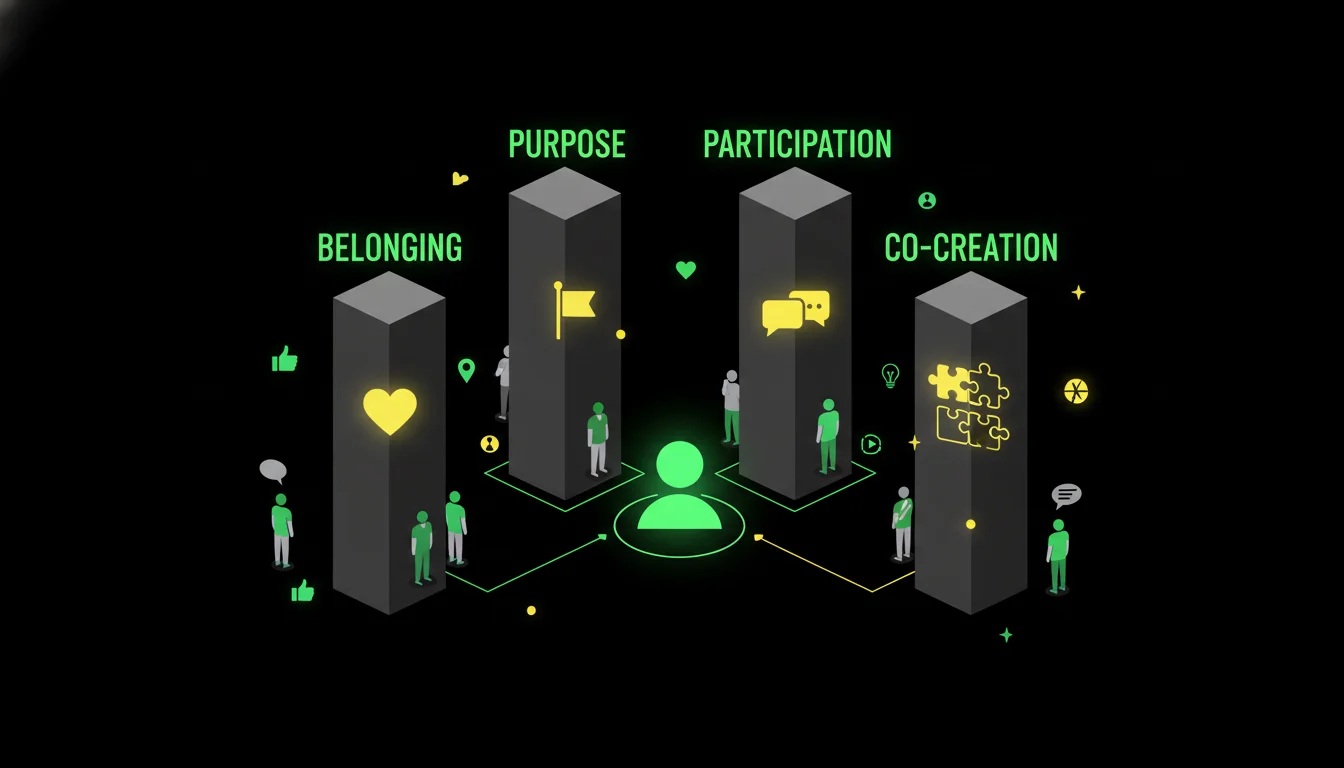
Phase 1: Foundation (Months 1-6)
Identify your most passionate customers, create a private community space (Discord, Slack, Mighty Networks), establish rituals, and start with 50-100 founding members. Success looks like 60%+ monthly participation, members recruiting their peers, meaningful conversations without brand prompts.
Phase 2: Activation (Months 7-12)
Launch creator programs, host member-led events, build feedback loops into product development, establish metrics dashboards, and scale to 500-2,000 active members. Success looks like user-generated content outpacing brand content, members answering each other’s questions, referral data becoming visible.
Phase 3: Acceleration (Month 13+)
Transition to community-led content, launch ambassador programs, open product roadmaps to community voting, build member resource marketplaces, and scale to 5,000+ members. Success looks like community driving 30-50% of new customer acquisition, exponential referral velocity.
The Reality Check: What Kills Community
Most brands fail at community not because the idea is wrong, but because they misunderstand the commitment. Community requires full transparency, genuine care, active moderation, serious resource allocation, and long-term thinking. Brands expecting immediate ROI will abandon the community after 3 months. Brands willing to invest 12-18 months before seeing major returns will win.
The brands that survive 2026 won’t be the loudest in the feed. They’ll be the ones whose customers can’t stop talking about them.
Essential Tools & Practitioner Playbook
Community Infrastructure: Discord, Slack, Mighty Networks, Orbit (analytics), Zapier (CRM integration), Airtable (dashboard).
Engagement Tools: Gamification platforms, recognition programs, Hoping for events, Circle for resource libraries.
Measurement: Invest in community analytics from day one. Track participation rates, retention cohorts, NPS trends, and referral velocity.
Conclusion
Community-led growth isn’t a marketing trend. It’s the permanent shift from acquisition-centric to retention-centric business models. Brands betting on community in 2026 are building moats that competitors can’t easily replicate.
The question isn’t whether to build community. It’s whether you can afford to wait. Garage Collective helps brands architect community-led growth strategies—from founding member recruitment to advocate activation to scaling referral loops that fuel sustainable growth.
FAQ’S
Q1. How do I recruit my first 100 community members?
Identify your most passionate customers from existing revenue data, reach out directly, offer early access or exclusive perks, and launch a private community before going public.
Q2. What’s the difference between a community and a customer group?
Communities have member-to-member relationships and shared purpose beyond the product; customer groups are transactional and brand-focused.
Q3. How long before community becomes a growth lever?
Most brands see meaningful referral velocity after 12-18 months of consistent investment and 1,000+ active members.
Q4. How do I prevent the community from becoming toxic?
Establish clear values, hire active moderators, remove bad actors quickly, and recognize positive behavior consistently.
Q5. What’s the ROI on community investment?
Community-first brands report 35-60% of new revenue from referrals within 24 months, with 3.5x higher customer lifetime value versus acquisition-only brands.
