



Technology
The marketing landscape in 2026 demands a new breed of professional—one who combines deep domain expertise with AI fluency to deliver measurable results at scale. While generalists still have a place, AI-specialist marketers who master specific competencies like prompt engineering, autonomous campaign optimization, and AI-led content production are becoming the most valuable assets in modern agencies.
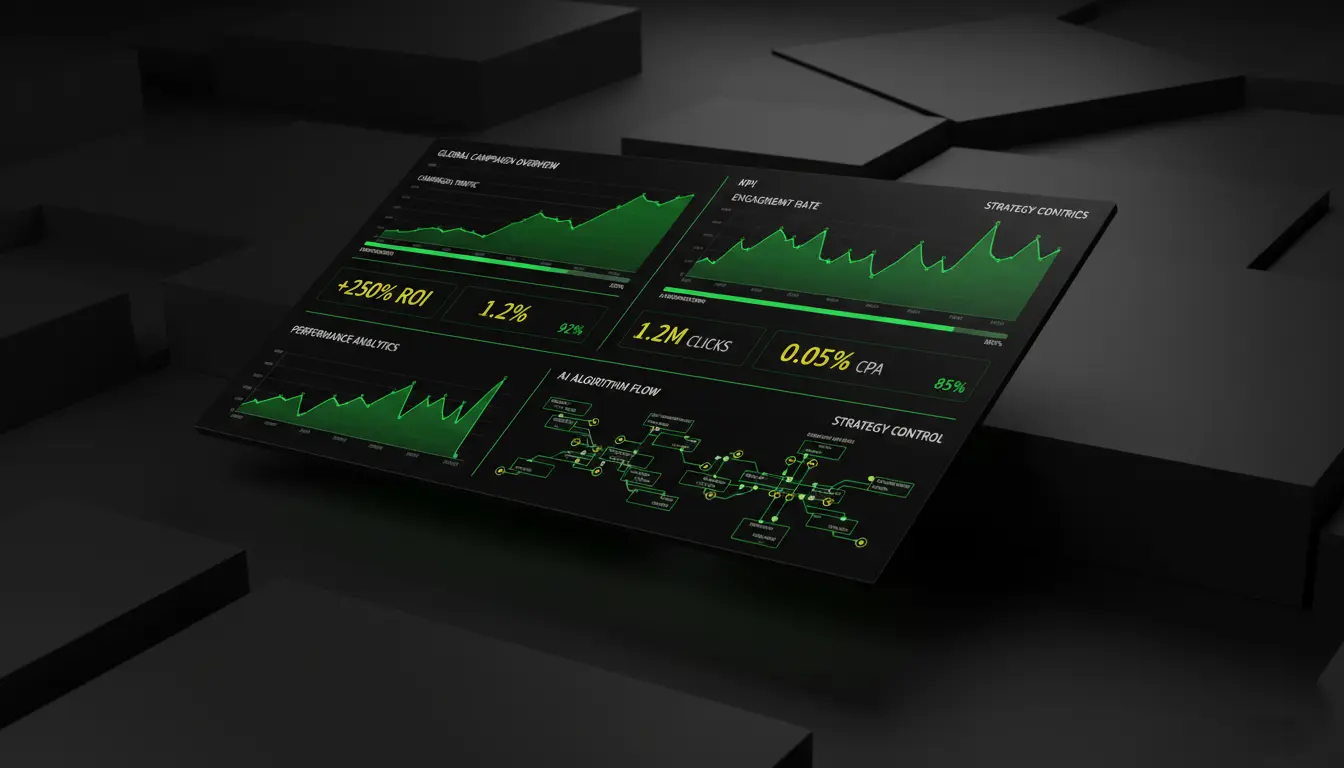
The shift from generalist to AI-empowered specialist
For decades, marketing favo red generalists who could handle multiple channels and wear many hats across content, paid media, SEO, and social. However, AI tools have democratized execution—anyone can now generate content, design ads, or build basic campaigns using ChatGPT, Canva AI, or Meta Advantage+.
What AI cannot replicate is strategic expertise grounded in real experience, industry knowledge, and the ability to orchestrate AI systems toward business outcomes. As highlighted in Garage Collective’s blog on AI transforming creative agencies, AI enhances creativity and productivity but human strategists define the vision, tone, and brand storytelling that drive impact.
The winners in 2026 are specialists who deeply understand one or two marketing domains—performance marketing, SEO, content strategy, or brand positioning—and augment their expertise with AI to execute faster, test smarter, and scale efficiently.
Core AI competencies every marketing specialist needs
To remain competitive, marketing experts must develop a focused set of AI-driven competencies that elevate their domain expertise.
- Prompt engineering and tool fluency: Mastering prompts across ChatGPT, Claude, Gemini, and Midjourney allows specialists to generate high-quality outputs aligned with brand and strategy.
- Answer Engine Optimization (AEO): Building discoverability inside AI assistants and conversational search so your brand appears in AI-generated recommendations and zero-click responses.
- AI-led performance marketing: Designing autonomous optimization systems that continuously adjust bidding, creative, and targeting based on real-time performance data.
- Creative automation pipelines: Using AI to produce large volumes of on-brand assets—ad variations, video scripts, social content—while maintaining creative consistency and brand identity.
Indian businesses working with digital marketing agencies expect specialists who can deliver both strategic depth and AI-powered execution speed.
Why specialists outperform generalists in AI-driven campaigns
Specialists with AI skills deliver superior results because they combine deep knowledge with the ability to systematically apply AI tools to complex problems.
A performance marketing specialist using AI can design incrementality tests, build custom audience segments, automate bid adjustments, and interpret multi-touch attribution—all while maintaining strategic control over budget and outcomes. A generalist using the same tools might run campaigns but lacks the expertise to diagnose underperformance, optimize toward profitability, or identify when algorithmic decisions conflict with business goals.
Similarly, SEO specialists leveraging SEO trends 2026 strategies around E-E-A-T, GEO (Generative Engine Optimization), and AI visibility can build authority that drives organic traffic and AI referrals simultaneously. Generalists may understand SEO basics but struggle to architect content systems that rank in both traditional search and AI-powered answer engines.
The depth of specialist knowledge combined with AI execution creates a competitive moat that generalists cannot easily replicate.
Building your AI-specialist skillset for 2026
Transitioning from generalist to AI-specialist requires focused learning and hands-on application across tools and frameworks.
Start by mastering one core marketing discipline—whether that’s paid media, content marketing, SEO, or email automation—and then layer AI competencies on top of your existing expertise. Take courses on AI-led marketing, experiment with tools like Zapier for automation, build prompt libraries for your domain, and study how platforms like Meta Advantage+ and Google Performance Max use machine learning to optimize campaigns.
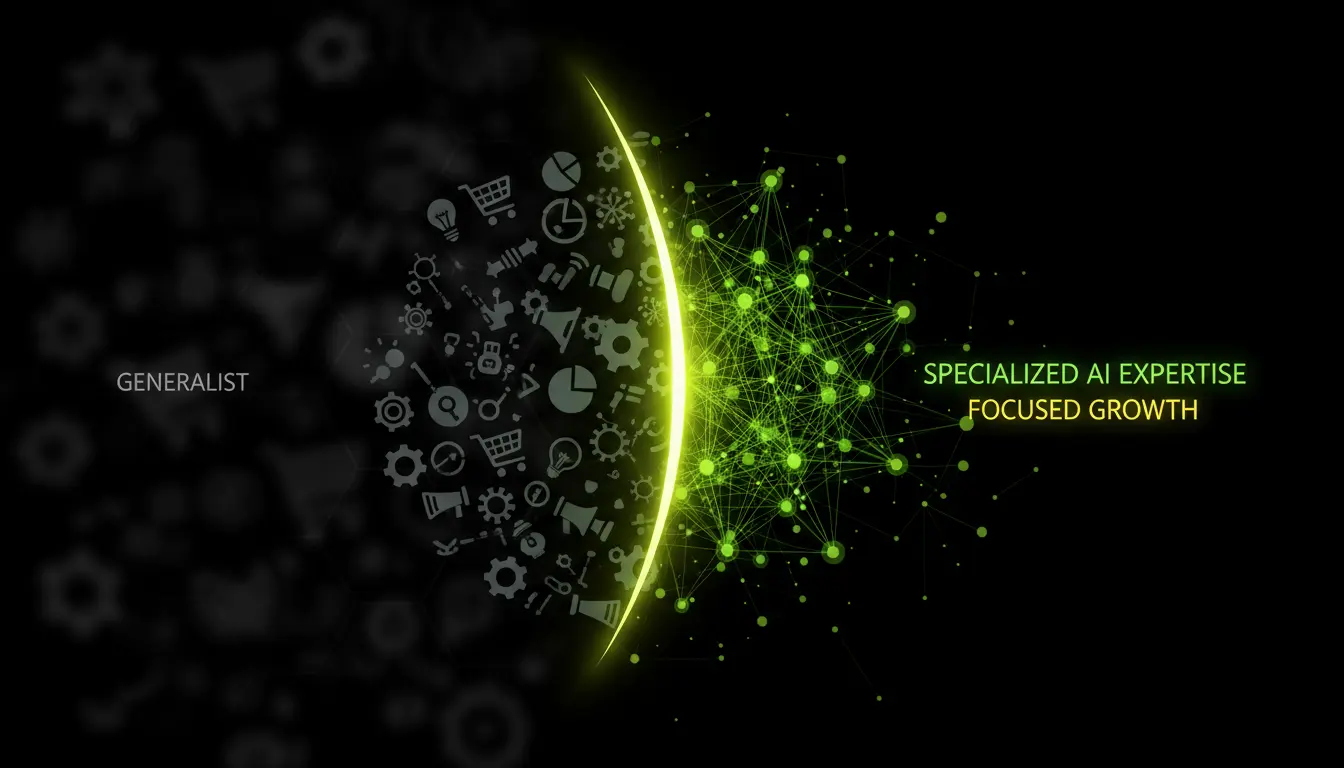
Garage Collective’s insights on AI in social media demonstrate how AI-powered targeting, content generation, and sentiment analysis are reshaping social marketing—specialists who master these tools deliver measurably better engagement and conversion rates.
The key is not becoming an AI engineer but becoming an expert marketer who knows when, where, and how to deploy AI for maximum strategic impact.
FAQ’S
Will AI replace generalist marketers in 2026?
AI will not replace them but will shift demand toward specialists who combine deep expertise with AI fluency for higher-value strategic work.
What’s the most important AI skill for marketers in 2026?
Prompt engineering and the ability to design AI-powered workflows that automate execution while maintaining strategic control and brand alignment.
Can generalists still succeed in AI-driven marketing?
Yes, if they develop specialist-level depth in at least one area and learn to orchestrate AI tools across channels rather than just executing tasks.
Which marketing roles benefit most from AI specialization?
Performance marketing, SEO, content strategy, and paid media roles benefit most because AI directly amplifies execution speed and optimization precision.
How quickly should I transition to AI-specialist skills?
Start now—AI adoption is accelerating rapidly, and by late 2026, AI-specialist competencies will be table stakes for competitive marketing roles in India.
