


The search landscape is no longer dominated by a single player. In 2025, artificial intelligence has fundamentally transformed how people find information online. According to recent data, ChatGPT alone surpasses Bing in traffic, receiving over 10 million queries daily, while platforms like Perplexity, Google Gemini, and Microsoft Copilot continue to expand.
This shift has created a new challenge for marketers: how do you ensure your brand appears not just in traditional search results, but across the entire ecosystem of AI-powered platforms?
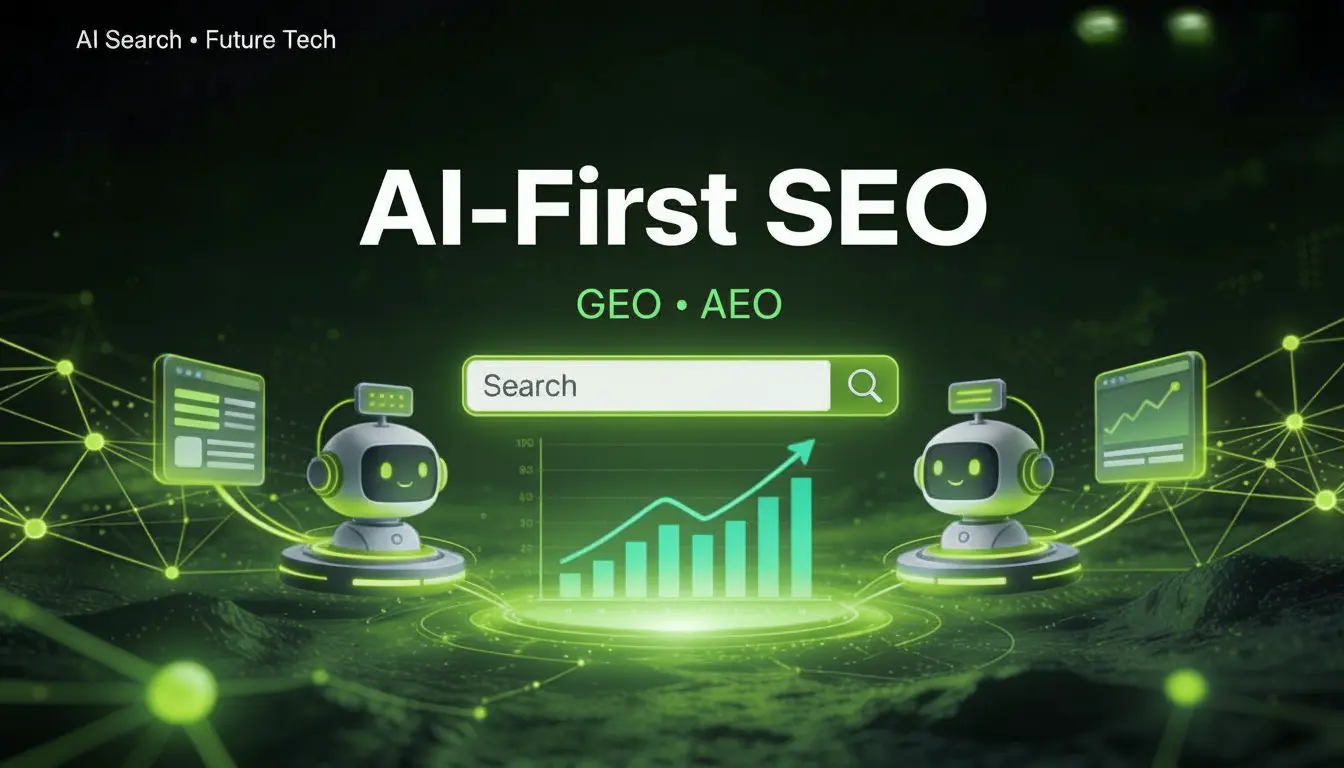
The answer lies in mastering three interconnected optimization strategies:
Search Engine Optimization (SEO), Answer Engine Optimization (AEO), and Generative Engine Optimization (GEO).
For digital marketing agencies and brands serious about maintaining visibility in 2025, understanding all three is no longer optional—it’s essential.
Understanding the AI-First Search Ecosystem
The modern search ecosystem has evolved into three distinct layers:
1. Traditional Search (SEO)
Platforms like Google and Bing still drive most web traffic, but AI integration has changed the mechanics. With Google’s AI Overviews now appearing in up to 47% of searches, ranking alone is no longer enough to capture user attention.
2. Direct Answer Engines (AEO)
Engines such as Perplexity and DuckDuckGo focus on delivering concise, cited answers directly in the interface—without requiring users to click through to websites. These platforms are built to provide instant clarity, not long search journeys.
3. Conversational AI & LLMs (GEO)
Tools like ChatGPT, Claude, and Google Gemini generate conversational responses using real-time data and web crawling. With millions of daily interactions, your brand now needs to be referenced within AI-generated responses to stay visible.
What Is GEO (Generative Engine Optimization)?
Generative Engine Optimization (GEO) ensures your content is discoverable, trustworthy, and reusable by large language models and generative AI platforms.
Unlike SEO, which optimizes for rankings, GEO focuses on earning citations and mentions within AI-created summaries.
Key GEO Strategies
Train AI models on brand-specific data to strengthen consistent brand representation.
Optimize technical SEO, including page speed, crawlability, and structured data (schema markup) to help AI read and contextualize content.
Build author and brand authority so AI trusts and cites your material.
Create real-time-discoverable content, particularly for platforms that crawl live data (e.g., Perplexity, ChatGPT Search).
Note: GEO often doesn’t produce direct clicks but enhances brand authority, awareness, and AI visibility—driving long-term trust and recognition.
What Is AEO (Answer Engine Optimization)?
Answer Engine Optimization (AEO) targets your content for instant answers in search results and AI overviews. Its goal is to own the featured snippet, the “position zero” of modern search.
AEO Tactics
Add FAQ and HowTo schema using JSON-LD for structured Q&A indexing.
Write concise, direct answers that appear early in content.
Implement step-by-step structures for procedural topics.
Optimize for user intent, solving exact questions being asked.
Use semantic formatting—clear headings, bolded keywords, and entity-rich language for better AI parsing.
AEO shines in Google AI Overviews and answer-first engines, where your brand can be cited even without a click.
How GEO, AEO, and SEO Work Together
These three optimization methods are complementary, not competing. A unified approach ensures your content reaches audiences across search listings, AI responses, and instant answer boxes.
Best Practices
Create content that serves all three strategies: answer-focused, structured, and contextual.
Use schema markup (FAQPage, HowTo, Article, Organization, LocalBusiness) across your site for machine readability.
Strengthen EEAT (Experience, Expertise, Authoritativeness, Trustworthiness) via bios, credentials, and consistent entity references.
Optimize semantic relationships between your brand, services, products, and industries through schema.
Track AI visibility using emerging tools that measure how your brand appears across platforms like ChatGPT, Perplexity, and Gemini—just as you monitor Google rankings.
Why This Matters for Digital Marketing Agencies
For agencies, staying ahead of AI-search evolution offers a major competitive advantage. Embracing GEO, AEO, and SEO together can lead to:
Wider visibility across traditional and AI discovery channels.
Higher credibility, as brands cited by trusted AI engines gain user trust faster.
Reduced ad spend, with stronger organic growth.
Future-proof positioning, ensuring resilience as AI search becomes the norm.
Conclusion
By 2025, search optimization is no longer a single-strategy game.
The winning formula—GEO + AEO + SEO—creates a comprehensive, AI-aligned visibility strategy that spans search engines, answer engines, and conversational platforms.
The future of search isn’t one platform.
It’s all of them—seamlessly integrated.
