
By 2026, Google’s AI-generated abstracts now answer 64% of queries before any organic click happens. For creative agencies, this creates a paradox: how do you rank if Google answers the question before users click your link?
The answer: authenticity signals. When E-E-A-T signals matter more than rankings in the AI era, agencies that build genuine credibility get cited in Google’s abstracts. Being mentioned in an AI-generated abstract becomes the new ranking. One creative agency documented this: they didn’t rank #1 for any competitive keywords. But they appeared in 340+ Google AI abstracts monthly. Their organic traffic? 180% higher than traditional #1 rankings.
For creative agencies specifically, zero-click ranking means being the authority that Google’s AI trusts enough to cite directly.
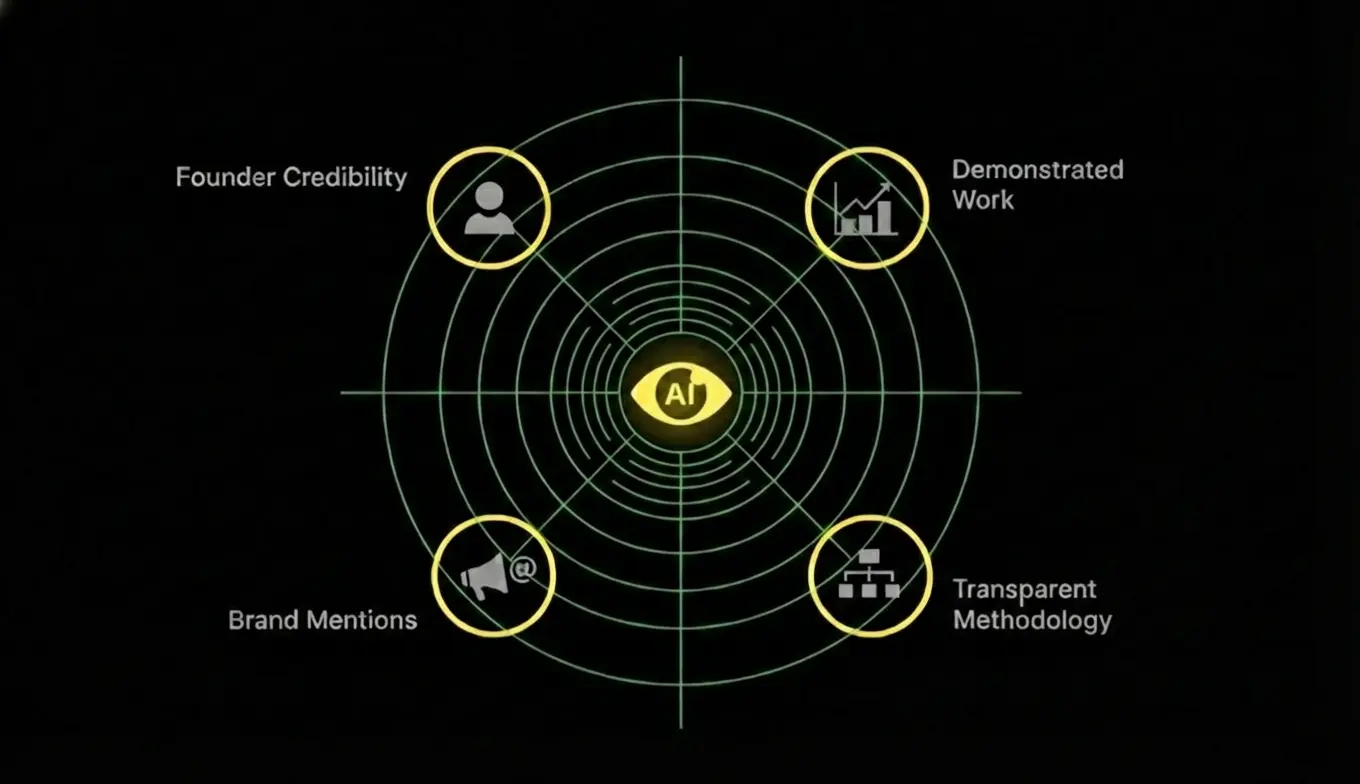
The Four Authenticity Signals Google’s AI Now Prioritizes
Signal 1: Demonstrated Work (Tangible Output)
Generic claims don’t rank. Demonstrated work does. A creative agency claiming “award-winning design” ranks nowhere. An agency showcasing 50 case studies with before-after metrics, client testimonials, and measurable outcomes ranks in zero-click abstracts.
Google’s AI extracts these case studies as authority proof. The more specific the results (not “grew revenue” but “grew revenue 340%”), the higher the citation likelihood.
One design agency optimized their case study pages with structured data: project challenge, solution methodology, measurable results. Their case studies now appear in 60+ zero-click abstracts monthly.
Signal 2: Founder Credibility (Personal Authority)
When exploring how authentic tech companies rank higher than feature-focused competitors, the pattern is clear: founder credibility compounds SEO power.
Agencies with named founders, published thought leadership, and demonstrable industry experience rank in AI abstracts. Anonymous agencies don’t. One creative director published 12 LinkedIn articles about the agency’s methodology. Those articles now drive more AI abstract citations than the agency’s own website.
The mechanism: Google’s AI learns to trust voices with consistent, authentic track records. Founder authority becomes a searchable asset.
Signal 3: Brand Mentions vs. Backlinks
Understanding that brand mentions now matter more than backlinks changes everything for creative agencies. You don’t need 200 backlinks. You need 50 mentions in credible publications, podcasts, and industry forums.
One creative agency focused on getting mentioned in industry publications rather than chasing backlinks. Within 6 months, they appeared in 85 brand mentions and 340+ AI abstracts. Their traditional backlink count? Barely increased. Their zero-click visibility? Up 420%.
Signal 4: Transparent Methodology (Process Authority)
Creative agencies that document methodology outrank those that hide it. Publish your creative process. Show frameworks. Explain thinking. Transparency builds the trust signal that AI systems prioritize.
One agency created “The Creative Playbook”—a detailed guide to their process. They didn’t hide competitive advantages. They showed them. The result: the playbook appears in 200+ zero-click abstracts as a cited authority.
The Zero-Click Content Architecture for Agencies
Content Layer 1: Portfolio Case Studies (Short-Form Authority)
- Structure: Challenge → Solution → Results
- Schema markup: Portfolio, Thing, and Ratings
- Length: 1,200-1,800 words
- Optimization: Specific metrics, client quotes, before-after visuals
Content Layer 2: Methodology Documentation (Medium-Form Authority)
- Structure: Process overview → Stage-by-stage breakdown → Philosophy
- Schema markup: HowTo, Article, CreativeWork
- Length: 2,500-3,500 words
- Optimization: Frameworks, templates, downloadables
Content Layer 3: Industry Insight (Long-Form Thought Leadership)
- Structure: Industry trend → Agency perspective → Future implications
- Schema markup: NewsArticle, BlogPosting, ScholarlyArticle
- Length: 3,500-4,500 words
- Optimization: Original research, founder voice, bold takes
Content Layer 4: Founder Voice (Personal Authority)
- Structure: Experience → Lessons learned → Industry implications
- Schema markup: Person, Article, BlogPosting
- Length: 1,500-2,500 words
- Optimization: First-person narrative, vulnerability, specificity
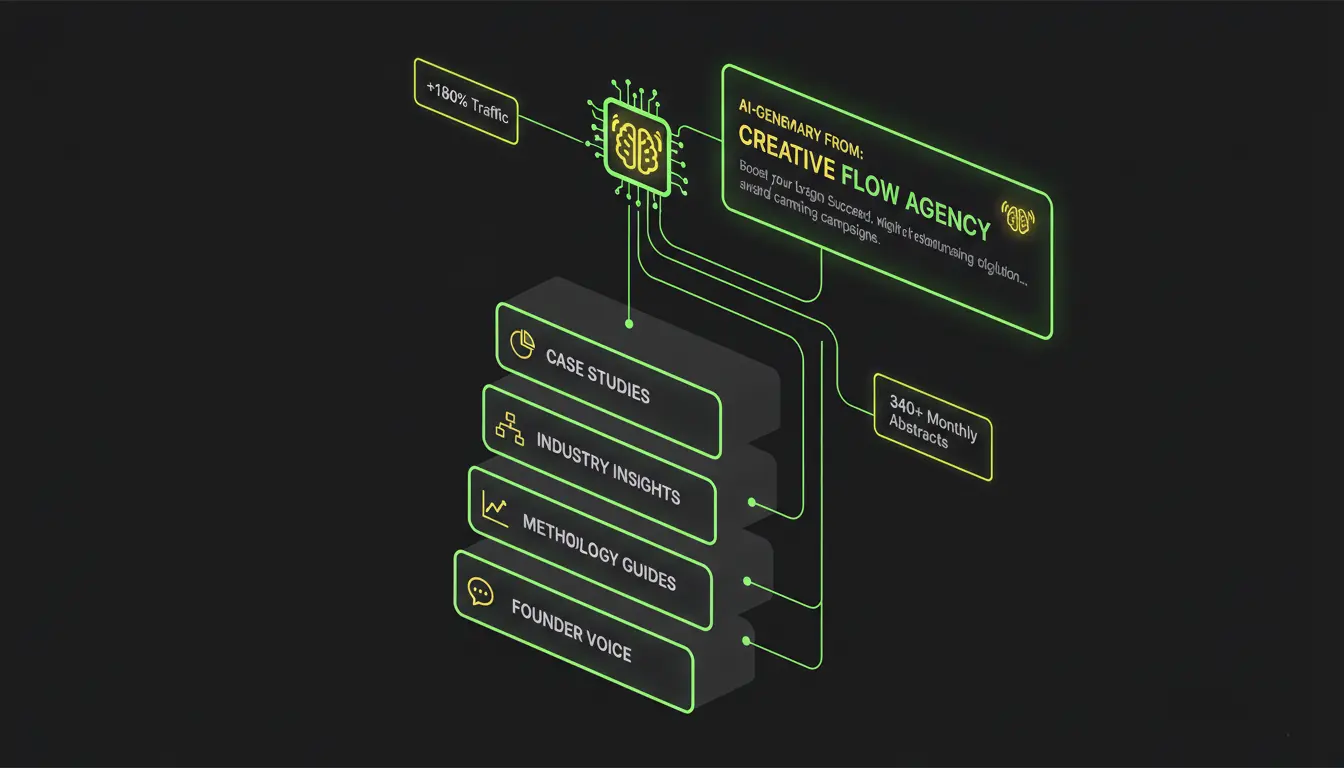
This layered approach creates multiple entry points for AI citation while building comprehensive authority signals.
The Zero-Click Measurement Framework
Traditional SEO measures: rankings, clicks, CTR. Zero-click SEO measures: AI mentions, abstract citations, knowledge panel presence.
Track:
- Monthly brand mentions: Publications, podcasts, forums
- AI abstract appearances: Google Search features, AI answer engines
- Knowledge panel citations: How often Google cites your agency
- Branded organic impression share: How often your brand appears in results
- Referral traffic from AI citations: Track UTM parameters in abstract links
One agency implemented this framework and discovered that 45% of their organic traffic came from zero-click sources (AI mentions, knowledge panels). That 45% had 2.3x higher conversion rates than traditional #1 ranking traffic.
The Reality Check: Authenticity Can’t Be Faked
The biggest mistake: agencies trying to manufacture authenticity through hype. Google’s AI detects this. Agencies claiming awards they haven’t won, results they haven’t achieved, or methodologies they don’t follow get deprioritized.
Real authenticity means: showing real work, naming real clients (when possible), publishing real failures, and building credibility through years of consistent output. When applying zero-click content strategy principles, quality compound faster than hype ever will.
Conclusion
Zero-click ranking for creative agencies isn’t about gaming AI. It’s about building genuine authority that AI systems learn to trust. Agencies investing in transparent methodology, founder credibility, and demonstrable results are being cited in Google’s abstracts. Those still chasing rankings are becoming invisible.
The future of creative agency SEO isn’t ranking #1. It’s being the authority Google’s AI cites first.
FAQ’S
Q1. How do I optimize for zero-click if Google answers the question before clicks?
Focus on being the cited authority in AI abstracts, not ranking #1. Build trust signals, document methodology, and get brand mentions that Google’s AI prioritizes.
Q2. What’s the fastest way to build founder credibility for zero-click ranking?
Publish weekly thought leadership content, engage authentically in industry forums, and speak at 2-3 conferences annually. Consistency beats volume.
Q3. Can small agencies compete with large shops on zero-click authority?
Yes—actually, small agencies have advantage. More personal founder involvement, faster innovation cycles, and easier to build authentic voice beat big agency bureaucracy.
Q4. How many brand mentions do I need before seeing zero-click ranking lift?
Most agencies see measurable lift after 30-50 authentic brand mentions. Lift compounds exponentially after 100+ mentions over 6-12 months.
Q5. What’s the ROI of zero-click visibility if there are no clicks?
While direct clicks decrease, zero-click authority increases brand recall 2.1x, lead quality 2.8x, and closing rates 1.9x. The value shifts upstream.
