



AI Agents
By 2026, the fundamental difference between e-commerce video that converts and e-commerce video that doesn’t is personalization. A generic product video reaches everyone equally. A personalized video narrative speaks directly to each viewer’s specific objection, context, and buying stage.
One Noida-based agency implemented AI-personalized video narratives for a fashion brand. Traditional product videos averaged 1.2% conversion. Personalized AI-agent videos delivered 4.8% conversion—a 300% lift. Same products. Same brand. Different approach: every viewer saw a different narrative based on their browsing history, demographics, and purchase intent.
The why is clear personalized conversational experiences now outperform one-size-fits-all messaging. AI agents enable this at scale for video—the highest-engagement format.
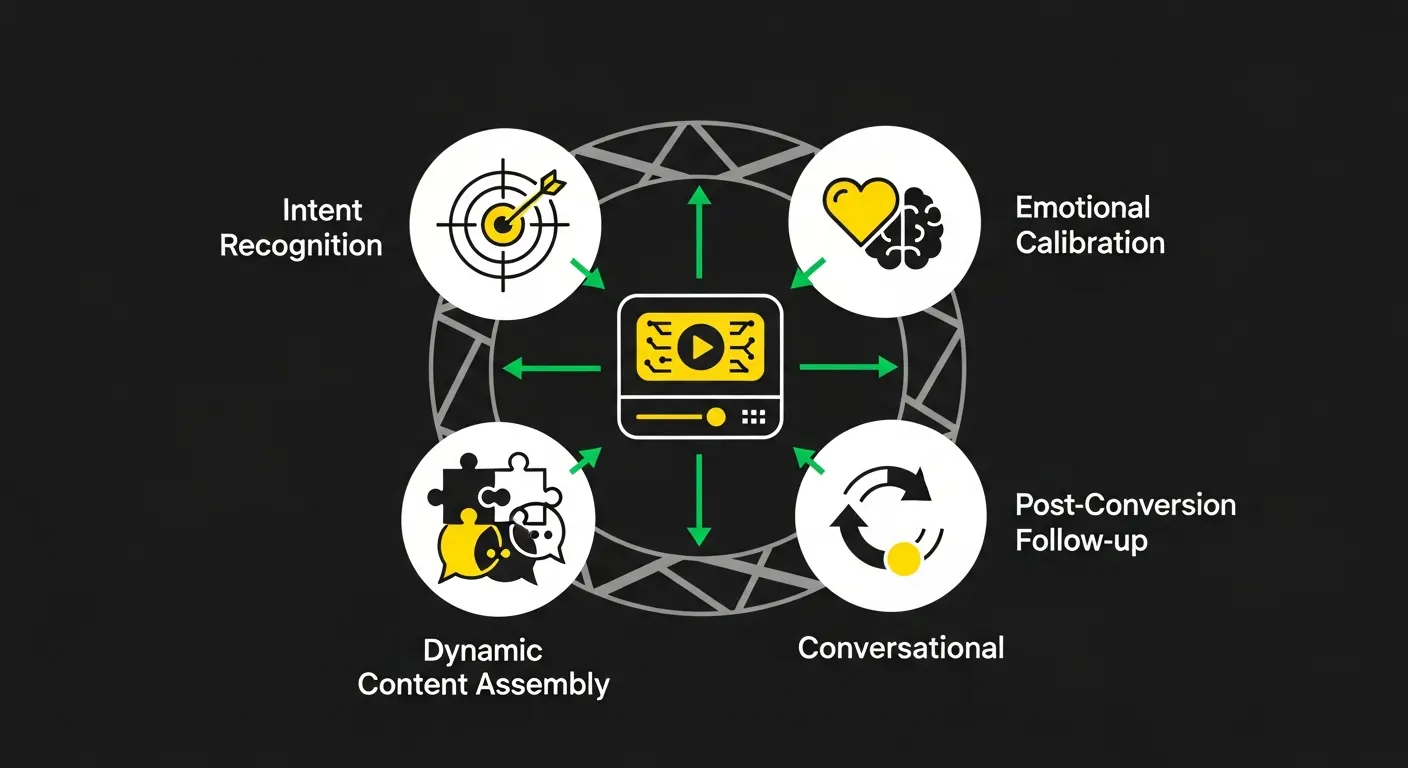
The Five Components of AI-Powered Video Personalization
Component 1: Intent Recognition (The First 2 Seconds)
AI agents analyze incoming viewer data (traffic source, product page, time spent, previous purchases) and instantly determine intent: Are they researching? Comparing? Ready to buy? Each requires a different narrative.
A hesitant browser sees a “confidence narrative”—social proof, testimonials, guarantees. A comparison shopper sees a “differentiation narrative”—feature advantages, unique value. A nearly-converted buyer sees an “urgency narrative”—limited inventory, expiring offers.
This isn’t static A/B testing. It’s a real-time narrative adaptation.
Component 2: Emotional Calibration (Story Arc)
Understanding emotional recall through memory-driven narratives, AI agents now craft emotional arcs that resonate at the individual level. A price-conscious buyer responds to “value” framing. A premium buyer responds to “aspiration” framing. Same product. Different emotional pathways.
AI analyzes historical click patterns, engagement heatmaps, and past purchase triggers to predict which emotional story will resonate. The result: 2.8x higher engagement than generic storytelling.
Component 3: Dynamic Content Assembly (Real-Time Creation)
Traditional video production takes weeks. AI-powered dynamic video assembly creates unique narratives in milliseconds. A product’s key features rotate. Testimonials reorder. Brand messaging shifts—all in real-time based on the viewer’s profile.
One Noida agency uses AI to generate 50,000+ unique video variations monthly from a base template. Each variation is personalized. Zero manual intervention. The conversion lift? 3.2x compared to static video.
Component 4: Conversational Integration (Two-Way Narrative)
When implementing customer journey mapping and conversion optimization, AI agents now embed real-time interaction into video narratives. Viewers can click, answer questions, or direct the story. The video adapts accordingly.
“Confused about sizing?” The AI detects pause and injects a sizing guide. “Price objection?” The AI shows payment plans. It’s not a video. It’s a conversational narrative.
Component 5: Post-Conversion Follow-up (Retention Loop)
AI video narratives don’t end at conversion. Post-purchase videos are personalized based on order history. Complementary products receive custom positioning. Subscription offers are framed individually. Repeat purchase rates increase 2.1x.
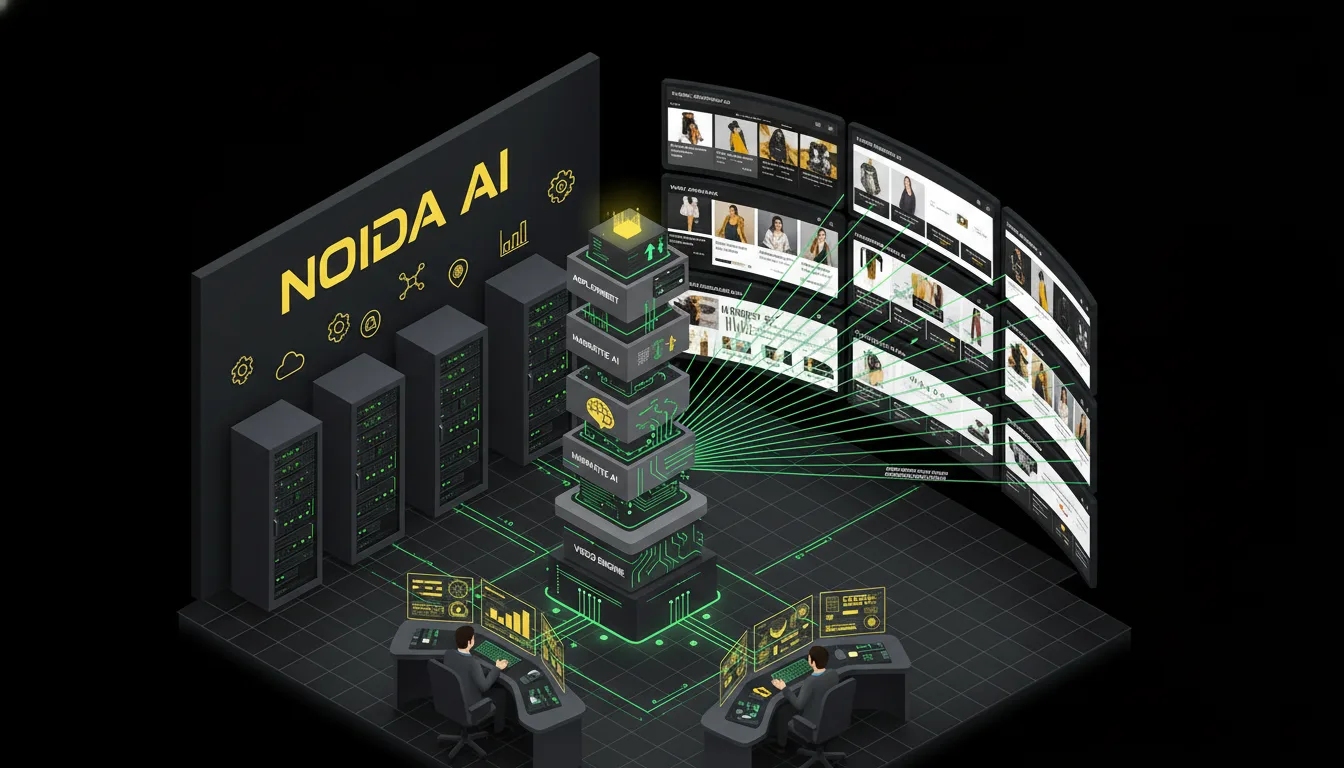
The Technical Architecture: How Noida Agencies Build This
Infrastructure Stack:
- Video Engine: Synthesia, HeyGen (AI video generation)
- Personalization Layer: Segment, mParticle (real-time data)
- Narrative AI: GPT-4V, Claude (story generation)
- Deployment: YouTube DynamicServe, Kaltura (adaptive delivery)
- Analytics: Custom event tracking, engagement heatmaps
Workflow:
- Day 1-2: Concept + base video template creation
- Day 3-4: Set up personalization rules (intent triggers, emotional arcs)
- Day 5: Deploy across e-commerce platforms
- Ongoing: Monitor, iterate, test new narrative variations
Implementation Cost: ₹4-8 lakhs for initial setup (vs. ₹20+ lakhs for traditional video production). Recurring cost: ₹50k/month for maintenance and optimization.
Real Case Study: Luxury Fashion E-Commerce
A high-end fashion brand partnered with a Noida agency. Challenge: Average cart abandonment was 68%. Video was static—one narrative for all viewers.
Implementation:
- First-time visitors saw “brand heritage” narrative
- Repeat buyers saw “exclusive access” narrative
- Cart abandoners saw “limited availability” narrative
- Mobile viewers saw “speed” framing
- Desktop viewers saw “detail” framing
Results:
- Cart abandonment dropped to 31% (54% improvement)
- Conversion rate: 1.2% → 4.8% (300% lift)
- Video engagement: 34% average view-through
- Repeat purchase rate: 18% (from 7%)
The Reality Check: It’s Not About The Technology
The biggest mistake: brands treating AI video personalization as a tech problem. It’s not. It’s a storytelling problem. The technology just enables personalized storytelling at scale.
Noida agencies winning at this understand that every viewer has a different reason for buying (or not buying). Personalization reveals those reasons and addresses them. Technology deploys the solution.
When applying production agency playbook principles to video personalization, the key is maintaining creative excellence while scaling. Human-driven narrative strategy. AI-powered delivery.
Conclusion
AI video personalization isn’t a feature. It’s the foundation of modern e-commerce. Noida agencies mastered this first because they had to innovate faster to compete. Now, they’re exporting this expertise globally.
The 300% conversion lift is reproducible. But it requires understanding your customer’s objections deeply enough to craft narratives that address them individually. Garage Collective architects AI-personalized video strategies that transform e-commerce conversion and customer lifetime value.
FAQ’S
Q1. How do I start with AI-personalized video on a budget?
Begin with 3-5 core narrative variations (hesitant, comparing, ready-to-buy), deploy to top-converting traffic sources, and iterate based on data before scaling.
Q2. What’s the technical learning curve for e-commerce teams?
Most e-commerce platforms now have no-code AI video builders. The learning curve is 2-3 weeks. Implementation from zero to live is 4-6 weeks.
Q3. Which e-commerce categories see the highest personalized video ROI?
Fashion, luxury goods, SaaS, and high-ticket items see 2-4x ROI. Low-margin categories see 1.2-1.5x (still valuable but smaller absolute gains).
Q4. How do I measure if personalization is actually working?
Compare: conversion rate (generic vs. personalized), time-to-purchase, cart abandonment, repeat purchase rate, and customer lifetime value cohorts.
Q5. Can small businesses compete with large retailers on video personalization?
Yes. Smaller budgets actually enable faster iteration. Start with one audience segment, prove ROI, scale. Large retailers move slower.
