



SEO
Traditional SEO metrics are becoming obsolete. In 2026, measuring success isn’t about ranking position #1 for a keyword anymore—it’s about appearing in AI-generated responses, being cited by AI agents, and capturing AI referral traffic. The question every marketer should ask is: “Where am I showing up when AI answers questions for my audience?”
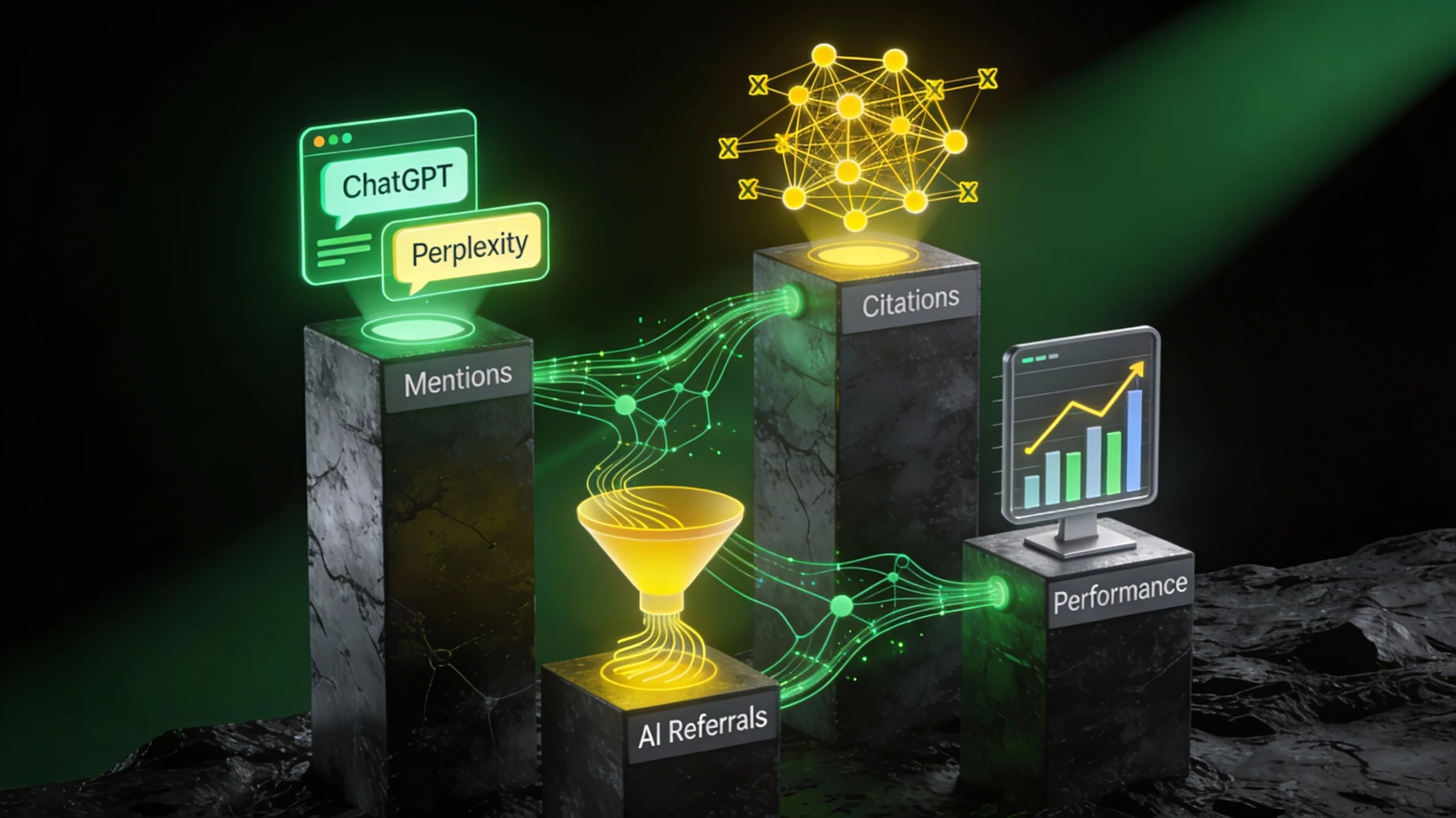
This guide introduces a practical framework for measuring AI visibility—the metric that matters in an AI-driven search landscape.
Why Traditional SEO Metrics Are No Longer Enough
For two decades, search engine rankings were the gold standard for measuring digital success. You tracked keyword positions, monitored organic traffic, and optimized for first-page placement. But the world has shifted.
Today, AI systems like ChatGPT, Perplexity, Claude, and Google’s generative results don’t always link directly to your content. Sometimes they synthesize your information without sending any traffic. Understanding how search engine optimization works today means recognizing that visibility has multiple dimensions beyond traditional rankings.
AI visibility encompasses:
-
Mentions in AI-generated responses
-
Citations from authoritative sources within AI platforms
-
AI referral traffic from direct AI recommendations
-
Attribution in conversational AI contexts
-
Authority signals that AI systems recognize and reward
The Four Pillars of AI Visibility Measurement
1. Monitor AI Platform Mentions
Your first step is tracking where your brand, products, and content appear in AI-generated answers. This requires manual monitoring and automated tools working together.
What to track:
-
ChatGPT responses (search your industry queries in ChatGPT, Copilot, and Claude)
-
Perplexity AI mentions and citations
-
Google’s AI Overviews (formerly SGE)
-
Bard and other emerging AI search tools
How to implement: Set up weekly searches for your top 20 branded and non-branded keywords in each major AI platform. Document which results mention you, cite you, or recommend you. Create a simple spreadsheet tracking frequency and context.
Why it matters: If you’re answering buyer questions better than competitors, AI systems will eventually recommend you. Tracking mentions helps you identify which content resonates with AI algorithms and which topics need improvement.
2. Measure Citation Frequency and Authority
Citations from credible sources amplify your AI visibility. Unlike traditional backlinks, AI systems now weight citations based on both quality and context.
What to track:
-
Industry publication mentions (analyst reports, news sites, thought leadership platforms)
-
Peer citations in academic and professional contexts
-
EEAT signals (Experience, Expertise, Authority, Trust) that AI evaluates
-
Citation growth over time (month-over-month trends)
How to implement: Use tools like Ahrefs, SEMrush, or Moz to track backlinks, but focus on high-authority sources. Set monthly benchmarks and measure citation growth. Pay special attention to citations from sources that AI systems trust—industry leaders, research institutions, and verified experts.
Why it matters: Building authority through thought leadership generates citations naturally. When you’re cited by trusted sources, AI systems recognize you as an authority worth recommending.

3. Track AI Referral Traffic
AI referral traffic is the new frontier. This traffic comes directly from AI recommendations, conversational AI interactions, and AI shopping agents.
What to track:
-
UTM parameters from AI platform links (add
?utm_source=chatgpt,?utm_source=perplexity, etc.) -
Direct referrals from AI chatbots and recommendation engines
-
Traffic patterns unique to AI sources (usually higher engagement, lower bounce rate)
-
Conversion rates from AI referral traffic vs. traditional organic traffic
How to implement: Create unique tracking codes for each AI platform so visits can be attributed accurately, then monitor Google Analytics 4 for spikes in “direct” traffic around specific topics to spot AI-driven discovery. Next, set up custom segments to isolate AI-related referral patterns and validate which sources are contributing the most.
Why it matters: AI referral traffic is often high-intent traffic. When someone finds you through an AI recommendation, they’re typically further along in their decision journey. Tracking and optimizing this traffic directly impacts revenue.
4. Analyze Content Performance in AI Contexts
Finally, measure which of your content pieces generate AI visibility. This reveals what topics, formats, and structures AI systems prefer to recommend.
What to track:
-
Content pieces that appear in AI responses
-
Average content length and depth for AI-recommended pieces
-
Content structure patterns (FAQs, how-tos, listicles, thought leadership)
-
Topic clusters that trigger AI recommendations
-
Update frequency and freshness impact on AI mentions
How to implement:
-
Document which blog posts, guides, and resources get mentioned in AI responses
-
Analyze their average word count, heading structure, and content depth
-
Identify common characteristics (e.g., do AI systems prefer well-structured FAQ posts?)
-
Create a content template based on high-performing pieces
-
Audit existing content and optimize lower-performing pieces to match winning patterns
Why it matters: Understanding what AI systems prefer helps you optimize future content for AI visibility. Instead of guessing what works, you’re making data-driven decisions based on actual AI behavior.
Building Your AI Visibility Dashboard
Create a simple dashboard tracking these metrics monthly:
| Metric | Target | Actual | Change |
|---|---|---|---|
| ChatGPT/Perplexity mentions | 10+ | — | — |
| Citation frequency | 15+ per month | — | — |
| AI referral traffic | 5% of organic | — | — |
| Content pieces in AI responses | 20% of library | — | — |
5 FAQs
Q1: How long does it take to see AI visibility results?
A: 2-3 months to start tracking consistent mentions; 6-12 months to establish authority signals that drive sustained AI recommendations.
Q2: Can I use the same metrics for AI visibility as traditional SEO?
A: Partially. Track organic rankings alongside AI mentions, but prioritize AI-specific metrics like citation frequency and AI referral traffic over keyword position.
Q3: Which AI platforms should I prioritize?
A: Start with ChatGPT and Google’s AI Overview, then expand to Perplexity, Claude, and industry-specific AI tools based on your audience.
Q4: How do I know if my content is being used by AI systems?
A: Monitor AI responses directly, use citation tracking tools, and analyze your referral traffic for AI-source patterns in Google Analytics.
Q5: Does building authority through lead generation improve AI visibility?
A: Yes. Community engagement, thought leadership, and verified expertise all generate citations and authority signals that AI systems reward with higher recommendations.
