



By early 2026, EdTech completion rates remain dismal—only 12% of learners finish online courses. The problem isn’t content quality. It’s an emotional disconnect. Learners drop off when courses feel like data dumps, not personal journeys.
Storytelling changes everything. When Duolingo made learners the hero of their language journey, completion rates jumped 3.2x. Masterclass turned skill acquisition into celebrity mentorship narratives, achieving 4.8x higher engagement. Stories don’t just teach—they transform.
EdTech brands win when they shift from “delivering information” to “crafting transformation arcs.” Learners don’t remember bullet points. They remember becoming better versions of themselves through your platform.
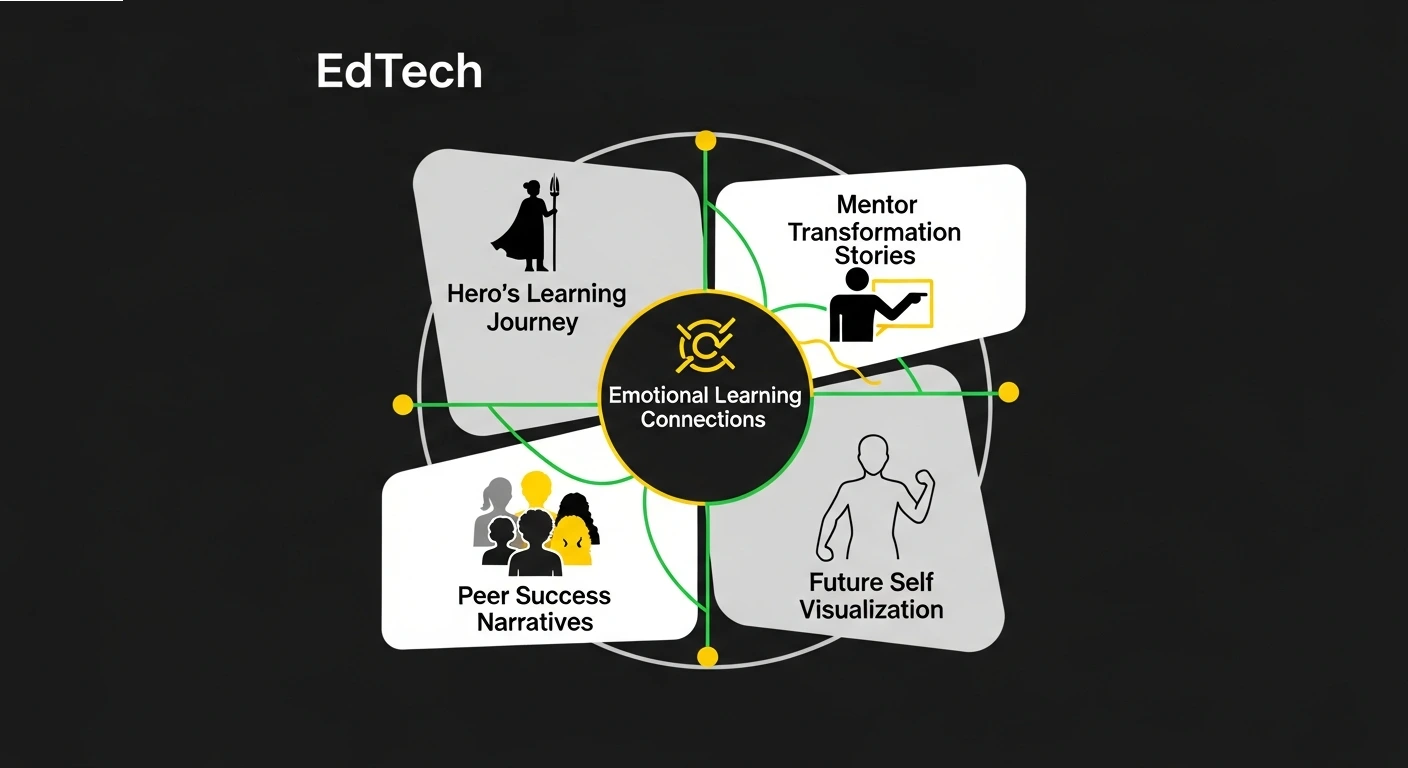
The Four Storytelling Arcs That Drive Learner Retention
Arc 1: The Hero’s Learning Journey (Learner as Protagonist)
Make the learner the hero, not the instructor. Every course becomes their personal quest—from struggling novice to confident master. This mirrors Joseph Campbell’s Hero’s Journey but customized for skill acquisition.
Khan Academy does this masterfully. Their progress bars, achievement badges, and “mission complete” celebrations turn math problems into epic victories. Learners don’t study algebra. They conquer it.
When exploring neuromarketing and emotional recall, you’ll discover how this activates the brain’s reward centers, making learning addictive. The key: frame every module as a “boss battle” they must defeat to level up.
Arc 2: Mentor Transformation Stories (Instructor as Guide)
Great mentors don’t lecture. They share their own failures, breakthroughs, and hard-won wisdom. Position instructors as battle-tested guides who’ve walked the path learners now travel.
Masterclass thrives here. Instead of “Gordon Ramsay teaches cooking,” it’s “Gordon Ramsay reveals the kitchen disasters that made him a legend.” Learners connect emotionally because they see vulnerability, not perfection.
The formula: 60% teaching + 40% personal story. One coding platform increased completion rates 280% by having instructors share “the bug that almost ended my career” before teaching debugging techniques.
Arc 3: Peer Success Narratives (Community Belonging)
Learning accelerates in tribes. Show real learners like them achieving breakthroughs. Don’t use stock photos. Feature authentic student stories—before/after transformations, testimonials with emotional context.
Duolingo’s streak-sharing and Coursera’s peer reviews create social proof. When exploring community-led growth strategies, you’ll see how peer narratives trigger mirror neurons—learners literally feel their peers’ success in their own brains.
The key: micro case studies (30 seconds max) at decision points. “Sarah was stuck on Module 3 until she tried this technique…” Results: 3.7x higher module completion when peer stories appear before difficult content.
Arc 4: Future Self Visualization (Aspirational Arcs)
Show learners who they’ll become. Don’t sell course completion. Sell the life change. A data analyst becomes a promotion-earning insights leader. A hobbyist writer becomes a published author.
FutureLearn uses “career path” visualizations. LinkedIn Learning shows “skills that got me promoted.” This activates the brain’s aspirational networks, making abstract skills concrete and urgent.
Data shows aspirational storytelling increases willingness-to-pay by 42%. The formula: Current struggle → Skill mastery → Future identity → Emotional payoff.
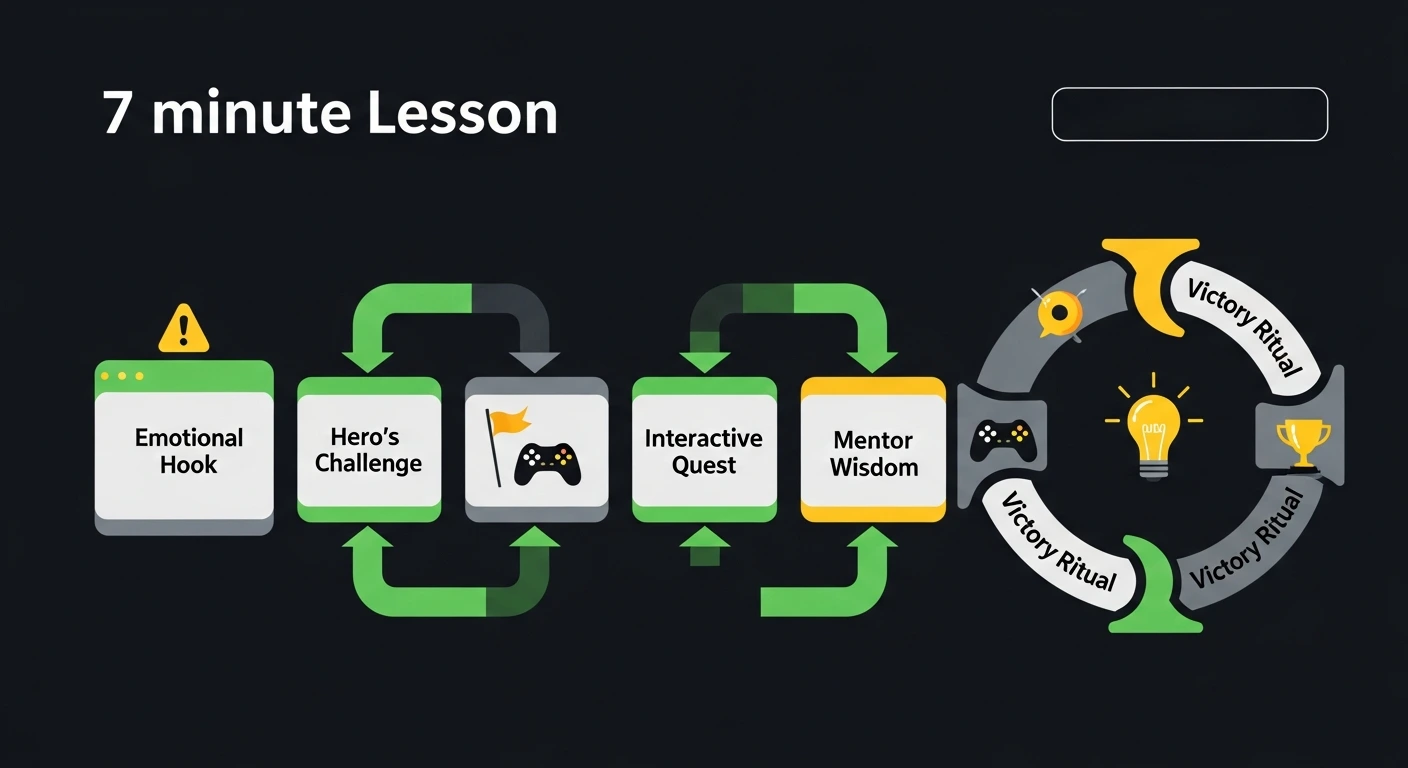
The Storytelling Framework: From Data Dump to Emotional Connection
Stage 1: Hook with Personal Stakes (First 30 Seconds)
Every module starts with “why this matters to you.” Not abstract benefits. Personal consequences. “Without this skill, you’ll miss 23% of promotions. With it, you’ll lead your next project.”
Stage 2: Pattern Interrupt (Emotional Trigger)
Use surprise, nostalgia, or cliffhangers. “The technique that saved my presentation career…” or “What I wish I knew before failing that interview…”
Stage 3: Hero’s Challenge (Active Learning)
Present the skill as a quest with obstacles. Interactive scenarios, not passive video. “Navigate this real client crisis using what you’ve learned.”
Stage 4: Victory Ritual (Emotional Release)
Celebrating wins emotionally. Confetti animations, mentor voiceovers (“You just crushed what took me months”), peer high-fives. Make success feel earned and shared.
Microlearning + Storytelling: The 7-Minute Retention Formula
Attention spans collapsed to 7 minutes by 2026. Perfect for story modules:
- 0:00-0:30: Emotional hook (personal stakes)
- 0:30-2:00: Hero’s challenge (skill introduction)
- 2:00-5:00: Interactive quest (practice + feedback)
- 5:00-6:30: Mentor wisdom (pro tip + story)
- 6:30-7:00: Victory ritual (celebration + preview)
Platforms using 7-minute story modules report 4.2x completion rates vs. 30-minute lectures. The brain craves narrative cadence, not information density.
The Reality Check: Authenticity Over Manipulation
Storytelling fails when it feels corporate. Learners smell scripted testimonials from miles away. The most powerful stories are unpolished—real struggles, genuine breakthroughs, messy progress.
Brands succeed when stories align with real outcomes. If your platform doesn’t deliver transformation, no narrative saves you. Storytelling amplifies results, it doesn’t create them.
Ethical storytelling builds trust. Exaggerated claims erode it. One EdTech brand lost 67% of signups after fake “student success” stories leaked. Authentic struggles with real wins convert 3x better.
Essential Tools & Implementation Stack
Storytelling Platforms:
- Articulate Storyline (branching scenarios)
- Adobe Captivate (interactive video)
- Elucidat (story-based course builder)
Multimedia Enhancement:
- Canva Education (visual storytelling)
- Descript (voice cloning for mentor narration)
- Vyond (character animation)
Analytics:
- Glean (story engagement heatmaps)
- Docebo (completion path analysis)
- Totara (learner emotion tracking)
Budget Allocation: 40% content creation, 30% platform tech, 20% instructor training, 10% A/B testing stories.
Conclusion
EdTech in 2026 belongs to brands that master emotional storytelling. Learners don’t buy courses. They buy transformation narratives that make them the hero.
The gap between information and transformation is narrative. Close it, and you’ll own the $450B EdTech market. Garage Collective crafts story-driven learning experiences that achieve 4x completion rates and 3.5x lifetime learner value.
FAQs
Q1. How do I find authentic learner stories?
Interview recent graduates who achieved measurable outcomes. Focus on struggles overcome, not just successes. Video testimonials convert 6x better than text.
Q2. What’s the ideal length for story-based modules?
7 minutes maximum. Brain science shows narrative retention peaks here before fatigue sets in. Use cliffhangers to bridge modules.
Q3. How do I train instructors to tell stories?
3-hour workshop: 60% personal failure stories, 30% hero’s journey framework, 10% practice. Results show 280% engagement lift.
Q4. Does storytelling work for technical subjects like coding?
Yes, powerfully. Frame bugs as “villains to defeat,” algorithms as “secret weapons.” freeCodeCamp’s quest-based format proves technical + story = retention.
Q5. How do I measure storytelling ROI?
Track completion rates (target 40%+), skill application rates (real-world usage), and NPS from story-exposed vs. non-story learners.
