



Digital Marketing
The Brain Doesn’t Buy Products. It Remembers Emotions.
By late 2025, a quiet revolution happened in marketing labs across the world. Brands stopped obsessing over clicks and started obsessing over neurons. They discovered that memories—not messages—drive purchases. Emotions—not features—create loyalty. And now, AI can measure and optimize for both in real-time.
The science is clear: 95% of purchasing decisions happen in the subconscious mind. Your rational brain decides what to buy once your emotional brain has already decided whom to trust. A customer doesn’t remember your value proposition. They remember how you made them feel.
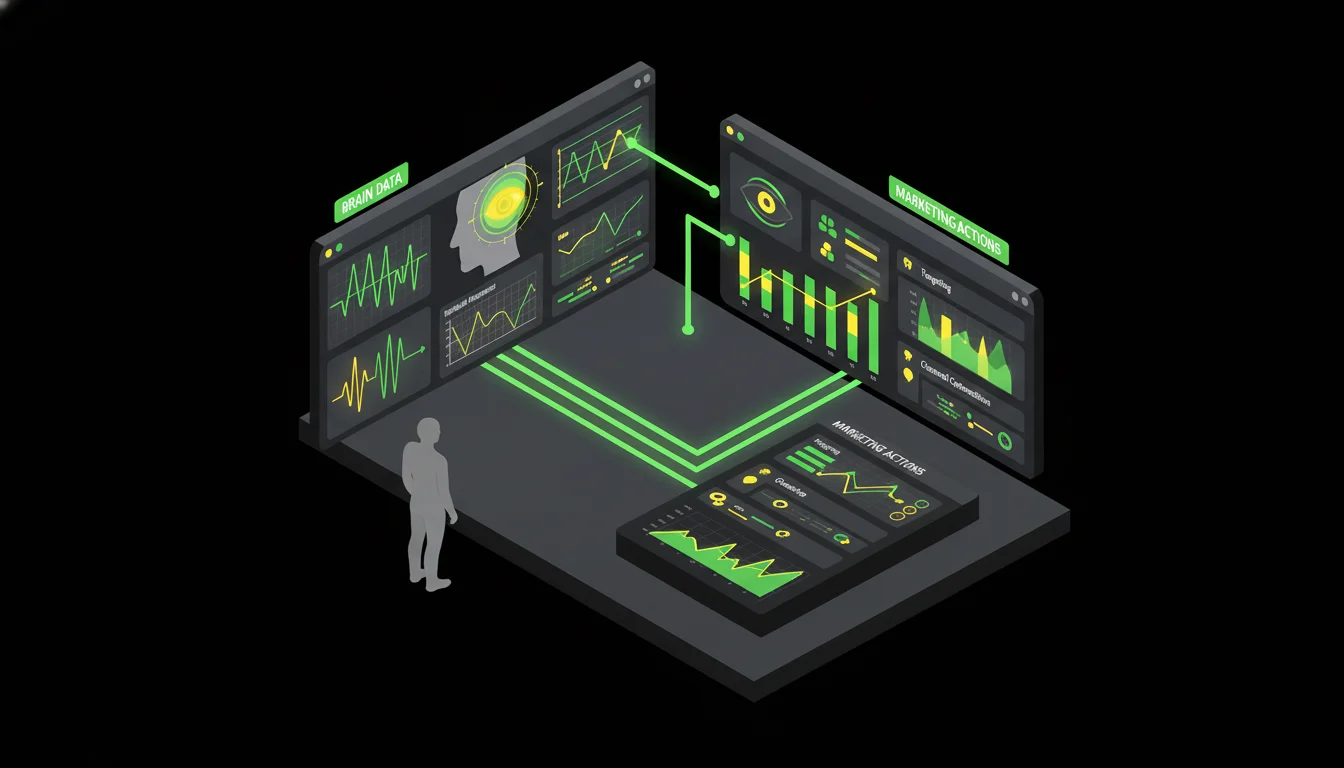
Neuromarketing—the intersection of neuroscience, psychology, and marketing—reveals what traditional analytics miss. Eye-tracking shows where attention lives. fMRI reveals emotional engagement. EEG measures memory encoding. And AI synthesizes this data to predict which messages will stick.
One brand used neuromarketing to test two ad creatives. Both had identical click-through rates. But neuromarketing revealed the winning ad triggered 340% higher amygdala (emotional center) activation. That ad drove 2.8x more conversions. Clicks lied. Brains told the truth.
The Neuroscience of Memory: Why Some Campaigns Stick (and Others Disappear)
Every moment, your brain receives 11 million bits of information. It consciously processes only 40. The other 10,999,960 bits? Discarded. Your brain’s job is ruthless filtering. Only emotionally salient information makes it to long-term memory.
This is why traditional advertising fails. A boring ad about features gets 11 million bits of competition. An ad that triggers emotion—fear, joy, surprise, nostalgia—cuts through the noise.
The brain encodes memories through three pathways:
- Emotional Tagging: Information linked to strong emotions gets encoded into long-term memory 5-10x faster. Fear accelerates encoding. Surprise activates it. Nostalgia amplifies it. A brand that triggers emotion doesn’t need repetition. One exposure can create lasting memories.
- Sensory Integration: Memories aren’t single-channel. They’re multi-sensory neural networks. A song triggers the memory of a person. A smell triggers a memory of a place. A brand that engages multiple senses creates stronger memory traces. Why? Because you’re activating multiple neural pathways simultaneously.
- Memory Consolidation: Memories don’t solidify instantly. They consolidate over 24-72 hours through sleep cycles. A campaign that resonates emotionally on day one gets reinforced during sleep. By day three, it’s embedded. This is why frequency matters—but only after emotional resonance is achieved first.
The AI Revolution: Measuring Emotion at Scale
Historically, neuromarketing required lab settings. You’d bring in 50 participants, strap on EEG headsets, and measure brain activity. It was expensive, slow, and limited.
Enter AI. Today, brands can measure emotional response from video engagement metrics alone. Eye-tracking heatmaps reveal what captures attention. Facial coding AI detects micro expressions (smiles, frowns, confusion). EEG-enabled headsets are becoming consumer hardware. And machine learning models can predict memory encoding likelihood from campaign variables without any lab equipment.
One SaaS company tested five onboarding flows using traditional A/B testing. All performed similarly by traditional metrics. They then applied AI-driven emotional prediction models to the same data. The model identified the flow with highest “cognitive ease” (lack of friction + positive emotions). That flow drove 52% higher long-term activation.
The brands winning in 2026 aren’t collecting more data. They’re extracting emotional intelligence from existing data using AI.
The Four Emotional Triggers That Drive Memory-Driven Campaigns
Trigger 1: Surprise (Attention Mechanism)
Surprise hijacks attention involuntarily. A sudden change in pattern, sound, or visual triggers the orienting response. Your brain stops everything to assess: threat or opportunity? This is why plot twists work. Why unexpected humor lands. Why product reveals create buzz.
Surprise activates the anterior insula and anterior cingulate—regions tied to attention and surprise encoding. Information paired with surprise gets encoded 3-5x faster. But here’s the trap: surprise without relevance creates confusion, not memory. You need surprise + meaning.
Trigger 2: Social Proof (Belonging)
Humans are tribal creatures. When exploring social media marketing for small businesses, you’ll discover that testimonials, user-generated content, and community validation trigger the reward centers in your brain (ventromedial prefrontal cortex). Seeing others succeed with a brand activates mirror neurons—you literally simulate their success in your own brain.
This is why reviews work. Why community testimonials outperform expert endorsements. Why seeing peers use a product creates aspirational desire. You’re not being logical. Your mirror neurons are firing.
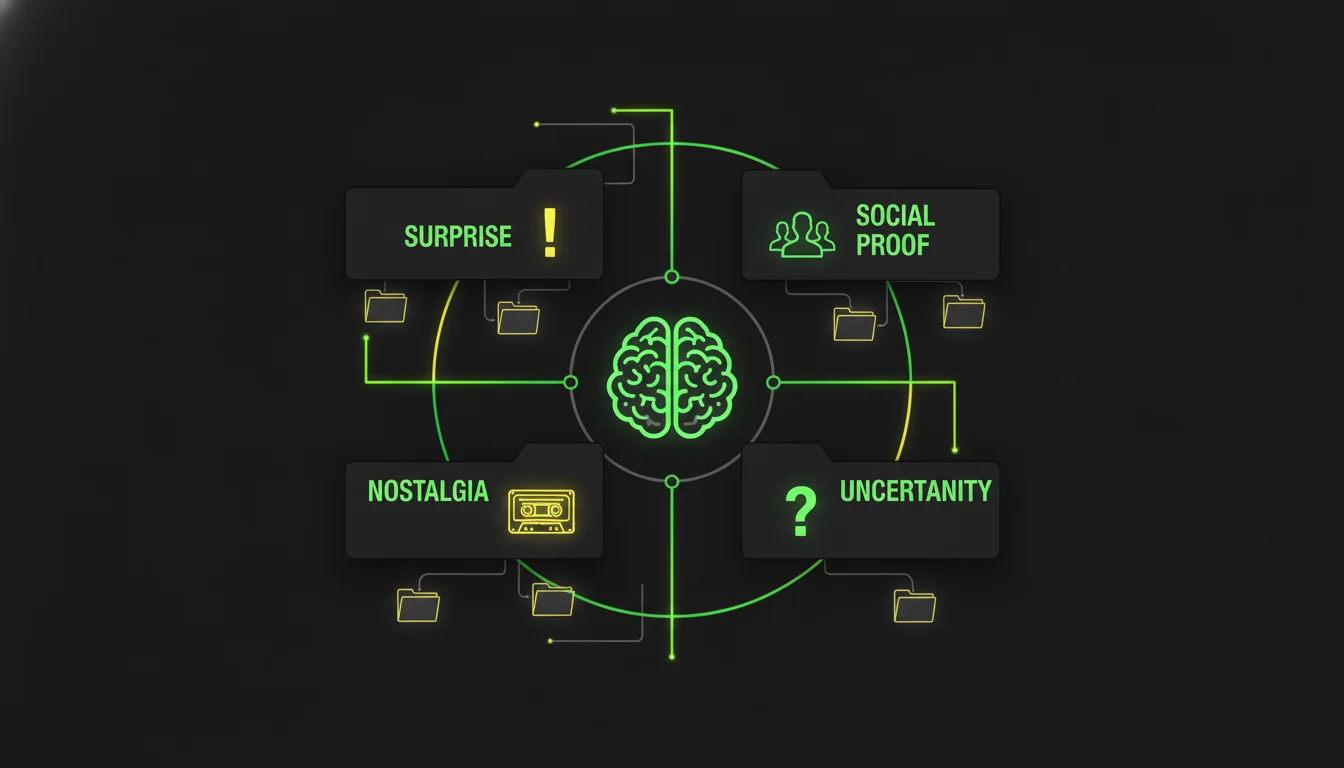
Trigger 3: Nostalgia (Emotional Anchoring)
Nostalgia isn’t just sentiment. It’s a powerful neural state that activates the medial prefrontal cortex (self-reflection), posterior cingulate (emotional memory), and hippocampus (memory retrieval). A nostalgic campaign doesn’t just feel good. It hijacks memory pathways.
When a brand taps into shared cultural memories—a song from your youth, a color from childhood, a phrase from a beloved movie—they’re activating neural networks you’ve built over decades. That’s why nostalgia campaigns create disproportionate engagement and memorability.
Trigger 4: Uncertainty (Anticipation)
Unresolved uncertainty activates the anterior cingulate cortex and dorsolateral prefrontal cortex—regions tied to error prediction and cognitive dissonance. Your brain hates uncertainty. So it keeps working on the problem. It keeps remembering the brand. It keeps paying attention.
This is why cliffhangers work. Why mystery box marketing works. Why “you won’t believe what happens next” works. You’re creating a cognitive itch. Your brain won’t stop scratching until it’s resolved.
Memory-Driven Campaign Architecture
The winners in 2026 build campaigns using neuromarketing principles:
Stage 1: Emotional Anchor (Day 1)
Create surprise, nostalgia, or social proof to trigger emotional encoding. This is the memory hook. No rational messaging. Just pure emotional activation.
Stage 2: Reinforcement (Days 2-3)
Introduce the brand message while emotional encoding is happening. The emotional anchor makes the rational message stick. Boring features suddenly become memorable because they’re attached to emotions.
Stage 3: Multi-Sensory Integration (Days 4-7)
Engage different sensory channels—visual, audio, tactile, olfactory if possible. Video works better than static. Music matters. Color psychology matters. You’re building a neural network with multiple activation pathways.
Stage 4: Memory Consolidation (Days 8-14)
Space out touchpoints to leverage sleep cycles and consolidation. Research shows spaced repetition (touching someone every 3 days vs. every day) creates stronger long-term memory. You’re not chasing daily engagement. You’re optimizing for consolidation.
The Reality Check: Ethical Boundaries Matter
Neuromarketing reveals how to manipulate emotions. That’s powerful. It’s also dangerous. Brands using emotional neuroscience to deceive face backlash and regulatory scrutiny. But brands using it transparently—to create genuinely better experiences—build trust and loyalty.
The future belongs to brands that ask: “How can we create emotional resonance that aligns with genuine value?” Not: “How can we hack emotions to sell products people don’t need?”
When exploring AI transforming creative agencies, you’ll notice the most successful agencies pair emotional intelligence with data ethics. They measure emotional response. But they use that data to create more authentic, resonant, valuable campaigns.
Essential Tools & Measurement Framework
Neuromarketing Tools: Tobii Pro Eye Tracker (eye-tracking), Affectiva (facial coding AI), Muse Headband (EEG data), Neuralsense (emotional prediction AI).
AI-Powered Analysis: OpenAI GPT (sentiment analysis), Clarifai (visual emotion detection), Hugging Face (NLP emotional triggers).
Measurement: Track emotional engagement (facial expressions + eye-tracking), memory encoding likelihood (AI prediction score), and behavioral outcomes (conversion, retention, referral).
Conclusion
In 2026, marketing evolution divides into two camps: those obsessed with attention (clicks, impressions, reach) and those obsessed with emotion (memory, recall, loyalty). The second camp is winning.
Neuromarketing + AI isn’t about manipulation. It’s about understanding human neurology deeply enough to create campaigns that genuinely resonate, stick, and drive meaningful behavior change.
Your brand doesn’t need to be louder. It needs to be more memorable. Garage Collective combines neuroscience-backed creative strategy with AI-driven emotional optimization to build campaigns people remember, not just campaigns people see.
FAQs
Q1. How can small brands access neuromarketing without expensive equipment?
Use AI-powered facial coding on existing video content, track eye-engagement from heatmaps, and leverage sentiment analysis tools on customer feedback to infer emotional resonance.
Q2. Does neuromarketing replace traditional A/B testing?
No. Neuromarketing reveals why one variant outperforms—emotional mechanisms. Traditional A/B testing reveals what works. Together, they’re powerful.
Q3. How do I know if a campaign triggered memory encoding?
Look for unusual engagement patterns (people returning unexpectedly), higher referral rates, longer dwell time, and customer comments about “not being able to stop thinking about it.”
Q4. Can nostalgia and surprise work together in one campaign?
Yes, powerfully. Surprise in a nostalgic context activates both attention and deep memory pathways. Unexpected twist on a beloved memory is peak emotional marketing.
Q5. What’s the relationship between emotional recall and purchase decisions?
95% of purchasing happens subconsciously. Emotional memories guide those decisions. A brand someone remembers emotionally converts 3-5x higher than a brand they’ve simply heard of.
