


If you’ve ever wondered why some websites show up on Google’s first page while others don’t, the answer is SEO. Search Engine Optimization (SEO) is the process of improving your website so search engines like Google rank it higher in organic (unpaid) results. Whether you’re a blogger, small business owner, or digital marketer, learning SEO is one of the highest-ROI skills you can build in 2026.
What Is SEO and Why Does It Matter?
SEO stands for Search Engine Optimization — a set of strategies that make your website more visible when people search for topics related to your business or content. Unlike paid ads, organic SEO traffic is free and compounds over time. According to multiple studies, the top three Google results capture over 60% of all clicks, making SEO a non-negotiable for any online presence.
Google uses complex algorithms to evaluate pages using factors like content relevance, backlinks, page speed, and mobile-friendliness. Understanding these factors is your first step.
The 4 Stages of SEO
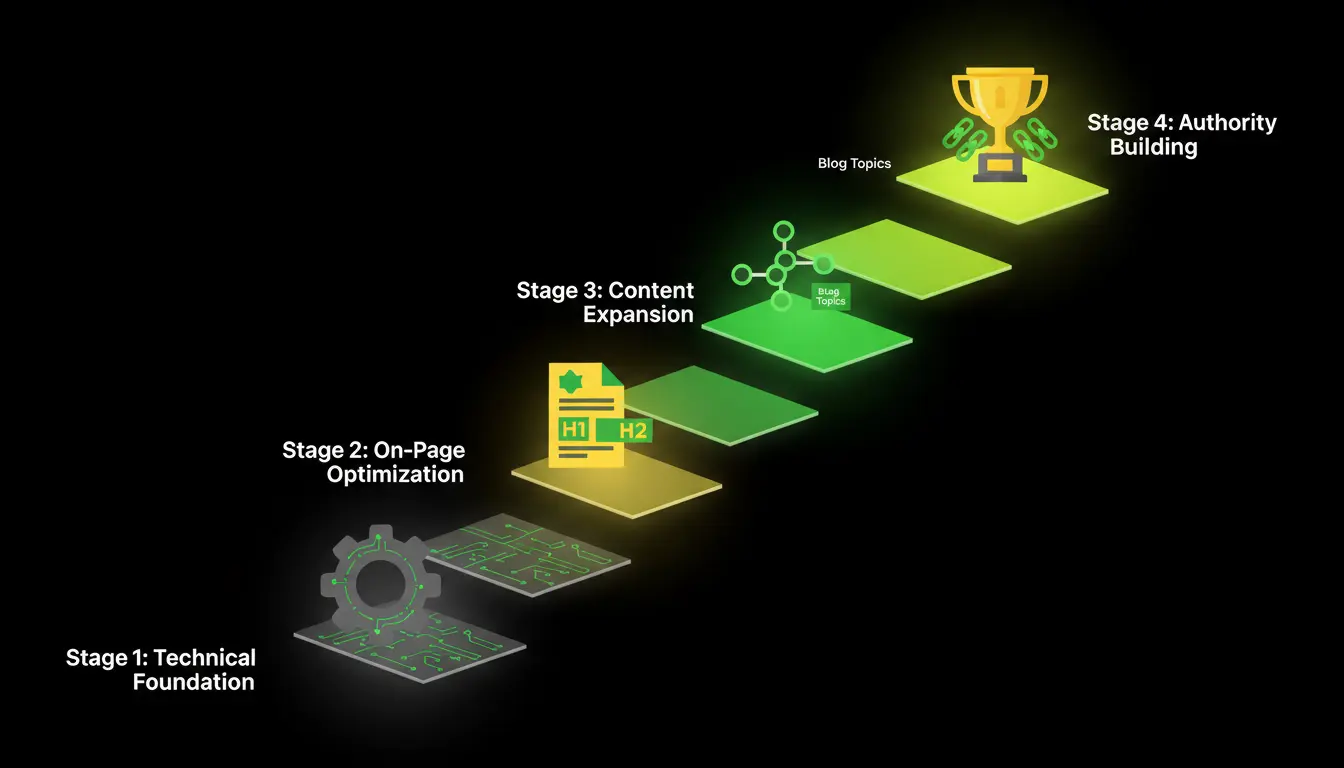
SEO isn’t a one-time task — it’s a progressive journey with four clear stages:
- Technical Foundation — Ensure Google can crawl and index your site. Set up an XML sitemap, fix broken links, enable HTTPS, and improve Core Web Vitals.
- On-Page Optimization — Optimize titles, meta descriptions, headers (H1-H3), keyword placement, image alt text, and internal links.
- Content Expansion — Build topic clusters around your niche using blog posts, landing pages, and guides that match user search intent.
- Authority Building — Earn high-quality backlinks through guest posts, digital PR, and link-worthy content.
What Are the 3 C’s of SEO?
The 3 C’s — Content, Code, and Credibility — form the backbone of modern SEO:
- Content: Original, helpful, and intent-matched content that answers real user queries
- Code: Clean technical structure that enables fast loading and easy crawling
- Credibility: Trustworthy signals like backlinks, author bios, and brand mentions
The 80/20 Rule in SEO
The Pareto Principle applies heavily to SEO — 80% of your results come from 20% of your efforts. That 20% typically includes: choosing the right keywords, writing high-quality content, fixing major technical issues, and earning a few strong backlinks. Don’t chase every tactic. Focus on the fundamentals first and do them well.
Can You Do SEO Yourself — For Free?
Absolutely. Beginners can learn and apply SEO without spending a rupee using:
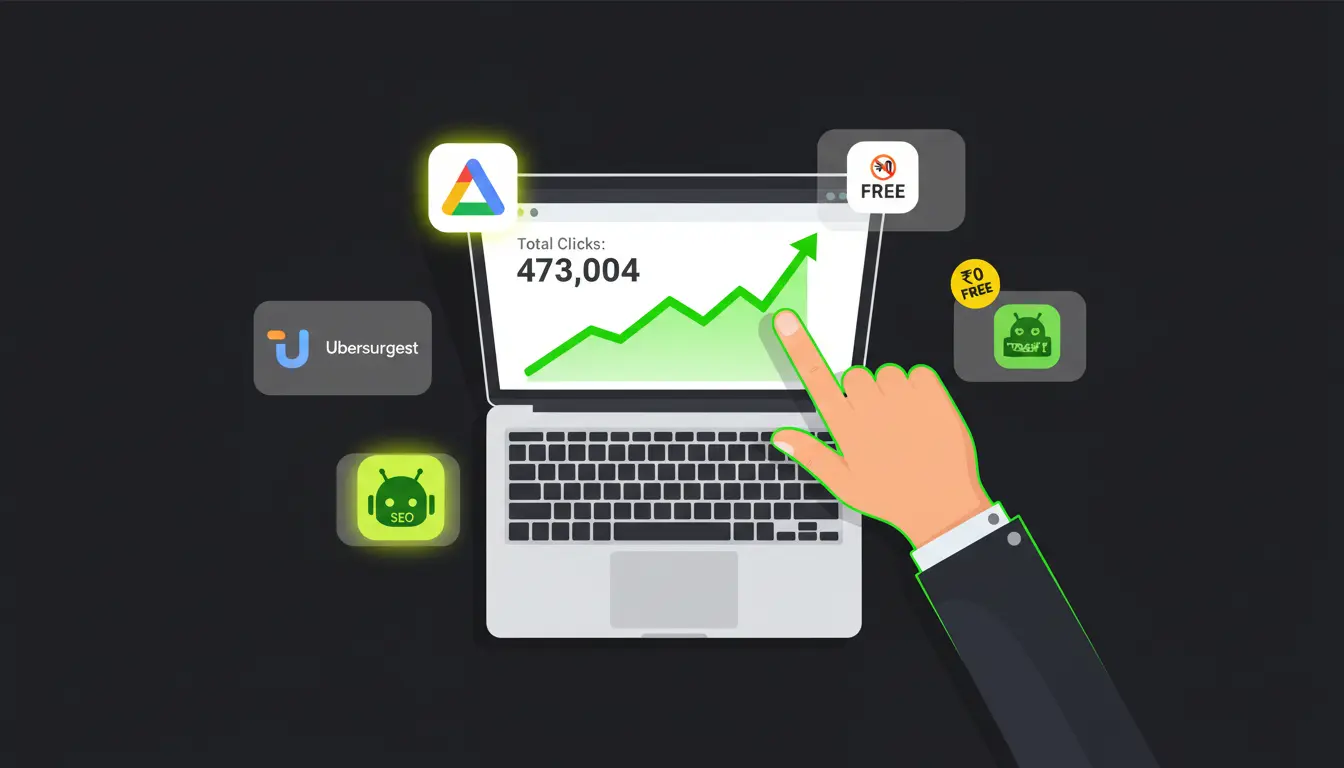
- Google Search Console — Monitor indexing, clicks, and errors
- Google Analytics — Track traffic and user behavior
- Ubersuggest (Free Tier) — Keyword research
- Yoast SEO (WordPress) — On-page optimization guidance
- Moz Beginner’s Guide — Structured free learning resource
The key is consistency. Apply what you learn on a real website and iterate based on results.
Is Google SEO Hard to Learn?
SEO has a learning curve but is not difficult if approached systematically. The basics — keyword research, title optimization, and content writing — can be learned in weeks. Advanced strategies like technical audits and link building take months of practice. The good news: Google itself provides a free SEO Starter Guide that covers everything a beginner needs.
How Quickly Can You Learn SEO?
- 2–4 weeks: Understand SEO concepts and terminology
- 1–3 months: Apply on-page SEO and see early ranking signals
- 6–12 months: Build authority and experience measurable traffic growth
Results depend on your niche competitiveness, publishing frequency, and consistency of effort.
Can ChatGPT Do SEO?
ChatGPT is a powerful SEO assistant — it can help with keyword brainstorming, meta description writing, blog outlines, and FAQ generation. However, it cannot replace actual SEO tools for rank tracking, backlink analysis, or technical audits. Use AI as a productivity layer on top of your SEO strategy, not as a replacement for it.
FAQ’S
Q1. What is the 80/20 rule in SEO?
80% of your SEO results come from 20% of efforts — focus on keywords, content quality, and core technical fixes.
Q2. Can I learn SEO by myself?
Yes — free resources like Google Search Console, Moz, and hands-on practice are enough to get started.
Q3. Can ChatGPT do SEO?
ChatGPT assists with content and ideation but can’t replace dedicated SEO tools for audits and tracking.
Q4. Can you do SEO for free?
Yes — Google Search Console, Analytics, and Ubersuggest’s free tier cover most beginner needs at zero cost.
Q5. How quickly can I learn SEO?
Basic concepts take 2–4 weeks; measurable results typically appear within 3–6 months of consistent effort.
