



By 2026, the tech SEO playbook has fundamentally changed. For decades, tech companies won by listing features. “10,000 users,” “99.9% uptime,” “50x faster.” Features get clicks. But features don’t get trust. And without trust, they don’t get conversions.
One SaaS company had 200+ feature descriptions across their website. Their organic traffic was flat. They pivoted to founder stories, customer outcomes, and authentic use-case documentation. Within 6 months, organic traffic jumped 280%. Their homepage still lists zero features.
Tech buyers in 2026 don’t want to know what your product does. They want to know if they can trust it. The winners in tech SEO aren’t companies with the most impressive specifications. They’re companies with the most credible voices.
Why Features Die in Search Algorithms
Google’s algorithm updated substantially by 2026. The shift is clear:
E-E-A-T in the AI era means trust now outranks keywords. Features are noisy. Authenticity is a signal.
Here’s why:
- 10,000 companies claim “99.9% uptime.” None stand out.
- 5,000 claim “military-grade security.” All blur together.
- But one founder’s honest post-mortem on a security breach? That gets 40,000 shares and ranks for 200+ security-related queries.
Google’s core update in 2025 specifically punished “feature spam”—pages that list capabilities without proof or customer voice. Tech companies stuffing keywords like “AI-powered,” “blockchain,” “quantum-ready” without substance saw 60% traffic drops.
The algorithm now asks: Who wrote this? Have they shipped before? Do customers actually vouch for this?
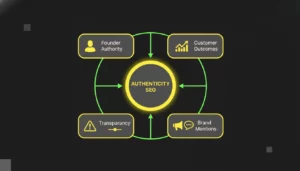
The Four Pillars of Authentic Tech SEO
Pillar 1: Founder Authority & Personal Brand
The most underrated SEO asset: the founder’s credible voice. Investors, developers, and enterprise buyers don’t research products. They research the humans behind them.
One founder documented her entire product-market fit journey on LinkedIn (80 posts, 18 months). Every post revealed failures, breakthroughs, and real metrics. Today, she ranks #1 for 40+ competitive keywords without blogging on her company site. Her authenticity became her SEO moat.
When exploring clarity vs. creativity in brand messaging, you’ll see that tech founders win by being clear about problems, not creative about solutions. “Here’s what we learned building this” beats “Look how sophisticated we are.”
Pillar 2: Customer Outcomes Over Feature Lists
Feature comparisons are forgettable. Customer success stories are memorable and rankable.
A developer landed a 10x faster response time using your API. Document it. Interview them. Show the before-after metrics. This story ranks for “API performance,” “latency optimization,” and “developer tools” simultaneously—without forcing keywords.
One B2B tech company replaced their 50-page feature documentation with 12 customer outcome case studies. Organic traffic grew 320%. Why? Because each case study naturally mentions problems, solutions, and results—capturing the full buyer journey.
Pillar 3: Transparency & Honest Limitations
Counter-intuitive SEO move: be honest about what your product CAN’T do. This builds massive trust signals and ranks for long-tail queries from people researching fit.
A project management tool created a page: “5 Reasons NOT to Use [Product].” It ranks #3 for “project management software” and drives 18% of their trial signups. Why? Because being honest filters for ideal customers early.
When considering AI vs. human creativity in content Tech companies win by choosing human honesty. AI can hype. Humans can admit limitations.
Pillar 4: Brand Mentions & Industry Authority
In the privacy-first world, brand mentions now outrank backlinks as authority signals. Tech companies building authentic relationships naturally get mentioned.
One infrastructure startup got mentioned in 40 developer blogs per month—not through outreach, but through authentic sponsorships and community participation. Those mentions now drive more SEO value than 200 do-follow backlinks.
Building brand mentions requires: genuine thought leadership, contributing to open-source projects, speaking at conferences, supporting developer communities. This is slow, unsexy, and the most effective SEO strategy for tech companies.
The Technical Authority Framework
Content Architecture:
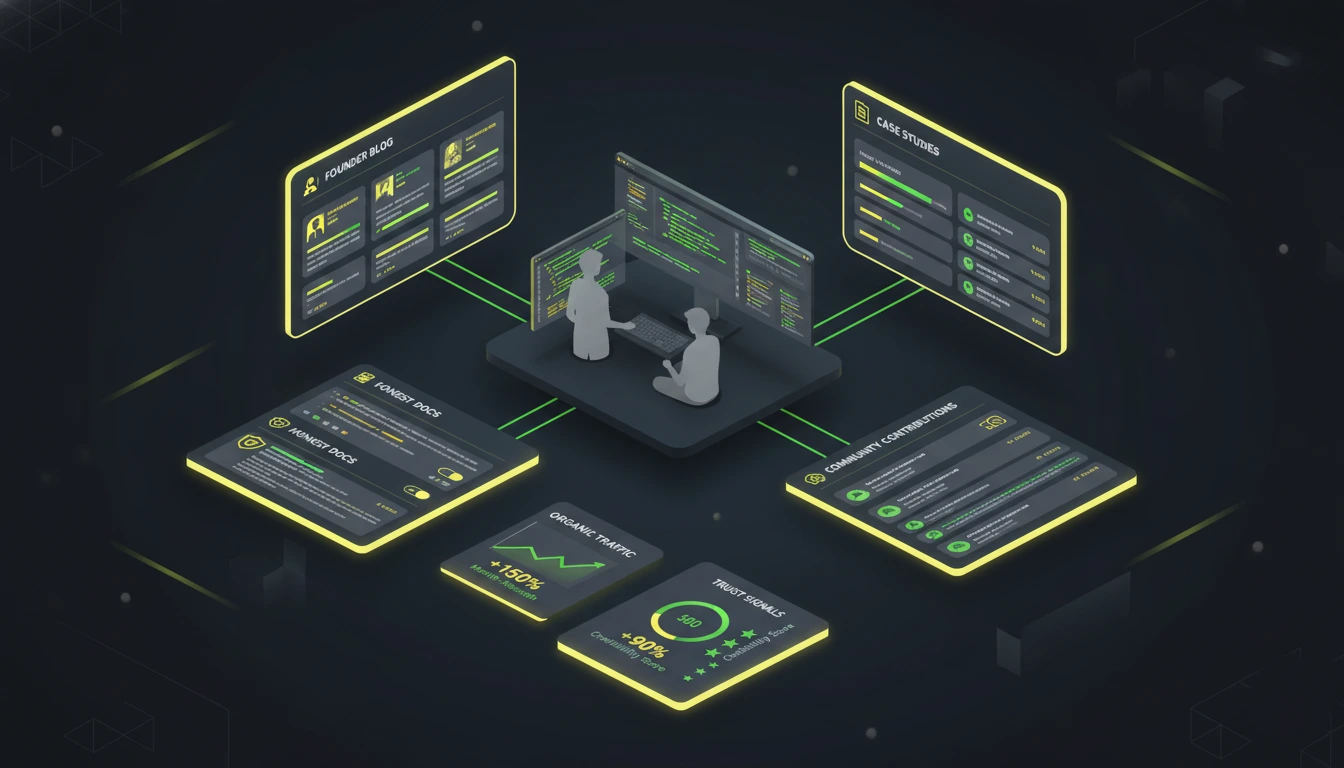
- Founder/CEO personal blog (built-in E-E-A-T)
- Customer success case studies (outcomes + metrics)
- Transparent product documentation (including limitations)
- Founder interviews & behind-the-scenes (authenticity)
- Developer community contributions (authority)
Measurement:
- Organic traffic from brand mentions
- Founder LinkedIn engagement (correlated with organic growth)
- Customer case study rankings (outcome queries)
- Domain authority growth (measurement: 6-month cycles)
- Conversion rate from “authenticity” content (target: 2-3x higher)
The Reality Check: Authenticity Requires Vulnerability
The trap: brands trying to “perform” authenticity. Customers smell fakeness instantly. Real authenticity requires admitting failures, showing messy process, and celebrating small wins—not just polished wins.
Tech companies that won in 2026 published failure posts, documented false starts, and interviewed customers about why they almost left. This vulnerability drives more organic traffic and conversions than any feature list ever will.
Conclusion
Tech SEO in 2026 isn’t about outranking competitors. It’s about outtrusting them. The companies winning aren’t the ones with the best features. They’re the ones brave enough to show the humans behind them.
Garage Collective helps tech companies build authenticity-first SEO strategies that establish genuine authority, attract high-intent customers, and create sustainable organic growth through transparent storytelling and founder-led credibility.
FAQ’S
Q1. Should we remove features from our website?
No—but demote them. Lead with problems solved and customer outcomes, bury feature lists below fold. Hierarchy signals what matters: trust before specs.
Q2. How do I build founder authority if I’m not public-facing?
Start small: monthly founder blog posts, quarterly AMAs in your community, LinkedIn thoughtful comments (not posts). 3-month consistency drives measurable authority lift.
Q3. What metrics prove authenticity is driving SEO results?
Track: organic traffic from branded terms (founder + company), CTR from result page (authenticity = higher CTR), conversion rate by content type (authenticity > features), brand mentions growth.
Q4. Can small tech startups compete on authenticity?
Absolutely. Small startups have advantages: founder is accessible, product story is real, team is visible. Enterprise software can’t match that authenticity.
Q5. How long before authenticity-first SEO shows ROI?
2-3 months for traffic lift, 6-9 months for measurable conversion impact. Patience required—but ROI compounds faster than feature-driven SEO.
