



SEO — Search Engine Optimization — is one of the most searched digital marketing terms in the world, yet many people still aren’t sure what it truly means or how it works. Simply put, SEO is the practice of improving your website so that search engines like Google rank it higher in organic (unpaid) results when people search for topics related to your business. In 2026, with AI reshaping how search engines work, understanding SEO is more valuable than ever.
What Does SEO Actually Mean?
SEO stands for Search Engine Optimization. It is the process of structuring your website’s content, code, and credibility so that search engines can crawl, understand, and confidently rank it above competitors. Think of Google as a librarian — SEO is how you help that librarian recommend your book to the right reader at the right time.
SEO covers three core areas:
- On-Page SEO — Titles, keywords, headers, meta descriptions, and content quality
- Technical SEO — Site speed, mobile-friendliness, crawlability, and structured data
- Off-Page SEO — Backlinks, brand mentions, and authority signals from other websites
Is SEO an IT Skill?
SEO is not a pure IT skill — it is a multidisciplinary skill that blends marketing, content strategy, data analysis, and some technical knowledge. While technical SEO does require familiarity with HTML, JavaScript, and site architecture, the majority of SEO work involves keyword research, content writing, and strategic thinking. In 2026, SEO professionals are also expected to understand AI tools like BERT, MUM, and Gemini that influence how Google ranks content.
Is SEO Difficult to Learn?
SEO has a learning curve, but it is absolutely learnable without a technical degree. The fundamentals — keyword research, on-page optimization, and content creation — can be grasped in a few weeks using free resources. Advanced skills like technical audits, link building, and AI-driven SEO strategies require consistent practice over months.
What Is the Golden Rule of SEO?
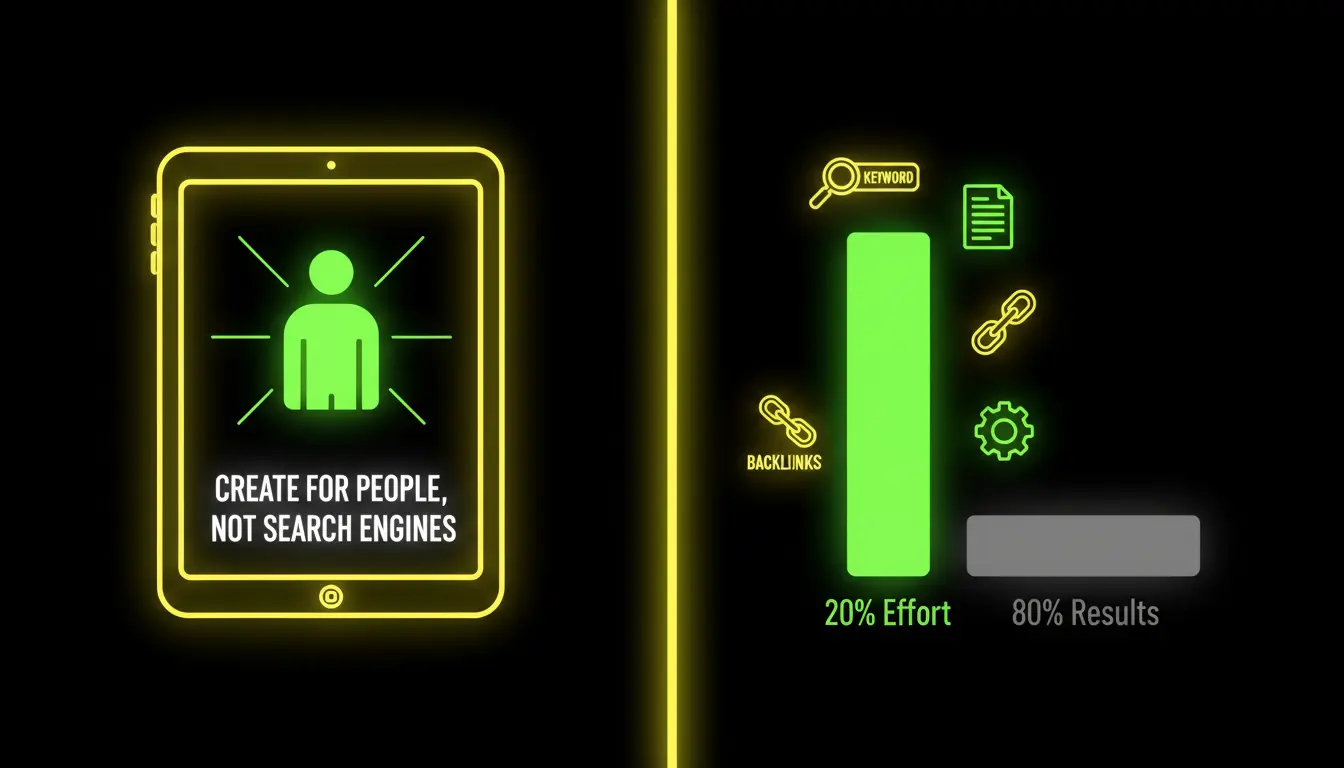
The golden rule of SEO is simple: create content for people, not search engines. When your content genuinely answers questions, solves problems, and provides real value, it automatically satisfies Google’s ranking criteria. Paired with E-E-A-T (Experience, Expertise, Authoritativeness, and Trustworthiness), this people-first principle is the single strategy that never becomes obsolete.
What Is the 80/20 Rule in SEO?
The 80/20 rule in SEO means that 80% of your organic traffic results come from just 20% of your efforts. That critical 20% typically includes choosing the right target keywords, writing high-quality content that matches search intent, earning a handful of strong backlinks, and fixing core technical issues. Prioritize these fundamentals before chasing advanced tactics.
What Are the 4 Stages of SEO?
SEO success follows a clear four-stage progression:
- Technical Foundation — Fix crawling, indexing, page speed, and mobile issues
- On-Page Optimization — Optimize titles, headers, content, and internal links
- Content Expansion — Build topic clusters and target long-tail keywords
- Authority Building — Earn backlinks and build domain credibility over time
Can I Do SEO for Free?
Yes — beginners can start SEO at zero cost using tools like Google Search Console, Google Analytics, Ubersuggest’s free tier, and Moz’s Beginner’s Guide. Free platforms like WordPress with Yoast SEO also provide real-time on-page recommendations without any subscription.
How Much Does SEO Cost?
SEO costs vary widely depending on whether you DIY or hire professionals:
- DIY SEO: Free (tools + time investment)
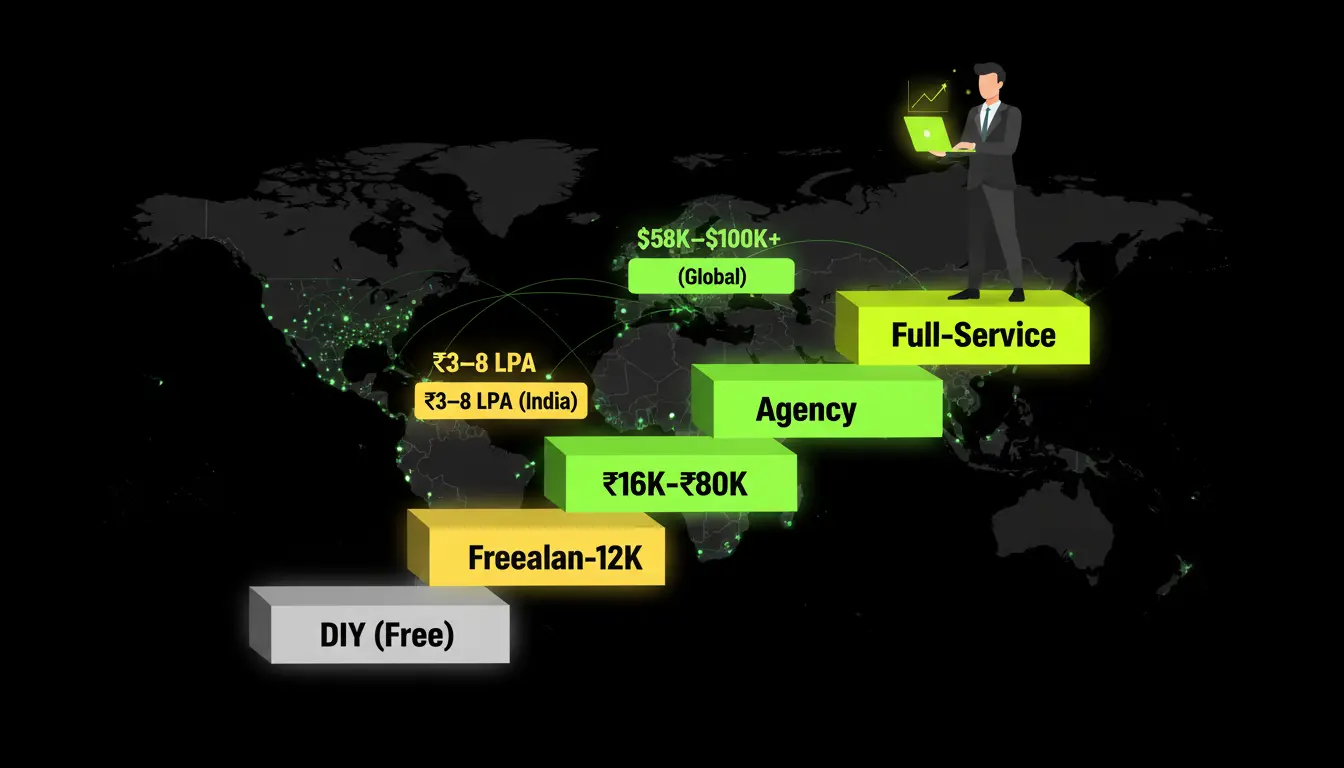
- Freelancer: ₹4,000–₹12,000/month (approx. $50–$150/hour globally)
- Basic Agency Package: ₹16,000–₹25,000/month ($200–$300/month)
- Full-Service Agency: ₹80,000–₹1,60,000+/month ($1,000–$2,000+/month)
How Much Do SEOs Get Paid?
SEO is a well-paying career globally. The median annual salary for an SEO professional is around $58,000, with specialists earning between $38,000–$109,000 per year depending on experience and role. SEO Managers in the US earn an average of $80,585 annually, while senior roles and consultants cross $100,000+. In India, SEO specialists typically earn ₹3–₹8 LPA at entry level, scaling significantly with experience.
FAQ’S
Q1. What does SEO mean?
SEO stands for Search Engine Optimization — improving a website to rank higher in organic Google search results.
Q2. Is SEO an IT skill?
SEO is a multidisciplinary skill combining marketing, content, data analysis, and some technical knowledge — not purely IT.
Q3. What is the golden rule of SEO?
Always create content for people first — when you solve real user problems, search engines reward you automatically.
Q4. Can I do SEO for free?
Yes — Google Search Console, Analytics, and Ubersuggest’s free tier are enough to get started at zero cost.
Q5. How much does SEO cost?
Basic SEO starts free with DIY tools; professional agency services range from $200 to $2,000+ per month.
