



For seven years, marketers chased E-E-A-T—Google’s framework for Experience, Expertise, Authoritativeness, and Trustworthiness. Agencies added credentialed authors. Publishers stacked author bios. Everyone hunted “trust signals.”
But in 2025, AI generates answers instead of humans clicking through. No one reads your “About Us” page. AI decides: Is this source cite-worthy? This flips the trust equation entirely.
The Trust Shift in AI Answers
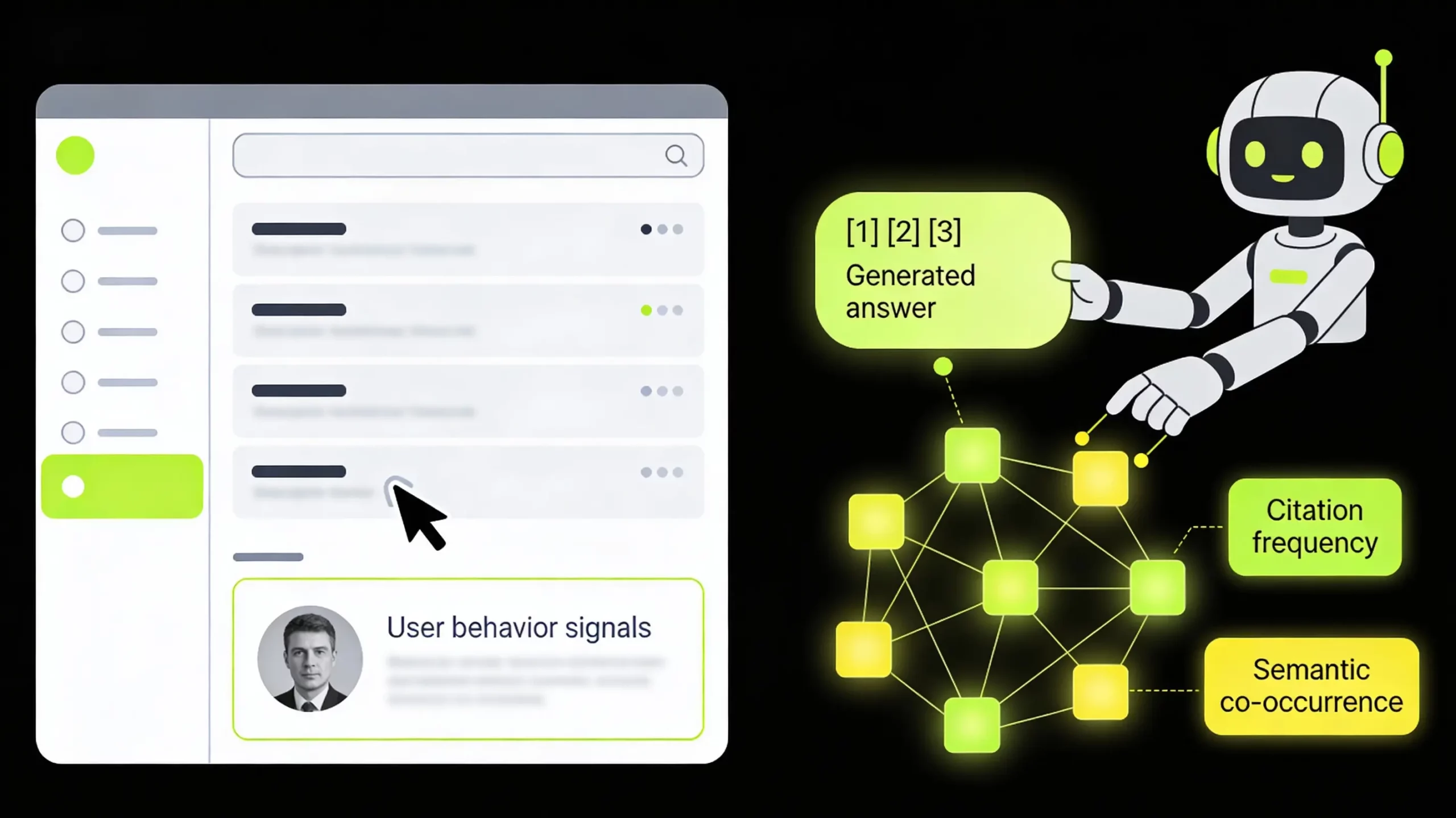
Traditional E-E-A-T relied on user signals like clicks, dwell time, and returns. AI lacks those. It judges via:
-
Semantic co-occurrence: Your content clusters with other authorities on the topic.
-
Citation frequency: Frequent nods from trusted sources.
-
Contradiction checks: Alignment (not conflict) with source consensus.
-
Domain metadata: Recognition from established sites.
A polished page with strong human E-E-A-T might flop in AI citations without external backing. Meanwhile, a cited research piece from a niche source often wins out.
Reframed E-E-A-T Pillars for AI
Adapt each pillar to AI’s pattern-matching:
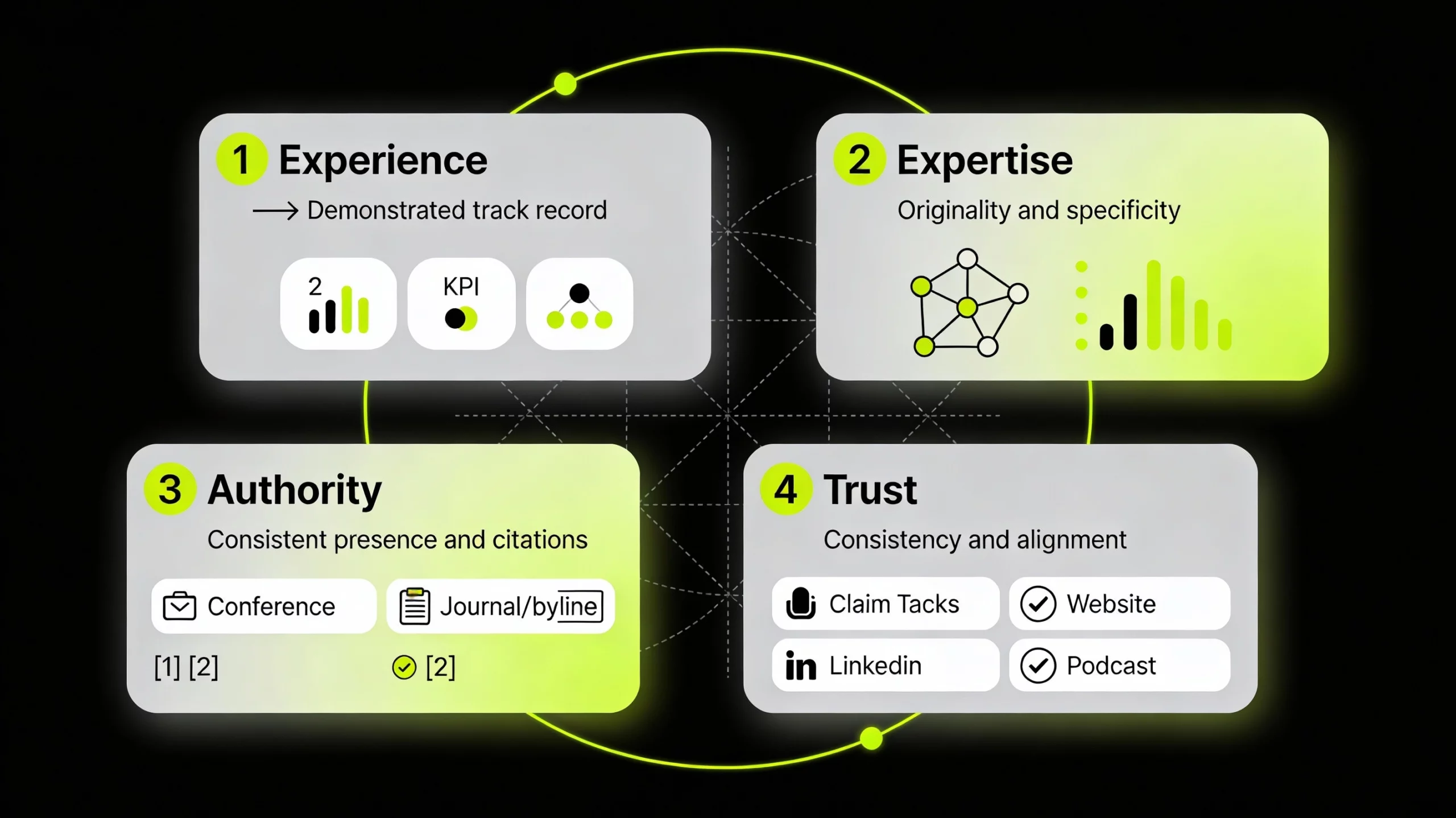
Experience → Quantified Track Record
Swap bio lists for specifics:
-
“Led 150+ SaaS marketing transformations, boosting revenue 47%.”
-
“Deployed strategies for 500+ brands in 12 countries.”
AI spots verifiable outcomes over vague claims.
Expertise → Originality + Specificity
Prioritize unique research, data-backed claims, and counterintuitive insights. This is why original research and proprietary frameworks get cited more than rehashed advice—AI systems recognize the semantic uniqueness of your patterns.
Authoritativeness → Citation Density
Build via guest posts, research mentions, conference talks, and journalist links. After 30–40 diverse citations, AI treats you as a reference point.
Trustworthiness → Cross-Platform Consistency
Align messaging across LinkedIn, publications, and speeches. Inconsistencies flag skepticism; harmony boosts citation odds.
3-Phase Action Plan
Phase 1: Audit Assets
-
Inventory platforms (site, LinkedIn, pubs, podcasts).
-
Check voice/claim consistency.
-
Quantify outcomes with metrics.
Phase 2: Stack Citations
-
Target 20–30 industry pubs for features.
-
Network 50+ journalists/analysts.
-
Release quarterly original research (surveys, cases).
Phase 3: Embed Trust Signals
-
Update bios with results.
-
Link case studies to third-party mentions.
-
Add transparent author pages with credentials.
Expect 10–15% more AI citations, better snippets, and authority query gains within 6 months.
Future-Proofing with Transparency
The brands winning in 2025 aren’t those with the slickest design or most credentials. They are the ones who build sustainable authority through authentic engagement, consistent messaging, and verifiable outcomes.
E-E-A-T didn’t become irrelevant. It evolved. The new trust is semantic, distributed, and earned through consistent demonstration of expertise.
FAQs
Q1: What’s E-E-A-T in 2025?
AI-verifiable reliability over user-pleasing pages.
Q2: Why trust differs in AI answers?
Models cite based on source signals, skipping site visits.
Q3: Key AI trust signals?
Citations, authority alignment, clear provenance.
Q4: Prove “Experience” to AI?
Specific metrics and methods for corroboration.
Q5: Fastest E-E-A-T boost?
Original content + earned mentions on reputable sites.
