Corporate Video Production Cost in India: 2026 Budget Guide
Abhishek Dwivedi
Team Lead, SEO
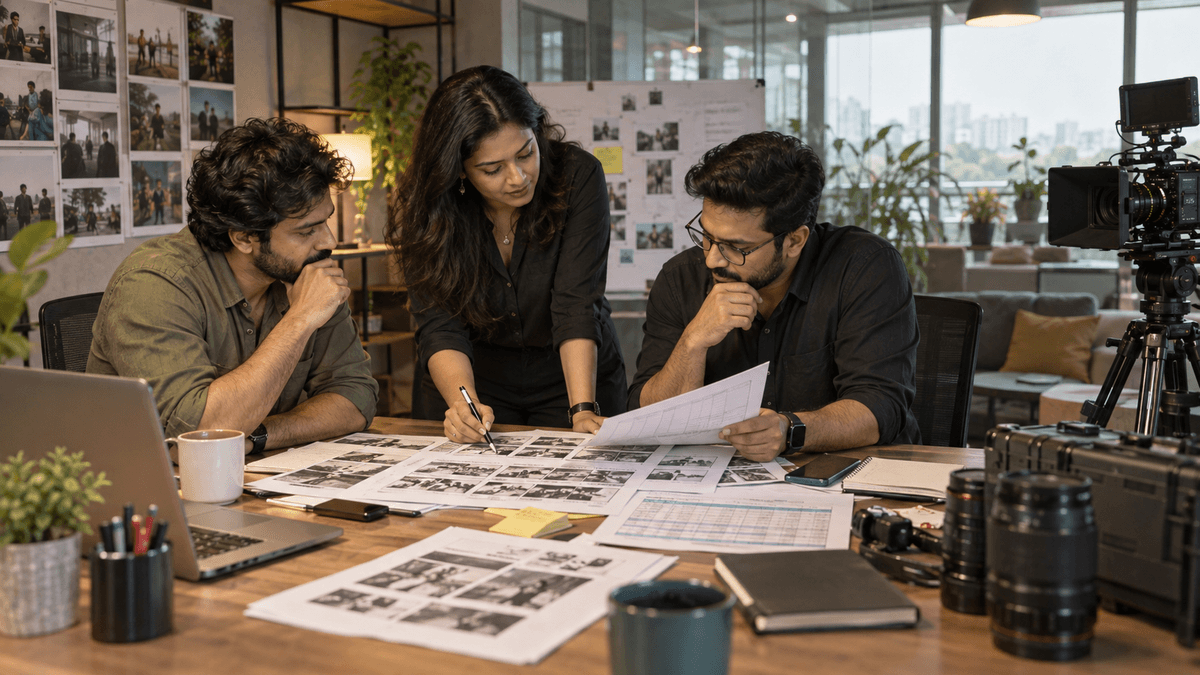
Corporate video production costs in India vary because the term can mean anything from a single-location interview to a multi-city brand film. Published 2026 market guides place simple productions near ₹25,000 to ₹1,00,000, while complex cinematic work can reach ₹10 lakh or more. The only useful quote is one tied to a defined scope. Contents: cost ranges, budget drivers, itemized quote checklist, realistic budgeting steps, hidden costs, common mistakes, supplier comparison, and frequently asked questions.
Key takeaways
Published price ranges are market observations, not a Garage Collective rate card. Format, shoot days, crew, locations, talent, post-production, rights, and versions affect cost more than video length alone. Ask every vendor to quote against the same brief and compare ownership, usage rights, revisions, travel, taxes, and delivery formats before comparing totals.
How much does corporate video production cost in India in 2026?
Current published guides show a very wide market. Basic productions are often quoted from roughly ₹25,000 to ₹1,00,000. Mid-scope company-profile or corporate films are commonly placed in the low lakhs. Multi-location, talent-led, cinematic, or effects-heavy productions can move beyond ₹10 lakh. These are market-published estimates, not a universal rate card. Use them to test whether a proposal is plausible, not to price a real project.
Why do corporate video production quotes vary so much?
A founder interview, recruitment film, product demonstration, customer story, brand documentary, and TVC solve different problems. The goal determines how much research, scripting, visual treatment, production control, and post-production is needed. Garage Collective offers brand film and video production services from concept through final cut.
Pre-production prevents expensive uncertainty
Pre-production can include discovery, concept routes, scriptwriting, storyboards, shot lists, casting, location scouting, schedules, permits, and production design. Removing these lines may make a quote look cheaper, but it can transfer uncertainty to the shoot day, when changes are most expensive. The agency’s creative strategy and performance content work shows why concept and channel planning should be scoped before cameras roll.
Shoot days and crew size change direct costs
A focused interview may need a small crew and one location. A brand film may need a director, producer, cinematographer, camera and lighting teams, sound, art direction, styling, hair and makeup, production assistants, and location management. Additional days affect crew, equipment, transport, accommodation, catering, and insurance.
Post-production, versions, and usage rights change the total
Post-production may include ingest and backup, edit versions, motion graphics, animation, visual effects, colour grading, sound design, voice-over, music licensing, subtitles, captions, aspect-ratio versions, language versions, and channel-specific masters. Ask where, for how long, and in which territories the film, music, voice, footage, and talent will be used. India’s Copyright Act treats cinematograph films, sound recordings, and underlying works as distinct protected works, so written rights and licenses matter.
What should an itemized video production quote include?
Use the same checklist for every supplier: 1. Objective, audience, message, and channels. 2. Final duration and number of edits. 3. Concepts, script, storyboard, and approval stages. 4. Crew roles and shoot days. 5. Camera, lighting, grip, sound, and specialty equipment. 6. Casting, talent fees, voice-over, and usage terms. 7. Locations, permits, travel, accommodation, catering, and insurance. 8. Production design, props, wardrobe, hair, and makeup. 9. Editing, animation, visual effects, colour, and sound. 10. Music source, license, and territory. 11. Subtitles, captions, languages, and accessibility. 12. Horizontal, vertical, square, short, and platform-specific versions. 13. Review rounds and extra-revision charges. 14. Raw footage, project files, backup, and archive period. 15. Delivery specifications, timeline, payment milestones, taxes, and exclusions.
How do you build a realistic corporate video budget?
Step 1: define the business job in one sentence. Step 2: list the full deliverable family, not only one hero film. Step 3: separate the fixed base scope from optional shoot days, locations, talent, animation, languages, and versions. Step 4: define a change process and contingency for approved changes. Step 5: compare relevant work, process, ownership, and production controls, not only the total. Garage Collective’s Bodycare brand film case study is a verified example, and buyers can inspect broader Garage Collective work.
Which video production costs are commonly missed?
Common omissions include talent and music usage extensions, location permissions and overtime, travel and freight, props and wardrobe, teleprompter or specialty equipment, multiple languages, subtitles and transcripts, vertical and short versions, paid-media masters, additional revision rounds, raw footage, project files, long-term archive, taxes, and third-party pass-through costs. India Cine Hub publishes general filming-permission guidance, but the actual requirement depends on the location, production, and authority involved.
Common budgeting mistakes
Avoid asking for a quote before defining deliverables, choosing by finished duration alone, treating revisions as unlimited, ignoring distribution versions, and leaving rights until the end. A 30-second film can require more production design, talent, and post-production than a five-minute interview. Define reviewers, approval stages, feedback rounds, usage, territory, term, paid media, music, and talent rights in the brief.
How should you compare video production companies?
Shortlist partners using five questions: 1. Have they delivered the same type of film, audience, or production complexity? 2. Does the proposal explain the creative route and production method? 3. Are inclusions, exclusions, rights, revisions, and versions explicit? 4. Who owns approvals, safety, backups, and final quality? 5. Can the team show relevant work and explain its role? Price matters, but clarity is a signal too.
Frequently asked questions
What is the average corporate video production cost in India?
Published 2026 guides show basic work near ₹25,000 to ₹1,00,000 and complex productions at ₹10 lakh or more. The range is broad because the same label covers interviews, company-profile films, product videos, documentaries, social assets, and cinematic campaigns. Request a scope-based estimate.
What makes a corporate video more expensive?
The largest drivers are creative development, shoot days, crew, equipment, locations, talent, travel, production design, animation, visual effects, music and talent rights, number of versions, and revision scope.
Is animation cheaper than live action?
Not automatically. Simple motion graphics can be efficient, while original character animation, 3D work, simulations, or many revision rounds can cost more than a focused live-action shoot. Compare the method against the communication goal.
How long does corporate video production take?
Timelines depend on approvals and complexity. A focused interview can move quickly, while a concept-led, multi-location, talent-heavy film may require several weeks for pre-production, filming, post-production, and approvals. Ask for milestones and approval deadlines in the proposal.
Should the quote include raw footage?
Do not assume it does. Raw footage and editable project files affect storage, transfer, licensing, and future-edit responsibilities. State the requirement in the brief and confirm the delivery format and archive period.
How many revisions should be included?
The useful answer is a defined number of consolidated review rounds at named stages. Script, storyboard, rough cut, fine cut, and final master should not be treated as one continuous unlimited revision cycle.
What should I send before asking for a quote?
Send the objective, audience, core message, intended channels, approximate duration, deliverable versions, reference quality, locations, languages, timeline, approval team, known rights requirements, and a realistic budget range.
Get a scope before you compare prices
If you are planning a corporate video, brand film, or campaign asset, start with a scope that makes quotations comparable. Request a free marketing plan or talk to the production team about the objective, deliverables, timeline and production approach. The first goal is clarity, not a rushed number. Sources: UFI Productions corporate-video cost guide, Cybertize Media corporate-video cost guide, Frame Makerzzz corporate-video cost guide, Copyright Act, 1957 and India Cine Hub filming-permission guidelines. Copyright and permission references are general information, not legal advice.
Like what you're reading?
Get a free marketing plan tailored to your brand
Get Your Free Planyes, actually free. we're not kidding.
Key Takeaways
the TL;DR your boss will love
This Isn't Just Theory. We Do This Daily.
Let us show you exactly what we'd do for your brand - strategy, channels, budget, timeline. Free. No pitch deck.
Get Smarter Every Week
Ideas, data, and the occasional hot take. Biweekly, no spam.
we promise not to sell your email to robots
You Might Also Dig These
^ we picked these just for you (okay, the algorithm did)
Google's October 2026 AI Content Guidance: SEO and E-E-A-T Checklist
Google updated its guidance on generative AI content on 1 October 2026, aligning the documentation more closely with its Search Quality Rater Guidelines. The update does not create a special ranking system for AI-written pages. It sharpens the standard that matters: content should serve a clear audience, demonstrate real expertise and make factual claims easy to verify. For Indian marketing teams using AI at scale, the operational question is no longer whether AI may be used. It is whether every published page adds original value, accountable authorship and dependable evidence.
ReadIndia Festive Commerce Playbook 2026: D2C, Quick Commerce and Always-On Growth
India’s festive season remains a major commercial opportunity, but e-commerce demand is no longer limited to a few sale events. NIQ describes a market shaped by both habitual purchases and event-driven peaks, while Meta points to video-first discovery, creators and messaging-led commerce. A useful festive plan connects demand forecasting, channel roles, creative and customer experience from discovery through repeat purchase.
ReadUltimate Guide to AI-First Agency Month: Optimize Performance Marketing ROI Amid Rising Ad Costs in India
Struggling to keep up with rising ad costs and ever-changing Google and Meta algorithms? Indian marketers, startups, and D2C brands are feeling the pressure to scale smarter - not harder. Ready to cut through the noise and supercharge your performance marketing ROI? This guide reveals AI-first strategies, proprietary tools, and proven tactics to help you stay ahead and win big in India’s digital market.
Read