Google Maps Promoted Pins and Affiliate Location Extensions: India Retail Guide
Abhishek Dwivedi
Team Lead, SEO
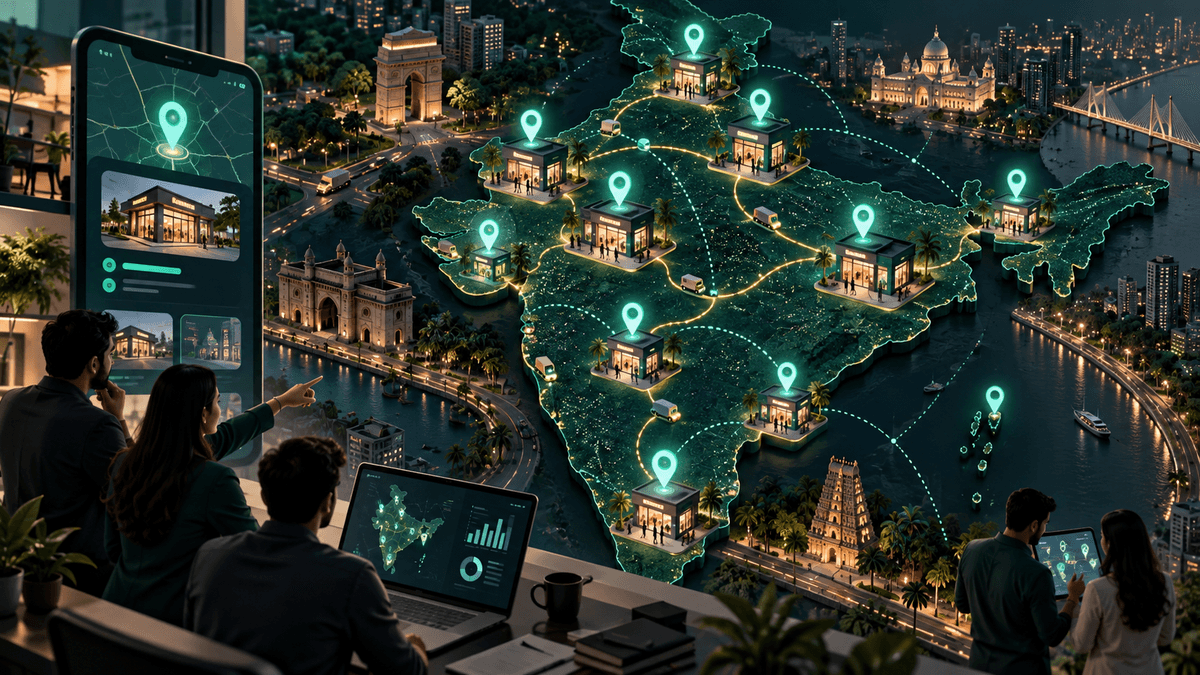
Google Maps can connect digital demand with nearby stores through promoted pins and location assets. For Indian retailers, dealers and brands sold through third-party chains, the opportunity is practical only when store data, eligibility, local inventory and measurement are reliable. This guide separates owned locations from affiliate networks and provides a launch checklist for local campaigns.
Understand the four Maps advertising surfaces
Google documents promoted pins, Map search ads, Map suggest ads and placesheet ads as distinct Maps experiences. Promoted pins can appear while people browse, search, follow directions or navigate. Campaign eligibility varies by format, and advertisers cannot buy Maps as a completely isolated channel in every case.
Demand Gen’s September 2026 update added promoted-pin opportunities for affiliate location extensions. Treat this as an extension of the customer journey rather than a replacement for Search, Performance Max or local organic visibility. Start with the business outcome—store discovery, directions, calls or visits—then choose the eligible campaign structure.
Choose owned or affiliate location assets correctly
Use owned location assets when your business controls the stores and can link a verified Business Profile. Use affiliate location assets when a manufacturer or brand sells through retail chains or dealerships it does not own. Mixing these models can produce inaccurate destinations and confusing reporting.
Document which entity owns each location, the source of its address and hours, the products or services available there and the update owner. For dealer networks and multi-brand retail, establish a removal process for closed, relocated or non-participating outlets before paid media begins.
Audit India location and inventory data
Standardise store names, address lines, PIN codes, latitude and longitude, phone numbers, opening hours and holiday exceptions. Test the pin and directions route on mobile rather than assuming the postal address resolves correctly. Include regional-language business names only when they are consistent with the verified source.
If the ad implies that a product is available nearby, connect the campaign promise to current local inventory or an explicit confirmation step. A promoted pin that sends a shopper to an out-of-stock outlet creates wasted media, support costs and brand distrust.
Design offers for local intent
Local creative should explain why the nearby visit is useful: availability, demonstration, test drive, service, collection, consultation or a valid local promotion. Keep the offer consistent across the ad, Maps location page, store staff and landing page. Avoid generic national copy when availability differs by city or dealer.
Use geographic reporting and distance bands to learn how far customers travel for the category. Separate high-density metros, emerging cities and dealer-led territories where auction pressure and store coverage differ.
Measure visits without overstating attribution
Track directions, calls, website visits and other local actions, then connect them to CRM, dealer or point-of-sale outcomes where possible. Store-visit conversions are enabled by Google only for eligible accounts and should be interpreted as modelled measurement. Compare matched regions or use geo experiments when spend justifies it.
Google’s official guides explain advertising in Maps and location assets. Review them against the controls available in your account, because supported campaign types and eligibility can change.
Like what you're reading?
Get a free marketing plan tailored to your brand
Get Your Free Planyes, actually free. we're not kidding.
Key Takeaways
- Separate owned locations from affiliate retail networks.
- Validate every pin, address, hour and participating outlet.
- Match the ad promise to actual local inventory or service.
- Measure directions and calls alongside CRM or POS outcomes.
- Verify current account eligibility before planning Maps-only outcomes.
the TL;DR your boss will love
This Isn't Just Theory. We Do This Daily.
Let us show you exactly what we'd do for your brand - strategy, channels, budget, timeline. Free. No pitch deck.
Get Smarter Every Week
Ideas, data, and the occasional hot take. Biweekly, no spam.
we promise not to sell your email to robots
You Might Also Dig These
^ we picked these just for you (okay, the algorithm did)
Google's October 2026 AI Content Guidance: SEO and E-E-A-T Checklist
Google updated its guidance on generative AI content on 1 October 2026, aligning the documentation more closely with its Search Quality Rater Guidelines. The update does not create a special ranking system for AI-written pages. It sharpens the standard that matters: content should serve a clear audience, demonstrate real expertise and make factual claims easy to verify. For Indian marketing teams using AI at scale, the operational question is no longer whether AI may be used. It is whether every published page adds original value, accountable authorship and dependable evidence.
ReadIndia Festive Commerce Playbook 2026: D2C, Quick Commerce and Always-On Growth
India’s festive season remains a major commercial opportunity, but e-commerce demand is no longer limited to a few sale events. NIQ describes a market shaped by both habitual purchases and event-driven peaks, while Meta points to video-first discovery, creators and messaging-led commerce. A useful festive plan connects demand forecasting, channel roles, creative and customer experience from discovery through repeat purchase.
ReadUltimate Guide to AI-First Agency Month: Optimize Performance Marketing ROI Amid Rising Ad Costs in India
Struggling to keep up with rising ad costs and ever-changing Google and Meta algorithms? Indian marketers, startups, and D2C brands are feeling the pressure to scale smarter - not harder. Ready to cut through the noise and supercharge your performance marketing ROI? This guide reveals AI-first strategies, proprietary tools, and proven tactics to help you stay ahead and win big in India’s digital market.
Read