SEO vs Google Ads: Which Is Better for Business Growth in India in 2026?
Ammar
AI Specialist
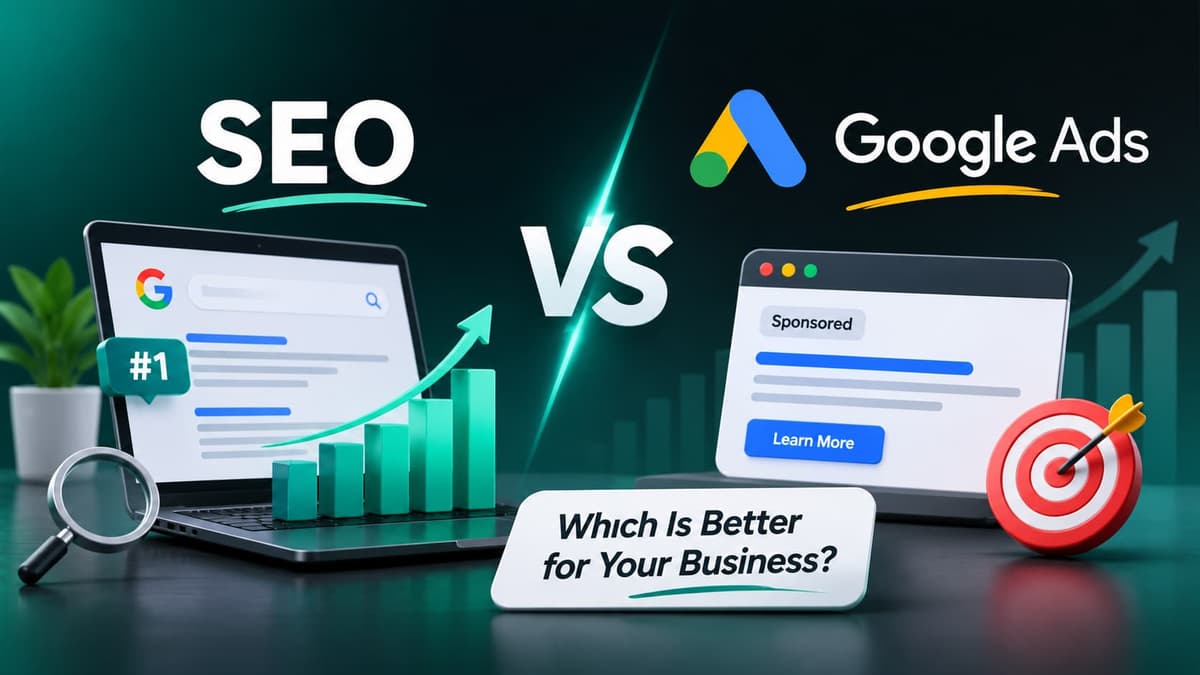
Should your business invest in SEO or Google Ads? Both strategies help businesses attract customers through Google, but they work differently. SEO builds organic visibility over time, while Google Ads helps businesses reach potential customers through paid placements. In this guide, we compare their costs, benefits, limitations and results to help Indian businesses choose the right marketing strategy in 2026.
What Is the Difference Between SEO and Google Ads?
SEO and Google Ads are two different ways to attract customers through Google.
SEO helps your website appear in organic search results without paying for every click. Google Ads allows businesses to pay for advertising placements and reach people searching for relevant products or services.
| Comparison | SEO | Google Ads |
|---|---|---|
| Traffic type | Organic | Paid |
| Cost | SEO investment and resources | Advertising budget |
| Visibility | Earned rankings | Paid placements |
| Results | Usually gradual | Can start soon after launch |
| Long-term value | Can compound over time | Requires continued ad spend |
| Best for | Sustainable organic visibility | Immediate campaign reach |
| Main challenge | Competition and time | Budget and campaign efficiency |
Neither approach is automatically better. The right choice depends on your business goals, competition and available budget.
1. What Is SEO and How Does It Work?
Search Engine Optimization (SEO) improves your website's visibility in organic search results.
When someone searches for a service or product, search engines identify relevant pages based on multiple signals, including content relevance, technical accessibility and quality.
Benefits of SEO
• Builds long-term organic visibility.
• Attracts people actively searching for your services.
• Helps establish industry authority.
• Reduces dependence on paid advertising over time.
• Supports sustainable website traffic.
Limitations of SEO
SEO requires consistent content development, technical improvements and authority building. Competitive keywords can take considerable time and effort to rank for.
2. What Are Google Ads and How Do They Work?
Google Ads is Google's paid advertising platform. Businesses can create campaigns that reach potential customers across Google Search and other advertising placements.
For example, when someone searches for "digital marketing agency in India", relevant advertisers may appear in sponsored search placements.
Benefits of Google Ads
• Reach potential customers quickly.
• Target relevant keywords and audiences.
• Control campaign budgets.
• Test different advertisements and landing pages.
• Measure clicks, enquiries and conversions.
Limitations of Google Ads
• Advertising requires ongoing investment.
• Competitive keywords can become expensive.
• Poor targeting can waste budget.
• Traffic may decline when campaigns stop.
3. SEO vs Google Ads: Which Is More Cost-Effective?
The cost structure is different.
With SEO, businesses invest in content, technical optimization, strategy and link acquisition.
With Google Ads, businesses pay for advertising interactions according to their campaign bidding model, alongside any management fees.
SEO may offer compounding returns over time, while Google Ads provides more immediate opportunities to generate traffic.
The right comparison is not simply cost per click. Businesses should evaluate qualified leads, customer acquisition cost and revenue.
4. Which Strategy Is Better for Different Businesses?
| Business Type | Recommended Starting Point |
|---|---|
| Local service businesses | Local SEO + Google Search Ads |
| E-commerce brands | SEO + Shopping/Search Ads |
| Startups | SEO + focused paid campaigns |
| B2B companies | SEO + high-intent Search Ads |
| Established businesses | Integrated SEO and paid strategy |
These are starting recommendations, not fixed rules. Actual channel selection depends on customer behaviour and search demand.
5. Can You Use SEO and Google Ads Together?
Absolutely. In many cases, combining both strategies creates a stronger marketing approach.
SEO helps build organic visibility, while Google Ads can capture additional demand through paid placements.
A combined strategy can include:
• Use Google Ads to test high-intent keywords.
• Identify which search terms generate qualified enquiries.
• Develop SEO content around relevant search intent.
• Improve landing pages using campaign insights.
• Track organic and paid conversions separately.
• Optimize the overall marketing investment using business results.
The objective is to create a connected customer acquisition strategy rather than treating each channel independently.
6. How to Choose Between SEO and Google Ads
Before choosing, ask yourself these five questions:
• Do customers already search for your products or services?
• Do you need enquiries immediately?
• Can you invest consistently in organic growth?
• How competitive are your target keywords?
• Can your business measure leads and actual sales?
If you need immediate campaign visibility, Google Ads may be a suitable starting point. If your business has sufficient resources, combining both can help cover different stages of the customer journey.
Frequently Asked Questions
Is SEO better than Google Ads?
SEO is useful for building long-term organic visibility, while Google Ads can generate paid visibility more quickly. The better option depends on your business objectives.
Which is cheaper, SEO or Google Ads?
Neither has a universal cost advantage. SEO involves ongoing optimization and content investment, while Google Ads requires advertising spend and potentially management fees.
Can Google Ads improve SEO rankings?
No. Running Google Ads does not directly improve organic rankings. Paid advertising and organic SEO are separate systems.
How long does SEO take to show results?
SEO timelines vary according to competition, website quality, content and authority. Meaningful improvements often require several months of consistent work.
Should small businesses use SEO and Google Ads together?
They can. Businesses should prioritize the channel that best matches customer demand and available resources, then expand when measurement and budgets support it.
Conclusion: Build a Smarter Search Marketing Strategy
SEO and Google Ads serve different purposes, but both can contribute to business growth. SEO builds organic visibility and long-term search presence. Google Ads helps businesses reach potential customers through paid campaigns. The strongest strategy is the one that connects marketing investment with qualified leads, conversions and revenue. At Garage Collective, we believe sustainable growth comes from combining the right strategy, creative execution and performance marketing. Ready to grow your business? Explore Garage Collective at https://garagecollective.agency/ and discover a smarter approach to digital growth.
Like what you're reading?
Get a free marketing plan tailored to your brand
Get Your Free Planyes, actually free. we're not kidding.
Key Takeaways
- SEO builds organic visibility, while Google Ads provides paid search visibility.
- Google Ads can generate traffic quickly, while SEO generally takes longer.
- SEO can create compounding long-term value.
- Google Ads requires ongoing advertising investment.
- Combining both can create a stronger customer acquisition strategy.
the TL;DR your boss will love
This Isn't Just Theory. We Do This Daily.
Let us show you exactly what we'd do for your brand - strategy, channels, budget, timeline. Free. No pitch deck.
Get Smarter Every Week
Ideas, data, and the occasional hot take. Biweekly, no spam.
we promise not to sell your email to robots
You Might Also Dig These
^ we picked these just for you (okay, the algorithm did)
Google's October 2026 AI Content Guidance: SEO and E-E-A-T Checklist
Google updated its guidance on generative AI content on 1 October 2026, aligning the documentation more closely with its Search Quality Rater Guidelines. The update does not create a special ranking system for AI-written pages. It sharpens the standard that matters: content should serve a clear audience, demonstrate real expertise and make factual claims easy to verify. For Indian marketing teams using AI at scale, the operational question is no longer whether AI may be used. It is whether every published page adds original value, accountable authorship and dependable evidence.
ReadIndia Festive Commerce Playbook 2026: D2C, Quick Commerce and Always-On Growth
India’s festive season remains a major commercial opportunity, but e-commerce demand is no longer limited to a few sale events. NIQ describes a market shaped by both habitual purchases and event-driven peaks, while Meta points to video-first discovery, creators and messaging-led commerce. A useful festive plan connects demand forecasting, channel roles, creative and customer experience from discovery through repeat purchase.
ReadUltimate Guide to AI-First Agency Month: Optimize Performance Marketing ROI Amid Rising Ad Costs in India
Struggling to keep up with rising ad costs and ever-changing Google and Meta algorithms? Indian marketers, startups, and D2C brands are feeling the pressure to scale smarter - not harder. Ready to cut through the noise and supercharge your performance marketing ROI? This guide reveals AI-first strategies, proprietary tools, and proven tactics to help you stay ahead and win big in India’s digital market.
Read