Video SEO Update: Google Adds Creator and Engagement Data to VideoObject Schema
Abhishek Dwivedi
Team Lead, SEO
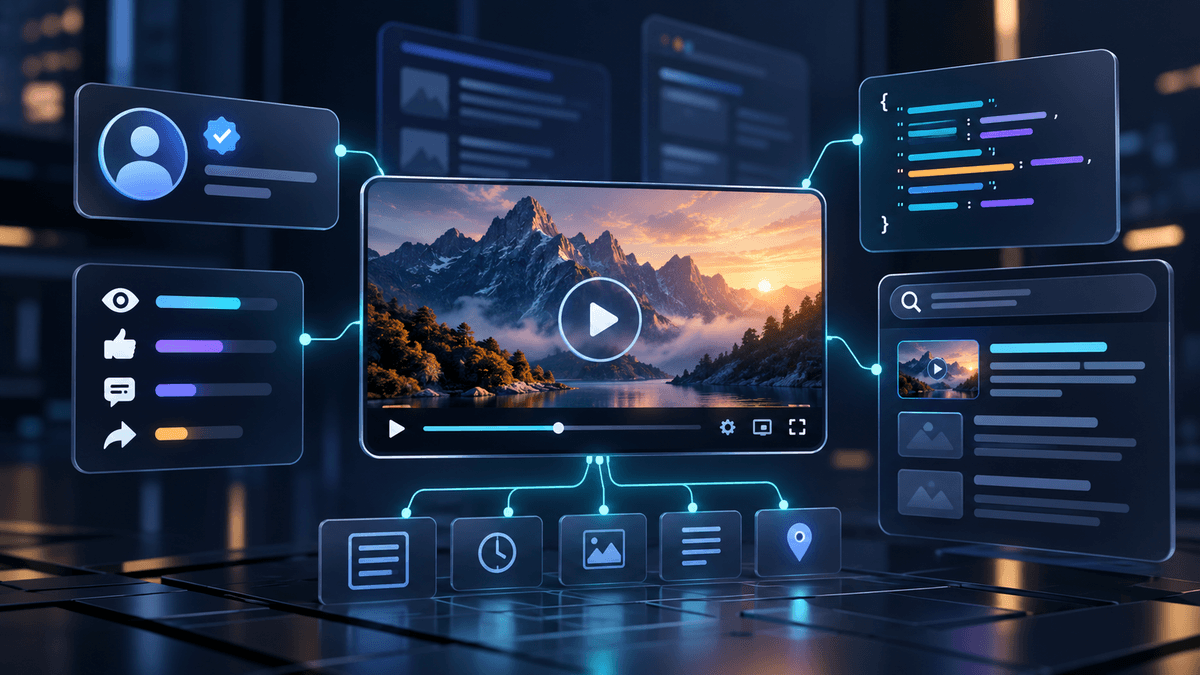
Google updated its VideoObject structured-data documentation on 24 September 2026, adding the creator property while noting continued support for author, and clarifying supported interaction types for interactionStatistic. The change gives publishers a clearer way to identify who created a video and describe engagement signals in machine-readable data. It does not guarantee a video rich result or higher ranking. The practical goal is accurate, consistent markup that matches the visible page, supports discovery and reduces ambiguity about the video's identity, creator and performance.
What Google changed in September 2026
Google's Search documentation changelog records two VideoObject updates on 24 September 2026: the addition of the creator property, with continued support noted for author, and a clarification of the supported interaction types for interactionStatistic. The stated purpose was to document creator and author support and clarify which interactions Google understands. Review the official entry in Google Search Central's documentation updates before implementation, because supported properties can change.
What the creator property communicates
The creator property identifies the person or organisation responsible for creating the video. A consistent creator entity can reduce ambiguity when the same production team appears across a website, video platform and profile pages. Use a Person or Organization object with a stable name and, where appropriate, a URL that explains the entity. The visible page should identify the same creator. Do not add a famous person, client or partner merely to attract relevance if that entity did not create the work.
How to use interactionStatistic accurately
interactionStatistic represents a user interaction and its count. Use the InteractionCounter structure and an interactionType Google documents as supported for VideoObject. Counts must come from a defensible measurement source and should match the relevant scope, such as views on the hosted player rather than an invented total across unrelated platforms. Do not add likes, comments or shares unless the chosen interaction type is supported and the count can be maintained. Stale or inflated engagement data weakens trust.
Keep the core VideoObject fields complete
A useful VideoObject implementation starts with the fundamentals: a clear name, description, thumbnail URL, upload date and a valid content or embed URL as applicable. Include duration in ISO 8601 format when known. Add creator or author only when the identity is accurate. Other properties should describe real page content and media behaviour. More markup is not automatically better. A smaller accurate object is safer than a large object filled with guesses or defaults.
Make the structured data match the visible page
Structured data must describe the video users can actually see and access. The visible title, summary, creator credit, thumbnail and publication information should agree with the markup. Do not mark up a video that is hidden behind an interaction Google cannot render, removed from the page or unrelated to the main topic. If access requires a subscription or registration, represent that accurately. Update or remove markup when the video changes.
Build a dedicated watch-page experience
A video has a stronger discovery context when it sits on a focused page with a descriptive title, useful summary, transcript or key points, creator credit and relevant supporting links. Make the player prominent and usable on mobile. Provide a stable thumbnail and avoid loading failures caused by consent tools or scripts. Our YouTube India playbook explains how education, trust and conversion can work together around video content.
Implementation checklist for development teams
Define one server-side source for each schema field instead of hand-editing JSON-LD on individual pages. Map the CMS title, description, thumbnail, upload date, duration, media URL and creator record into a reusable component. Add checks for missing thumbnails, invalid dates, unavailable media and inconsistent creator IDs. Document how interaction counts are calculated and refreshed. For planning original production, use our corporate video production cost guide to align scope and assets before publication.
Validate markup and monitor production changes
Test representative pages in Google's Rich Results Test, inspect the rendered page and validate the raw JSON-LD with a schema validator. Then monitor Search Console for video indexing and enhancement issues, while remembering that a valid test does not guarantee display. Re-test after CMS, player, consent or template changes. Crawl the site for orphaned markup and videos whose thumbnails, media URLs or creator pages no longer resolve.
Measure video SEO beyond rich-result eligibility
Track indexed video pages, impressions, clicks, watch-page engagement, player starts, meaningful completion and assisted conversions. Separate improvements caused by markup from changes in titles, thumbnails, distribution or page quality. Annotate deployment dates and compare eligible page groups. Schema is an enablement layer, not a replacement for useful video, strong packaging or accessible pages. The enterprise search architecture guide shows how structured data fits into broader technical controls.
Frequently asked questions
These answers cover the questions SEO, development and video teams most often ask when updating VideoObject markup.
Does adding VideoObject schema improve rankings?
No schema property guarantees higher rankings. Valid VideoObject markup helps search systems understand a video's identity, metadata and page context, and can support eligibility for video search features. Visibility still depends on relevance, quality, crawlability, indexability and the search system's decision to display a result.
Which engagement metrics belong in interactionStatistic?
Use only interaction types documented as supported for VideoObject and only when the count is accurate for the defined scope. A view count is common, but publishers should confirm the current documentation before adding other interactions. Do not combine numbers from multiple platforms unless the methodology is clear and the resulting count describes the same video.
Can an embedded YouTube video use VideoObject schema?
Yes, when the embedded video is a meaningful part of the page and the markup accurately describes it. Use the appropriate embed URL, a crawlable thumbnail and metadata that matches the visible player and page. The page should add value around the video and keep the player accessible. Avoid marking up every incidental embed as the main video.
How should publishers test VideoObject structured data?
Start with Google's Rich Results Test, then inspect the rendered HTML and validate the JSON-LD syntax. Confirm that every URL resolves, dates and durations use valid formats, the creator exists and the marked-up video is visible. Monitor Search Console after deployment and repeat testing whenever templates, players, consent tools or CMS mappings change.
Like what you're reading?
Get a free marketing plan tailored to your brand
Get Your Free Planyes, actually free. we're not kidding.
Key Takeaways
- Google documented creator support and clarified engagement types for VideoObject.
- Creator identity should match the person or organisation visibly credited on the page.
- Engagement counts need a supported interaction type and defensible measurement source.
- Structured data must match an accessible video, thumbnail and visible page content.
- Validation enables eligibility but does not guarantee rankings or rich-result display.
the TL;DR your boss will love
This Isn't Just Theory. We Do This Daily.
Let us show you exactly what we'd do for your brand - strategy, channels, budget, timeline. Free. No pitch deck.
Get Smarter Every Week
Ideas, data, and the occasional hot take. Biweekly, no spam.
we promise not to sell your email to robots
You Might Also Dig These
^ we picked these just for you (okay, the algorithm did)
Google's October 2026 AI Content Guidance: SEO and E-E-A-T Checklist
Google updated its guidance on generative AI content on 1 October 2026, aligning the documentation more closely with its Search Quality Rater Guidelines. The update does not create a special ranking system for AI-written pages. It sharpens the standard that matters: content should serve a clear audience, demonstrate real expertise and make factual claims easy to verify. For Indian marketing teams using AI at scale, the operational question is no longer whether AI may be used. It is whether every published page adds original value, accountable authorship and dependable evidence.
ReadIndia Festive Commerce Playbook 2026: D2C, Quick Commerce and Always-On Growth
India’s festive season remains a major commercial opportunity, but e-commerce demand is no longer limited to a few sale events. NIQ describes a market shaped by both habitual purchases and event-driven peaks, while Meta points to video-first discovery, creators and messaging-led commerce. A useful festive plan connects demand forecasting, channel roles, creative and customer experience from discovery through repeat purchase.
ReadUltimate Guide to AI-First Agency Month: Optimize Performance Marketing ROI Amid Rising Ad Costs in India
Struggling to keep up with rising ad costs and ever-changing Google and Meta algorithms? Indian marketers, startups, and D2C brands are feeling the pressure to scale smarter - not harder. Ready to cut through the noise and supercharge your performance marketing ROI? This guide reveals AI-first strategies, proprietary tools, and proven tactics to help you stay ahead and win big in India’s digital market.
Read